
dyu ISO 639
Julakan Autonyms
Jula
Visualizations
Language Cloud
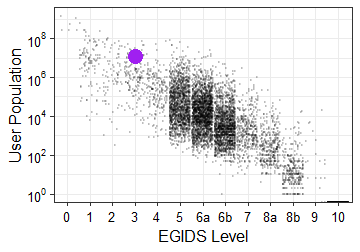
Full explanation
A language of Côte d’Ivoire.
- ISO 639
- dyu
- Alternate Names
- Dioula, Diula, Djula, Dyoula, Dyula, Jula Kong, Kong Jula, Tagboussikan
- Autonym
- Julakan
- Population
- 8,500,000 in Côte d’Ivoire, all users. L1 users: 1,500,000 in Côte d’Ivoire (2012 V. Vydrin). L2 users: 7,000,000 (2012 V. Vydrin). Total users in all countries: 12,504,000 (as L1: 2,226,000; as L2: 10,278,000).
- Location
- Savanes and Zanzan districts; widespread in all major cities.
- Language Maps
- Burkina Faso, Côte d’Ivoire
- Language Status
- 3 (Wider communication). Lingua franca in Côte d’Ivoire in the 19th century during the French colonial period. Also spoken in Burkina Faso. Used in education, trade, hunting, and religion.
- Classification
- Niger-Congo, Mande, Western, Central-Southwestern, Central, Manding-Jogo, Manding-Vai, Manding-Mokole, Manding, Manding-East, Northeastern Manding, Bamana
- Dialects
- None known. Spoken as L1 or L2 by millions of people of diverse ethnic backgrounds in West Africa. Mutually intelligible with Bambara [bam], Kita Maninkakan [mwk], and Eastern Maninkakan [emk].
- Language Use
- Used as L2 by Abidji [abi], Abron [abr], Anyin [any], Attié [ati], Beng [nhb], Cebaara Sénoufo [sef], Dan [dnj], Djimini Sénoufo [dyi], Dogoso [dgs], Gban [ggu], Jeri Kuo [jek], Khe [kqg], Mwan [moa], Ngen [gnj], Nyabwa [nwb], Plapo Krumen [ktj], Southern Toussian [wib], Téén [lor], Tepo Krumen [ted], Tonjon [tjn], Toura [neb], Wan [wan], Wè Southern [gxx], Wè Western [wec], Yaouré [yre].
- Language Development
- Literacy rate in L2: 15%–25%. Taught as subject in some primary schools; taught in 3 cities (Seguela, Mankono, Kong) as pilot classes. Materials are being prepared to expand to 8 other languages. Literature. Radio. Videos. Dictionary. Grammar. Texts. Bible: 2013.
- Writing
- Arabic script, Naskh variant [Arab]. Latin script [Latn]. N’Ko script [Nkoo], used in Côte d’Ivoire and Burkina Faso.
- Other Comments
- Majority ethnic Jula. Government designated as 1 of 5 languages to be developed for literature. Muslim.
- Language Resources
- OLAC resources in and about Jula
Also Spoken in
- Location
- Boucle du Mouhoun region: Kossi province; Cascades region: Comoe and Leraba provinces; Hauts-Bassins region: Houet province; Kenedougou province, scattered.
- Language Status
- 3 (Wider communication)
- Language Use
- Used by all. Used as L2 by Bolon [bof], Bomu [bmq], Buamu [box], Cerma [cme], Cwi Bwamu [bwy], Dagaari Dioula [dgd], Dogosé [dos], Dogoso [dgs], Dyan [dya], Dzùùngoo [dnn], Eastern Karaboro [xrb], Jalkunan [bxl], Kaansa [gna], Khe [kqg], Khisa [kqm], Konabéré [bbo], Láá Láá Bwamu [bwj], Lobi [lob], Lyélé [lee], Malba Birifor [bfo], Marka [rkm], Matya Samo [stj], Maya Samo [sym], Mòoré [mos], Nanerigé Sénoufo [sen], Natioro [nti], Northern Nuni [nuv], Northern Toussian [tsp], Pana [pnq], Phuie [pug], Seeku [sos], Siamou [sif], Sìcìté Sénoufo [sep], Southern Bobo Madaré [bwq], Southern Samo [sbd], Southern Toussian [wib], Téén [lor], Tiéfo [tiq], Turka [tuz], Viemo [vig], Wara [wbf], Western Karaboro [kza].
- Language Development
- Literacy rate in L1: 54% (2006 census). Used in adult literacy classes (2021 SIL). Taught in some primary schools through grades 3–5.
- Other Comments
- Different from Jola [dyo] (Diola) of Senegal. Majority not ethnic Jula. Muslim. View other languages of Burkina Faso
Language Name
Jula
User Population
3,616,000 in Burkina Faso, all users. L1 users: 616,000 in Burkina Faso (2009 UNSD). L2 users: 3,000,000 (2012 V. Vydrine).
- Location
- Mopti, Ségou, and Sikasso regions.
- Language Status
- 3 (Wider communication)
- Language Use
- Used as L2 by Duungooma [dux], Jowulu [jow], Konabéré [bbo], Pana [pnq], Shempire Sénoufo [seb], Syenara Sénoufo [shz].
- Other Comments
- Non-indigenous. The Malian government recognizes Jula in Mali as Bambara [bam]. Muslim. View other languages of Mali
Language Name
Jula
User Population
388,000 in Mali, all users. L1 users: 110,000 in Mali (2018). L2 users: 278,000 (2013 SIL).