
eng ISO 639
English Autonyms
English
Visualizations
Language Cloud
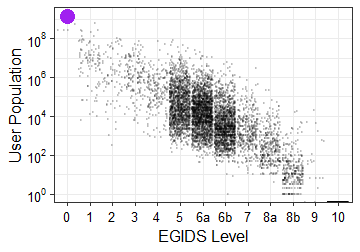
Full explanation
A language of United Kingdom
- ISO 639
- eng
- Autonym
- English
- Population
- 60,020,000 in United Kingdom, all users. L1 users: 56,600,000 in United Kingdom (2011 census). England and Wales 49,800,000, Scotland 5,118,000, Northern Ireland 1,681,000. L2 users: 3,420,000 (2011 census). Total users in all countries: 1,453,052,690 (as L1: 373,500,470; as L2: 1079,552,220).
- Language Maps
- Canada, Cook Islands, El Salvador and Honduras, Ireland and United Kingdom, Lesotho, South Africa and Swaziland, Liberia, South Africa: Enlarged area
- Language Status
- 1 (National). De facto national language.
- Classification
- Indo-European, Germanic, West, English
- Dialects
- Cockney, Scouse, Geordie, West Country, East Anglia, Birmingham (Brummie, Brummy), South Wales, Edinburgh, Belfast, Cornwall, Cumberland, Central Cumberland, Devonshire, East Devonshire, Dorset, Durham, Bolton Lancashire, North Lancashire, Radcliffe Lancashire, Northumberland, Norfolk, Newcastle Northumberland, Tyneside Northumberland, Lowland Scottish, Somerset, Sussex, Westmorland, North Wiltshire, Craven Yorkshire, North Yorkshire, Sheffield Yorkshire, West Yorkshire, Glaswegian. Many local English varieties around the world. Lexical similarity: 61% with Frisian [fry], 60% with German [deu], 27% with French [fra], 24% with Russian [rus], 20% with Portuguese [por].
- Typology
- SVO; prepositions; genitives after noun heads; articles, adjectives, numerals before noun heads; question word initial; word order distinguishes subject, object, indirect objects, given and new information, topic and comment; active and passive; causative; comparative; consonant and vowel clusters; 24 consonants, 13 vowels, 8 diphthongs; non-tonal; free stress; phrasal verbs.
- Language Use
- Some also use French [fra] (European Commission 2006). A few also use Spanish [spa] (European Commission 2006). A few also use Standard German [deu] (European Commission 2006).
- Language Development
- Taught in all primary and secondary schools. Taught in all tertiary schools. Fully developed. Bible: 1382–2002.
- Writing
- Braille script [Brai]. Deseret Alphabet [Dsrt], developed in 1854 with limited usage until 1877. Duployan shorthand [Dupl]. Latin script [Latn], primary usage. Shavian (Shaw) script [Shaw], no longer in use.
- Other Comments
- Christian.
- Language Resources
- OLAC resources in and about English
Also Spoken in
- Language Status
- 5 (Dispersed)
- Language Development
- Taught as subject in most primary and secondary schools.
- Other Comments
- Non-indigenous. View other languages of Andorra
Language Name
English
User Population
17,900 in Andorra (2004 Institut d’Estudis Catalans), L2 users.
- Location
- Widespread.
- Language Status
- 3 (Wider communication)
- Other Comments
- Non-indigenous. View other languages of United Arab Emirates
Language Name
English
User Population
7,078,900 in United Arab Emirates, all users. L1 users: 78,900 in United Arab Emirates (2019). L2 users: 7,000,000 (Shafiq and Afzal 2020).
- Location
- Scattered.
- Language Status
- 5 (Dispersed)
- Other Comments
- Non-indigenous. View other languages of Afghanistan
Language Name
English
User Population
1,812,000 in Afghanistan, all users. L1 users: 12,000 in Afghanistan (2017 J. Leclerc). L2 users: 1,800,000 (2021 World Factbook).
- Language Status
- 1 (National)
- Language Development
- Taught in all primary and secondary schools.
- Other Comments
- Non-indigenous. View other languages of Antigua and Barbuda
Language Name
English
User Population
16,200 in Antigua and Barbuda, all users. L1 users: 13,600 in Antigua and Barbuda (2019). It is difficult to substantiate the number of Creole speakers and English speakers. L2 users: 2,600 (2011).
- Language Status
- 1 (National)
- Language Development
- Taught in all primary and secondary schools.
- Other Comments
- Non-indigenous. View other languages of Anguilla
Language Name
English
User Population
11,350 in Anguilla, all users. L1 users: 950 in Anguilla (2004). It is difficult to substantiate the number of Creole speakers and English speakers. L2 users: 10,400 (2003 UNSD).
- Language Status
- Unestablished
- Language Use
- Used as L2 by Albanian Sign Language [sqk].
- Language Development
- Taught as subject in secondary schools.
- Other Comments
- Non-indigenous. View other languages of Albania
Language Name
English
User Population
2,900 in Albania (2017 J. Leclerc).
- Location
- Widespread, mostly in Buenos Aires.
- Language Status
- 5 (Dispersed)
- Other Comments
- Non-indigenous. The British came to build the railroads in Argentina in the early 1800s. View other languages of Argentina
Language Name
English
User Population
7,100,000 in Argentina, all users. L1 users: 100,000 in Argentina (1985 New York Times). L2 users: 7,000,000 (2020).
- Language Status
- 1 (National)
- Language Development
- Taught in all primary and secondary schools.
- Other Comments
- Non-indigenous. View other languages of American Samoa
Language Name
English
User Population
56,160 in American Samoa, all users. L1 users: 2,160 in American Samoa (2018). L2 users: 54,000 (2017).
- Location
- Widespread.
- Language Status
- 4 (Educational)
- Language Development
- Taught as subject in most primary and secondary schools.
- Other Comments
- Non-indigenous. View other languages of Austria
Language Name
English
User Population
6,558,600 in Austria, all users. L1 users: 58,600 in Austria (2003 UNSD). L2 users: 6,500,000 (2019).
- Dialects
- Australian Standard English, Aboriginal English, Neo-Nyungar (Noogar, Noonga, Noongar).
- Language Status
- 1 (National)
- Language Development
- Taught in all primary and secondary schools. Taught in all tertiary schools.
- Other Comments
- Non-indigenous. Minor regional dialect differences. Neo-Nyungar is the community dialect of the Nyungar people. View other languages of Australia
Language Name
English
User Population
24,200,000 in Australia (2020), all users. L1 users: 17,000,000 (2016 census).
- Location
- Widespread.
- Language Status
- 3 (Wider communication)
- Language Development
- Taught as subject in all primary and secondary schools.
- Other Comments
- Non-indigenous. View other languages of Aruba
Language Name
English
User Population
63,950 in Aruba, all users. L1 users: 7,950 in Aruba (2019 World Factbook). L2 users: 56,000 (2019).
- Language Status
- Unestablished
- Language Development
- Taught in some tertiary schools.
- Other Comments
- Non-indigenous. View other languages of Azerbaijan
Language Name
English
User Population
2,800 in Azerbaijan (Leclerc 2017b).
- Language Status
- 1 (National)
- Language Development
- Taught in all primary and secondary schools.
- Other Comments
- Non-indigenous. When Creole languages exist alongside their lexifier language, as in Barbados, a continuum forms of variations between the Creole and the lexifier language. It is therefore difficult to substantiate the number of Creole speakers and English speakers. Christian. View other languages of Barbados
Language Name
English
User Population
42,000 in Barbados, all users. L1 users: 29,000 in Barbados (2018). L2 users: 13,000 (Crystal 2003a).
- Language Status
- 5 (Dispersed)
- Language Use
- Used as L2 by Bihari [urd], Mahali [mjx], War-Jaintia [aml].
- Language Development
- Taught as subject in all secondary schools. Taught in most tertiary schools.
- Other Comments
- Non-indigenous. View other languages of Bangladesh
Language Name
English
User Population
29,300,000 in Bangladesh (2020 Euromonitor International), L2 users.
- Language Status
- 4 (Educational)
- Language Use
- Used as L2 by Dutch [nld], West Flemish [vls].
- Language Development
- Taught as subject in all primary and secondary schools.
- Other Comments
- Non-indigenous. View other languages of Belgium
Language Name
English
User Population
4,423,300 in Belgium, all users. L1 users: 43,300 in Belgium (2020 census), based on nationality. L2 users: 4,380,000 (2020).
- Language Status
- 4 (Educational)
- Language Use
- Used as L2 by Bulgarian [bul].
- Language Development
- Taught as subject in secondary schools.
- Other Comments
- Non-indigenous. View other languages of Bulgaria
Language Name
English
User Population
1,742,500 in Bulgaria, all users. L1 users: 2,500 in Bulgaria (2016 J. Leclerc). L2 users: 1,740,000 (2020).
- Location
- Widespread.
- Language Status
- 3 (Wider communication)
- Language Use
- Used for most business communication. Many Bahraini children learn English before Arabic [arb] because it is easier to learn (2004).
- Language Development
- Taught as subject in all primary and secondary schools.
- Other Comments
- Non-indigenous. View other languages of Bahrain
Language Name
English
User Population
23,100 in Bahrain (2019).
- Location
- Saint Barthelemy island: Gustavia port town on west coast.
- Dialects
- Gustavia English.
- Language Status
- 7 (Shifting)
- Language Use
- Few youth still speak it. Shifting to French [fra].
- Other Comments
- Non-indigenous. English with some creole influence. View other languages of Saint Barthélemy
Language Name
English
User Population
100 in Saint Barthélemy (2011 SIL).
- Dialects
- Bermudan English.
- Language Status
- 1 (National)
- Language Development
- Taught in all primary and secondary schools.
- Other Comments
- Non-indigenous. Colloquial English may not be a creole but a regional variety of uncreolized English. View other languages of Bermuda
Language Name
English
User Population
61,400 in Bermuda (2019).
- Language Status
- 1 (National)
- Language Use
- Government, education, and by the educated as L1 or L2.
- Language Development
- Taught in all primary and secondary schools beginning in grade 3, used as the language of instruction for the sciences, mathematics, geography, history, and the English language. Taught as subject in all primary schools in grades 1 and 2. Taught in tertiary schools.
- Other Comments
- Non-indigenous. View other languages of Brunei
Language Name
English
User Population
139,500 in Brunei, all users. L1 users: 5,500 in Brunei (2019). L2 users: 134,000 (Crystal 2003a).
- Language Status
- 1 (National)
- Language Development
- Taught in secondary schools on Saba.
- Other Comments
- Non-indigenous. When Creole languages exist alongside their lexifier language, a continuum forms of variations between the Creole and the lexifier language. It is therefore difficult to substantiate the number of Creole speakers and English speakers. View other languages of Caribbean Netherlands
Language Name
English
User Population
3,390 in Caribbean Netherlands (2001 census). Bonaire 300, Sint Eustatius 1,900, Saba 1,190.
- Location
- Scattered.
- Language Status
- 4 (Educational)
- Language Development
- Taught as subject in all primary and secondary schools. Taught as L2.
- Other Comments
- Non-indigenous. View other languages of Brazil
Language Name
English
User Population
10,921,000 in Brazil, all users. L1 users: 121,000 in Brazil (2020 Registro Nacional Migratório no Brasil), based on nationality. L2 users: 10,800,000 (2020 British Council).
- Language Status
- 1 (National)
- Language Development
- Taught in all primary and secondary schools.
- Other Comments
- Non-indigenous. When Creole languages exist alongside their lexifier language, as in the Bahamas, a continuum forms of variations between the Creole and the lexifier language. It is therefore difficult to substantiate the number of Creole speakers and English speakers. View other languages of Bahamas
Language Name
English
User Population
36,300 in Bahamas (2018).
- Location
- Widespread.
- Language Status
- 3 (Wider communication)
- Language Use
- Education, government, commerce, media. Used as L2 by Khengkha [xkf].
- Language Development
- Taught in many primary schools, especially private schools. Taught in all secondary schools. Taught in all tertiary schools.
- Other Comments
- Non-indigenous. View other languages of Bhutan
Language Name
English
- Language Status
- 1 (National)
- Language Use
- International trade, the medium of western influence.
- Language Development
- Language of instruction from fifth grade. Taught from the beginning of primary school as a required subject. Taught in all primary and secondary schools from grade 3; taught as subject in grades 1–2. Taught in all tertiary schools.
- Other Comments
- Non-indigenous. View other languages of Botswana
Language Name
English
User Population
939,900 in Botswana, all users. L1 users: 64,900 in Botswana (2020). L2 users: 875,000 (2016).
- Language Status
- 5 (Dispersed)
- Language Development
- Taught as subject in secondary schools.
- Other Comments
- Non-indigenous. View other languages of Belarus
Language Name
English
User Population
1,000,000 in Belarus (2020), L2 users.
- Location
- Widespread.
- Language Status
- 1 (National)
- Language Use
- Education, government, commerce.
- Language Development
- Taught in all primary and secondary schools.
- Other Comments
- Non-indigenous. When Creole languages exist alongside their lexifier language, as in Belize, a continuum forms of variations between the Creole and the lexifier language It is therefore difficult to substantiate the number of Creole speakers and English speakers. View other languages of Belize
Language Name
English
User Population
240,000 in Belize, all users. L1 users: 184,000 in Belize (2014 UNSD). L2 users: 56,000 (Crystal 2003a).
- Dialects
- Newfoundland English.
- Language Status
- 1 (National)
- Language Development
- Taught in all primary and secondary schools. Taught in all tertiary schools.
- Other Comments
- Non-indigenous. View other languages of Canada
Language Name
English
User Population
30,000,000 in Canada, all users. L1 users: 19,500,000 in Canada (2016 census). L2 users: 10,500,000 (2016 census).
- Location
- West island.
- Language Status
- 1 (National)
- Language Development
- Taught in all primary and secondary schools.
- Other Comments
- Non-indigenous. View other languages of Cocos (Keeling) Islands
Language Name
English
User Population
130 in Cocos (Keeling) Islands (2020 World Factbook).
- Language Status
- 4 (Educational)
- Language Development
- Taught as subject in all primary and secondary schools.
- Other Comments
- Non-indigenous. View other languages of Switzerland
Language Name
English
User Population
4,733,000 in Switzerland, all users. L1 users: 483,000 in Switzerland (2018 census). L2 users: 4,250,000 (2018).
- Location
- Widespread.
- Language Status
- 1 (National)
- Language Development
- Taught as subject in primary schools. Taught in all secondary schools.
- Other Comments
- Non-indigenous. All the residents of Palmerston Island speak a distinctive dialect of English and have close family connections to Penrhyn. The Palmerston residents are descendants of an Englishman with several Cook Islands wives who settled on Palmerston in the 19th century (2012 M. Salisbury). View other languages of Cook Islands
Language Name
English
User Population
17,680 in Cook Islands, all users. L1 users: 680 in Cook Islands (2011 SIL). L2 users: 17,000 (2012 M. Salisbury).
- Language Status
- 4 (Educational)
- Language Use
- Also use Spanish [spa].
- Language Development
- Taught as subject in many primary and secondary schools.
- Other Comments
- Non-indigenous. There is high demand for English education and policies are being pushed to make English the primary second language. View other languages of Chile
Language Name
English
User Population
1,965,500 in Chile, all users. L1 users: 15,500 in Chile (2020 Joshua Project). L2 users: 1,950,000 (2019 World Factbook).
- Location
- Mainly North West and South West regions.
- Language Status
- 1 (National)
- Language Development
- Taught in all primary and secondary schools in North West and South West regions; taught as subject in all schools in other regions. Taught in all tertiary schools in North West and South West regions.
- Other Comments
- Non-indigenous. View other languages of Cameroon
Language Name
English
User Population
9,805,900 in Cameroon, all users. L1 users: 5,900 in Cameroon (2020 Joshua Project), based on ethnicity. L2 users: 9,800,000 (Pinyon and Haydon 2010).
- Language Status
- 4 (Educational)
- Language Use
- Used as L2 by Mandarin Chinese [cmn], Min Nan Chinese [nan], Naxi [nxq], Uyghur [uig], Xibe [sjo].
- Language Development
- Taught as subject in most primary and secondary schools from grade 4. Taught in some tertiary schools.
- Other Comments
- Non-indigenous. View other languages of China
Language Name
English
User Population
15,620,000 in China, all users. L1 users: 120,000 in China (2020 Joshua Project), based on ethnicity. L2 users: 15,500,000 (Wei and Su 2012).
- Location
- San Andrés and Providencia department; scattered elsewhere.
- Language Status
- 5 (Dispersed)
- Language Use
- Used as L2 by Islander English Creole [icr].
- Other Comments
- Non-indigenous. View other languages of Colombia
Language Name
English
User Population
2,023,900 in Colombia, all users. L1 users: 23,900 in Colombia (2020 Joshua Project), based on ethnicity. L2 users: 2,000,000 (2019).
- Language Status
- 5 (Dispersed)
- Language Use
- Used as L2 by Southwestern Caribbean English Creole [jam].
- Language Development
- Taught as subject in most secondary schools.
- Other Comments
- Non-indigenous. View other languages of Costa Rica
Language Name
English
User Population
399,500 in Costa Rica, all users. L1 users: 17,500 in Costa Rica (2021 Joshua Project), based on ethnicity. L2 users: 382,000 (2020 census).
- Location
- Widespread.
- Language Status
- 5 (Dispersed)
- Language Use
- Used as L2 by Papiamentu [pap].
- Language Development
- Taught as subject in most secondary schools.
- Other Comments
- Non-indigenous. View other languages of Curacao
Language Name
English
User Population
5,400 in Curacao (2022).
- Language Status
- 1 (National)
- Language Development
- Taught in all primary and secondary schools.
- Other Comments
- Non-indigenous. View other languages of Christmas Island
Language Name
English
User Population
550 in Christmas Island (2020 World Factbook).
- Language Status
- 4 (Educational)
- Language Use
- Used as L2 by Greek [ell].
- Language Development
- Taught as subject in all primary and secondary schools.
- Other Comments
- Non-indigenous. View other languages of Cyprus
Language Name
English
User Population
902,800 in Cyprus, all users. L1 users: 34,800 in Cyprus (2013 UNSD). L2 users: 868,000 (European Commission 2012).
- Language Status
- 4 (Educational)
- Language Use
- Used as L2 by Czech [ces].
- Language Development
- Taught as subject in most primary and secondary schools beginning in grade 3.
- Other Comments
- Non-indigenous. View other languages of Czechia
Language Name
English
User Population
2,907,200 in Czechia, all users. L1 users: 7,200 in Czechia (2011 census). L2 users: 2,900,000 (European Commission 2012).
- Location
- Widespread.
- Language Status
- 4 (Educational)
- Language Use
- Used as L2 by German Sign Language [gsg], Northern Frisian [frr], Standard German [deu].
- Language Development
- Taught as subject in all primary and secondary schools. Taught in some tertiary schools.
- Other Comments
- Non-indigenous. View other languages of Germany
Language Name
English
User Population
47,037,000 in Germany, all users. L1 users: 437,000 in Germany (2020 census), based on nationality. L2 users: 46,600,000 (European Commission 2012).
- Location
- Widespread.
- Language Status
- 4 (Educational)
- Language Use
- Used as L2 by Danish [dan].
- Language Development
- Taught as subject in all primary and secondary schools in grades 3–9. Taught in some tertiary schools.
- Other Comments
- Non-indigenous. View other languages of Denmark
Language Name
English
User Population
5,031,600 in Denmark, all users. L1 users: 31,600 in Denmark (2020 census), based on nationality. L2 users: 5,000,000 (European Commission 2012).
- Dialects
- Dominican English.
- Language Status
- 1 (National)
- Language Development
- Taught in all primary and secondary schools.
- Other Comments
- Non-indigenous. When Creole languages exist alongside their lexifier language, as in Dominica, a continuum forms of variations between the Creole and the lexifier language. It is therefore difficult to substantiate the number of Creole speakers and English speakers. View other languages of Dominica
Language Name
English
User Population
65,000 in Dominica, all users. L1 users: 3,000 in Dominica (Crystal 2003a). L2 users: 62,000 (2020).
- Location
- Cibao Nordeste and Samaná regions, northeastern peninsula.
- Dialects
- Samaná English.
- Language Status
- 8a (Moribund)
- Language Use
- Older adults only. Shifted to Spanish [spa]. Also use Haitian Creole [hat].
- Other Comments
- Non-indigenous. Descendants of ex-slaves from the United States settled in 1824. Reportedly a settlement of African slaves existed here in the early 1500s. Includes features of creolization and archaic Black English. View other languages of Dominican Republic
Language Name
English
User Population
49,300 in Dominican Republic (2021 Joshua Project), based on ethnicity.
- Language Status
- 4 (Educational)
- Language Development
- Taught as subject in secondary schools. Taught in some tertiary schools.
- Other Comments
- Non-indigenous. View other languages of Algeria
Language Name
English
User Population
2,527,260 in Algeria, all users. L1 users: 7,260 in Algeria (2015 UNSD). L2 users: 2,520,000 (Ramaswami et al 2012).
- Location
- Widespread.
- Language Status
- 4 (Educational)
- Language Use
- Used as L2 by Standard Estonian [ekk].
- Language Development
- Taught as subject in all secondary schools.
- Other Comments
- Non-indigenous. View other languages of Estonia
Language Name
English
User Population
660,880 in Estonia, all users. L1 users: 880 in Estonia (2013 UNSD). L2 users: 660,000 (European Commission 2012).
- Language Status
- 4 (Educational)
- Language Use
- Used as L2 by Egyptian Spoken Arabic [arz].
- Language Development
- Taught in primary and secondary schools beginning in grade 7, only for mathematics and sciences. Taught in tertiary schools, specifically in medicine, engineering, and science.
- Other Comments
- Non-indigenous. View other languages of Egypt
Language Name
English
User Population
35,119,000 in Egypt, all users. L1 users: 19,000 in Egypt (2020 Joshua Project), based on ethnicity. L2 users: 35,100,000 (Ramaswami et al 2012).
- Location
- Widespread.
- Language Status
- 3 (Wider communication)
- Language Development
- Taught in primary and secondary schools. Taught in all tertiary schools.
- Other Comments
- Non-indigenous. View other languages of Eritrea
Language Name
English
- Language Status
- 4 (Educational)
- Language Use
- Used as L2 by Spanish [spa].
- Language Development
- Taught as subject in primary and secondary schools.
- Other Comments
- Non-indigenous. View other languages of Spain
Language Name
English
User Population
10,825,000 in Spain, all users. L1 users: 425,000 in Spain (2020 census), based on nationality. L2 users: 10,400,000 (European Commission 2012).
- Location
- Widespread.
- Language Status
- 4 (Educational)
- Language Use
- Language of higher education, many technical fields, and international communication. Used as L2 by Ethiopian Sign Language [eth].
- Language Development
- Taught in all primary and secondary schools from grade 5. Taught in all tertiary schools.
- Other Comments
- Non-indigenous. View other languages of Ethiopia
Language Name
English
User Population
241,870 in Ethiopia, all users. L1 users: 1,870 in Ethiopia (2010 UNSD). L2 users: 240,000 (2018).
- Location
- Widespread.
- Language Status
- 4 (Educational)
- Language Use
- Used as L2 by Finnish [fin].
- Language Development
- Taught as subject in all primary and secondary schools.
- Other Comments
- Non-indigenous. View other languages of Finland
Language Name
English
User Population
3,895,600 in Finland, all users. L1 users: 25,600 in Finland (2021 census). L2 users: 3,870,000 (European Commission 2012).
- Language Status
- 1 (National)
- Language Use
- Also used by many urban Chinese (4,652 in 1976), Rotuman, occasionally by Indians, rarely by Fijians (Geraghty and Pawley 1981). Reportedly a Fijian Pidgin English. Main language of commerce, education, government.
- Language Development
- Taught in most primary and secondary schools, officially beginning in grade 4, but all grades in most primary schools.
- Other Comments
- Non-indigenous. View other languages of Fiji
Language Name
English
User Population
190,000 in Fiji, all users. L1 users: 30,000 in Fiji (2019). L2 users: 160,000 (2021).
- Location
- Widespread.
- Language Status
- 1 (National)
- Language Development
- Taught in all primary and secondary schools.
- Other Comments
- Non-indigenous. Christian, secular. View other languages of Falkland Islands
Language Name
English
User Population
2,850 in Falkland Islands (2016 World Factbook).
- Language Status
- 1 (National)
- Language Development
- Taught in some primary schools. Outside of Chuuk state, the local language and English are both used as languages of instruction through the primary grades. Taught in all secondary schools.
- Other Comments
- Non-indigenous. View other languages of Micronesia
Language Name
English
User Population
61,320 in Micronesia, all users. L1 users: 1,320 in Micronesia (2005 UNSD). L2 users: 60,000 (Crystal 2003a).
- Location
- Widespread.
- Language Status
- 4 (Educational)
- Language Use
- Used as L2 by French [fra], West Flemish [vls].
- Language Development
- Taught in primary and secondary schools as subject.
- Other Comments
- Non-indigenous. View other languages of France
Language Name
English
User Population
26,436,000 in France, all users. L1 users: 236,000 in France (2020 Joshua Project), based on ethnicity. L2 users: 26,200,000 (European Commission 2012).
- Dialects
- Grenadian English.
- Language Status
- 1 (National)
- Other Comments
- Non-indigenous. When Creole languages exist alongside their lexifier language, as in Grenada, a continuum forms of variations between the Creole and the lexifier language. In such situations, a continuum forms of variations between the Creole and the acrolect. It is therefore difficult to substantiate the number of Creole speakers and English speakers. Post-creole English with French Creole influences (Alleyne 1985). View other languages of Grenada
Language Name
English
User Population
5,650 in Grenada (2020).
- Location
- Widespread.
- Language Status
- 1 (National)
- Other Comments
- Non-indigenous. View other languages of Guernsey
Language Name
English
User Population
62,500 in Guernsey.
- Language Status
- 1 (National)
- Language Development
- Taught in all primary and secondary schools from grade 4; taught as subject in grades 1–3. Taught in all tertiary schools.
- Other Comments
- Non-indigenous. View other languages of Ghana
Language Name
English
User Population
11,708,600 in Ghana, all users. L1 users: 8,600 in Ghana (2020 Joshua Project), based on ethnicity. L2 users: 11,700,000 (2010 census), based on literacy rate in English of respondents 15 years old and older.
- Language Status
- 1 (National)
- Other Comments
- Non-indigenous. View other languages of Gibraltar
Language Name
English
User Population
30,000 in Gibraltar, all users. L1 users: 28,000 in Gibraltar (Crystal 2003a). L2 users: 2,000 (Crystal 2003a).
- Language Status
- Unestablished
- Other Comments
- Non-indigenous. View other languages of Greenland
Language Name
English
User Population
2,000 in Greenland (2021), based on ethnicity.
- Location
- Widespread.
- Language Status
- 1 (National)
- Language Use
- Education, governmental operations, and business with international relations.
- Language Development
- Taught in all primary and secondary schools. Taught in all tertiary schools.
- Other Comments
- Non-indigenous. View other languages of Gambia
Language Name
English
User Population
67,700 in Gambia, all users. L1 users: 2,000 in Gambia (Biel 2014). L2 users: 65,700 (2019).
- Location
- Widespread.
- Language Status
- 4 (Educational)
- Language Use
- Used as L2 by Greek [ell].
- Language Development
- Taught as subject in all primary and secondary schools.
- Other Comments
- Non-indigenous. View other languages of Greece
Language Name
English
User Population
5,535,400 in Greece, all users. L1 users: 15,400 in Greece (2011 census). L2 users: 5,520,000 (European Commission 2012).
- Language Status
- 1 (National)
- Other Comments
- Non-indigenous. United States military and dependents. View other languages of Guam
Language Name
English
User Population
73,300 in Guam, all users. L1 users: 32,300 in Guam (2020), based on ethnicity. L2 users: 41,000 (2020).
- Language Status
- 5 (Dispersed)
- Other Comments
- Non-indigenous. View other languages of Guinea-Bissau
Language Name
English
User Population
42,200 in Guinea-Bissau (2015 UNSD), L2 users.
- Dialects
- Guyanese English.
- Language Status
- 1 (National)
- Language Development
- Taught in all primary and secondary schools. Taught in all tertiary schools.
- Other Comments
- Non-indigenous. When Creole languages exist alongside their lexifier language, as in Guyana, a continuum forms of variations between the Creole and the lexifier language. It is therefore difficult to substantiate the number of Creole speakers and English speakers. View other languages of Guyana
Language Name
English
User Population
102,000 in Guyana, all users. L1 users: 72,000 in Guyana (2021 Joshua Project), based on ethnicity. L2 users: 30,000 (Crystal 2003a).
- Location
- Widespread.
- Language Status
- 2 (Provincial)
- Language Use
- Positive attitudes. Used as L2 by Hong Kong Sign Language [hks].
- Language Development
- Taught as subject in most primary schools. Taught in secondary schools. Taught in most tertiary schools.
- Other Comments
- Non-indigenous. View other languages of China–Hong Kong
Language Name
English
User Population
3,750,000 in China–Hong Kong, all users. L1 users: 300,000 in China–Hong Kong (2016 census), increasing. L2 users: 3,450,000 (2016 census).
- Location
- Islas de la Bahía department: large cities along north mainland coast.
- Dialects
- Bay Islands English.
- Language Status
- 5 (Dispersed)
- Language Use
- Used as L2 by Garifuna [cab].
- Other Comments
- Non-indigenous. Some creole influence. View other languages of Honduras
Language Name
English
User Population
9,000 in Honduras (2015 J. Leclerc). Also 13,000 speakers of Bay Island Creole English (2015 J. Leclerc).
- Language Status
- 4 (Educational)
- Language Use
- Used as L2 by Croatian [hrv].
- Language Development
- Taught as subject in primary and secondary schools.
- Other Comments
- Non-indigenous. View other languages of Croatia
Language Name
English
User Population
2,000,800 in Croatia, all users. L1 users: 800 in Croatia (2020 Joshua Project), based on ethnicity. L2 users: 2,000,000 (European Commission 2006).
- Language Status
- 4 (Educational)
- Language Use
- Used as L2 by Hungarian [hun].
- Language Development
- Taught as subject in primary and secondary schools, from grade 6, but as early as grade 3 in some schools. Taught in some tertiary schools.
- Other Comments
- Non-indigenous. View other languages of Hungary
Language Name
English
User Population
1,957,800 in Hungary, all users. L1 users: 7,800 in Hungary (2020 Joshua Project), based on ethnicity. L2 users: 1,950,000 (European Commission 2012).
- Location
- Large cities in Java; other industrial areas.
- Language Status
- Unestablished
- Language Use
- Used by a growing number of Indonesians as well as the expatriate community. Used as L2 by Dla [kbv], Gorontalo [gor], Musi [mui], Tehit [kps].
- Other Comments
- Non-indigenous. View other languages of Indonesia
Language Name
English
User Population
34,000 in Indonesia (2020 Joshua Project), based on ethnicity.
- Dialects
- South Hiberno English, North Hiberno English.
- Language Status
- 1 (National)
- Language Use
- Some also use French [fra] (European Commission 2006). A few also use Standard German [deu] (European Commission 2006). View other languages of Ireland
Language Name
English
User Population
4,761,000 in Ireland, all users. L1 users: 4,470,000 in Ireland (European Commission 2012). L2 users: 291,000 (European Commission 2012).
- Location
- Widespread.
- Language Status
- 4 (Educational)
- Language Development
- Taught as subject in primary and secondary schools beginning in grade 3. Taught in some tertiary schools.
- Other Comments
- Non-indigenous. View other languages of Israel
Language Name
English
User Population
6,202,000 in Israel, all users. L1 users: 92,000 in Israel (Leclerc 2018a). L2 users: 6,110,000 (2018).
- Location
- Widespread.
- Language Status
- 3 (Wider communication)
- Language Use
- Used as L2 by Manx [glv]. View other languages of Isle of Man
Language Name
English
User Population
84,500 in Isle of Man (2019).
- Language Status
- 1 (National)
- Language Development
- Taught in some primary and secondary schools, more in southern India than in northern India; taught as subject in all other schools. Taught in most tertiary schools.
- Other Comments
- Non-indigenous. Neither British nor American English but a distinct Indian dialect with its own unique vocabulary and style. View other languages of India
Language Name
English
User Population
265,260,000 in India, all users. L1 users: 260,000 in India (2011 census). L2 users: 265,000,000 (2019).
- Language Status
- 1 (National)
- Other Comments
- Non-indigenous. The indigenous population no longer resides in the islands. Current residents include members of the United States military, a small detachment of British officials, and support staff, mainly of Mauritian and Philippine origin. View other languages of British Indian Ocean Territory
Language Name
English
User Population
3,000 in British Indian Ocean Territory (2018 World Factbook).
- Language Status
- 4 (Educational)
- Language Development
- Taught as subject in primary and secondary schools. Taught as subject in tertiary schools. Some faculties in colleges and universities, like medicine and engineering, employ English as the language of instruction.
- Other Comments
- Non-indigenous. View other languages of Iraq
Language Name
English
User Population
14,103,500 in Iraq, all users. L1 users: 3,500 in Iraq (2021 Joshua Project), based on ethnicity. L2 users: 14,100,000 (Ramaswami et al 2012).
- Language Status
- 5 (Dispersed)
- Other Comments
- Non-indigenous. View other languages of Iceland
Language Name
English
User Population
301,150 in Iceland, all users. L1 users: 1,150 in Iceland (2022). L2 users: 300,000 (2015).
- Language Status
- 5 (Dispersed)
- Language Use
- Used as L2 by Italian [ita].
- Other Comments
- Non-indigenous. View other languages of Italy
Language Name
English
User Population
20,734,000 in Italy, all users. L1 users: 34,000 in Italy (2021 Joshua Project), based on ethnicity. L2 users: 20,700,000 (European Commission 2012).
- Location
- Widespread.
- Language Status
- 1 (National)
- Other Comments
- Non-indigenous. View other languages of Jersey
Language Name
English
User Population
101,000 in Jersey (2019 World Factbook).
- Language Status
- 1 (National)
- Other Comments
- Non-indigenous. When Creole languages exist alongside their lexifier language, a continuum forms of variations between the Creole and the lexifier language. It is therefore difficult to substantiate the exact number of Creole speakers and speakers of the lexifier language. View other languages of Jamaica
Language Name
English
User Population
86,000 in Jamaica, all users. L1 users: 36,000 in Jamaica (2021 Joshua Project), based on ethnicity. L2 users: 50,000 (Crystal 2003a).
- Language Status
- 4 (Educational)
- Other Comments
- Non-indigenous. View other languages of Jordan
Language Name
English
User Population
4,564,800 in Jordan, all users. L1 users: 14,800 in Jordan (Leclerc 2021), based on ethnicity. L2 users: 4,550,000 (Ramaswami et al 2012).
- Language Status
- Unestablished
- Other Comments
- Non-indigenous. View other languages of Japan
Language Name
English
User Population
10,973,000 in Japan, all users. L1 users: 73,000 in Japan (Leclerc 2020b). L2 users: 10,900,000 (2020).
- Location
- Widespread.
- Language Status
- 1 (National)
- Language Use
- Official language in most transactions. Used by all. Positive attitudes. Also use Swahili [swh].
- Language Development
- Taught in all primary and secondary schools. Taught in all tertiary schools.
- Other Comments
- Non-indigenous. View other languages of Kenya
Language Name
English
User Population
4,244,000 in Kenya, all users. L1 users: 54,000 in Kenya (2020 Joshua Project), increasing, based on ethnicity. L2 users: 4,190,000 (2019).
- Location
- Major cities.
- Language Status
- 3 (Wider communication)
- Language Development
- Taught as subject in most secondary schools.
- Other Comments
- Non-indigenous. English [eng] has surpassed French [fra] as the more commonly spoken international language in Cambodia. View other languages of Cambodia
Language Name
English
User Population
3,502,360 in Cambodia, all users. L1 users: 2,360 in Cambodia (2009 UNSD). L2 users: 3,500,000 (2016 R. Salin).
- Language Status
- 1 (National)
- Other Comments
- Non-indigenous. View other languages of Kiribati
Language Name
English
User Population
37,100 in Kiribati, all users. L1 users: 2,100 in Kiribati (2021 Joshua Project). L2 users: 35,000 (2019).
- Language Status
- 1 (National)
- Other Comments
- Non-indigenous. When Creole languages exist alongside their lexifier language, as in St. Kitts and Nevis, a continuum forms of variations between the Creole and the lexifier language. It is therefore difficult to substantiate the number of Creole speakers and English speakers. View other languages of Saint Kitts and Nevis
Language Name
English
User Population
1,000 in Saint Kitts and Nevis (2019).
- Language Status
- 4 (Educational)
- Language Use
- Used extensively in education. Used as L2 by Korean [kor].
- Other Comments
- Non-indigenous. View other languages of South Korea
Language Name
English
User Population
5,141,000 in South Korea, all users. L1 users: 141,000 in South Korea (2020). L2 users: 5,000,000 (2014 The Diplomat).
- Language Status
- 4 (Educational)
- Other Comments
- Non-indigenous. View other languages of Kuwait
Language Name
English
User Population
26,000 in Kuwait (2011 census).
- Dialects
- Cayman Islands English.
- Language Status
- 1 (National)
- Language Development
- Taught in all primary and secondary schools.
- Other Comments
- Non-indigenous. Local colloquial English seemingly borrowed creole features similar to Jamaica and Central America without undergoing creolization (Holm 1989:479–480). View other languages of Cayman Islands
Language Name
English
User Population
50,000 in Cayman Islands (2012 UNSD).
- Location
- Scattered.
- Language Status
- 4 (Educational)
- Language Development
- Taught as subject in most primary and secondary schools.
- Other Comments
- Non-indigenous. View other languages of Kazakhstan
Language Name
English
User Population
1,870,900 in Kazakhstan, all users. L1 users: 900 in Kazakhstan (2017 J. Leclerc). L2 users: 1,870,000 (2009 census).
- Location
- Scattered.
- Language Status
- 3 (Wider communication)
- Language Use
- Used to some extent since American University of Beirut founded in 1866. Many English language publications. Language of instruction in some schools and universities. Not spoken on the street or in Lebanese homes.
- Other Comments
- Non-indigenous. View other languages of Lebanon
Language Name
English
User Population
2,740,100 in Lebanon, all users. L1 users: 10,100 in Lebanon (2020). L2 users: 2,730,000 (Ramaswami et al 2012).
- Dialects
- Saint Lucian English.
- Language Status
- 1 (National)
- Other Comments
- Non-indigenous. An emerging English vernacular on Saint Lucia in a rural area is significantly restructured, heavily French Creole [acf] influenced, English lexicon (1998 P. Garrett). View other languages of Saint Lucia
Language Name
English
User Population
41,700 in Saint Lucia, all users. L1 users: 1,700 in Saint Lucia (2021 Joshua Project). L2 users: 40,000 (Crystal 2003a).
- Location
- Scattered.
- Language Status
- 3 (Wider communication)
- Language Use
- Government. Used as L2 by Indo-Portuguese [idb], Sri Lankan Malay Creole [sci].
- Other Comments
- Non-indigenous. View other languages of Sri Lanka
Language Name
English
User Population
5,212,500 in Sri Lanka, all users. L1 users: 12,500 in Sri Lanka (2019). L2 users: 5,200,000 (2019).
- Dialects
- Liberian Standard English.
- Language Status
- 1 (National)
- Other Comments
- Non-indigenous. View other languages of Liberia
Language Name
English
User Population
60,000 in Liberia (2021 Joshua Project), based on ethnicity.
- Language Status
- 1 (National)
- Other Comments
- Non-indigenous. View other languages of Lesotho
Language Name
English
User Population
503,700 in Lesotho, all users. L1 users: 3,700 in Lesotho (2017 J. Leclerc). L2 users: 500,000 (Crystal 2003a).
- Language Status
- 4 (Educational)
- Language Use
- Used as L2 by Lithuanian [lit].
- Other Comments
- Non-indigenous. View other languages of Lithuania
Language Name
English
User Population
1,100,290 in Lithuania, all users. L1 users: 290 in Lithuania (2014 UNSD). L2 users: 1,100,000 (European Commission 2012).
- Location
- Widespread.
- Language Status
- 4 (Educational)
- Language Use
- Business, finance, industry. Used as L2 by Luxembourgish [ltz].
- Language Development
- Taught as subject in all secondary schools. Taught in some tertiary schools.
- Other Comments
- Non-indigenous. View other languages of Luxembourg
Language Name
English
User Population
369,300 in Luxembourg, all users. L1 users: 13,300 in Luxembourg (2021). L2 users: 356,000 (2021).
- Language Status
- 4 (Educational)
- Language Use
- Used as L2 by Standard Latvian [lvs].
- Other Comments
- Non-indigenous. View other languages of Latvia
Language Name
English
User Population
914,000 in Latvia (European Commission 2012), L2 users.
- Language Status
- Unestablished
- Other Comments
- Non-indigenous. View other languages of Libya
Language Name
English
User Population
13,700 in Libya (2020).
- Location
- Scattered.
- Language Status
- 4 (Educational)
- Language Development
- Taught as subject in secondary schools.
- Other Comments
- Non-indigenous. View other languages of Morocco
Language Name
English
User Population
5,000,000 in Morocco (Ramaswami et al 2012), L2 users.
- Location
- Widespread.
- Language Status
- 4 (Educational)
- Language Development
- Taught as subject in all primary and secondary schools.
- Other Comments
- Non-indigenous. View other languages of Monaco
Language Name
English
User Population
3,230 in Monaco (2014).
- Location
- Widespread.
- Language Status
- 5 (Dispersed)
- Other Comments
- Non-indigenous. View other languages of Montenegro
Language Name
English
User Population
130,190 in Montenegro, all users. L1 users: 190 in Montenegro (2011 census). L2 users: 130,000 (2011 census).
- Location
- Widespread.
- Language Status
- 3 (Wider communication)
- Other Comments
- Non-indigenous. When Creole languages exist alongside their lexifier language, as in Saint Martin, a continuum forms of variations between the Creole and the lexifier language. It is therefore difficult to substantiate the number of Creole speakers and English speakers. View other languages of Saint Martin
Language Name
English
User Population
5,000 in Saint Martin (2011 SIL).
- Location
- Scattered.
- Language Status
- 3 (Wider communication)
- Other Comments
- Non-indigenous. Although English had official status from 2007 to 2010, it is rarely used, with preference given to Malagasy and French [fra]. View other languages of Madagascar
Language Name
English
- Language Status
- 1 (National)
- Other Comments
- Non-indigenous. View other languages of Marshall Islands
Language Name
English
User Population
61,560 in Marshall Islands, all users. L1 users: 3,760 in Marshall Islands (2019). L2 users: 57,800 (2019).
- Language Status
- Unestablished
- Language Use
- Used as L2 by Burmese [mya].
- Other Comments
- Non-indigenous. View other languages of Myanmar
Language Name
English
User Population
45,600 in Myanmar (Leclerc 2017d).
- Location
- Scattered.
- Language Status
- 4 (Educational)
- Language Development
- Taught as subject in primary and secondary schools. Taught in a few secondary schools. Taught in tertiary schools.
- Other Comments
- Non-indigenous. View other languages of China–Macao
Language Name
English
User Population
196,700 in China–Macao, all users. L1 users: 17,700 in China–Macao (2016 census). L2 users: 179,000 (2016 census).
- Location
- Widespread.
- Language Status
- 1 (National)
- Language Use
- Vigorous. All domains. Used by all. Mixed attitudes. Neutral to positive attitudes.
- Language Development
- Many students from Asia, particularly Korea, come to Saipan specifically to study English. Taught in all primary and secondary schools. Taught in all tertiary schools.
- Other Comments
- Non-indigenous. View other languages of Northern Mariana Islands
Language Name
English
User Population
58,300 in Northern Mariana Islands, all users. L1 users: 9,600 in Northern Mariana Islands (2019 World Factbook). L2 users: 48,700 (2019).
- Language Status
- 1 (National)
- Other Comments
- Non-indigenous. When Creole languages exist alongside their lexifier language, as in Montserrat, a continuum forms of variations between the Creole and the lexifier language. In such situations, a continuum forms of variations between the Creole and the acrolect. It is therefore difficult to substantiate the number of Creole speakers and English speakers. View other languages of Montserrat
Language Name
English
User Population
130 in Montserrat (2020).
- Language Status
- 1 (National)
- Language Development
- Taught in primary and secondary schools as the language of instruction in private schools and as a subject in public schools.
- Other Comments
- Non-indigenous. View other languages of Malta
Language Name
English
User Population
440,300 in Malta, all users. L1 users: 8,300 in Malta (2018). L2 users: 432,000 (European Commission 2012).
- Language Status
- 1 (National)
- Language Use
- Courts, road signs.
- Language Development
- Taught in secondary schools.
- Other Comments
- Non-indigenous. View other languages of Mauritius
Language Name
English
User Population
203,100 in Mauritius, all users. L1 users: 3,100 in Mauritius (Leclerc 2018c). L2 users: 200,000 (Crystal 2003a).
- Location
- Widespread.
- Language Status
- 3 (Wider communication)
- Language Use
- Used as L2 by Maldivian [div].
- Other Comments
- Non-indigenous. View other languages of Maldives
Language Name
English
- Language Status
- 1 (National)
- Language Development
- Taught in all primary and secondary schools from grade 5; taught as subject in grades 1–4. Taught in all tertiary schools.
- Other Comments
- Non-indigenous. View other languages of Malawi
Language Name
English
User Population
1,091,000 in Malawi, all users. L1 users: 11,000 in Malawi (2020 Joshua Project), based on ethnicity. L2 users: 1,080,000 (2020).
- Location
- Chihuahua state: Colonia Dublán, Colonia Juarez; Distrito Federal: Mexico city; Morelos state: Cuernavaca.
- Language Status
- 5 (Dispersed)
- Language Use
- Used as L2 by Amoltepec Mixtec [mbz], Comaltepec Chinantec [cco], Mitla Zapotec [zaw], Plautdietsch [pdt], Santa María Zacatepec Mixtec [mza], Sochiapam Chinantec [cso], Tezoatlán Mixtec [mxb], Western Highland Chatino [ctp].
- Language Development
- Taught as subject in secondary schools.
- Other Comments
- Non-indigenous. There is high demand for English in schools, and the government would like to see children speaking English and Spanish in the next 20 years. View other languages of Mexico
Language Name
English
User Population
6,337,000 in Mexico, all users. L1 users: 537,000 in Mexico (2021 Joshua Project), based on ethnicity. L2 users: 5,800,000 (2019 El Financiero).
- Location
- Widespread: Johor, Kedah, Kelantan, Kuala Lumpur, Melaka, Negeri Sembilan, Pahang, Perak, Perlis, Pulau Pinang, Putrajaya, Selangor, and Terengganu states.
- Language Status
- 1 (National)
- Language Use
- Nearly all domains. Used by all. Positive attitudes.
- Language Development
- Taught as subject in all primary and secondary schools.
- Other Comments
- Non-indigenous. View other languages of Malaysia
Language Name
English
User Population
10,383,900 in Malaysia, all users. L1 users: 83,900 in Malaysia (2021 Joshua Project), increasing, based on ethnicity. L2 users: 10,300,000 (2020).
- Language Status
- 1 (National)
- Language Development
- Taught in all primary and secondary schools from grade 4. Many parents are opting for English as the language of instruction for all of primary education. Taught in tertiary schools.
- Other Comments
- Non-indigenous. View other languages of Namibia
Language Name
English
User Population
444,100 in Namibia, all users. L1 users: 24,100 in Namibia (2018). L2 users: 420,000 (2020).
- Language Status
- 1 (National)
- Other Comments
- Non-indigenous. View other languages of Norfolk Island
Language Name
English
User Population
790 in Norfolk Island (2020 World Factbook).
- Language Status
- 1 (National)
- Language Use
- Government and education.
- Language Development
- Taught in all primary and secondary schools.
- Other Comments
- Non-indigenous. View other languages of Nigeria
Language Name
English
User Population
60,024,000 in Nigeria, all users. L1 users: 24,000 in Nigeria (2021 Joshua Project), based on ethnicity. L2 users: 60,000,000 (Crystal 2003a).
- Language Status
- Unestablished
- Language Use
- Used as L2 by Mískito [miq], Nicaragua English Creole [bzk].
- Other Comments
- Non-indigenous. View other languages of Nicaragua
Language Name
English
User Population
7,000 in Nicaragua (2021 Joshua Project), based on ethnicity.
- Location
- Widespread.
- Language Status
- 4 (Educational)
- Language Use
- Used as L2 by Dutch [nld].
- Language Development
- Taught as subject in most primary and secondary schools. Taught in some tertiary schools.
- Other Comments
- Non-indigenous. View other languages of Netherlands
Language Name
English
User Population
15,577,800 in Netherlands, all users. L1 users: 77,800 in Netherlands (2019). L2 users: 15,500,000 (European Commission 2012).
- Location
- Widespread.
- Language Status
- 4 (Educational)
- Language Use
- Used as L2 by Norwegian [nor].
- Language Development
- Taught as subject in all primary and secondary schools. Taught in some tertiary schools.
- Other Comments
- Non-indigenous. View other languages of Norway
Language Name
English
User Population
4,660,600 in Norway, all users. L1 users: 30,600 in Norway (2021 census), based on nationality. L2 users: 4,630,000 (2019).
- Location
- Major cities.
- Language Status
- 4 (Educational)
- Language Use
- Used as L2 by Chukwa [cuw], Gurung [gvr], Maithili [mai], Mugom-Karmarong [muk], Newar [new], Nyeshangte [nmm], Sherpa [xsr], Southern Ghale [ghe].
- Language Development
- Taught in primary and secondary schools.
- Other Comments
- Non-indigenous. Second most widespread language in Nepal in popularity, education, and use. Spoken at all socio-economic levels, by both literate and non-literate. View other languages of Nepal
Language Name
English
User Population
8,402,030 in Nepal, all users. L1 users: 2,030 in Nepal (2011 census). L2 users: 8,400,000 (2020).
- Language Status
- 3 (Wider communication)
- Language Use
- Used as L2 by Nauruan [nau].
- Other Comments
- Non-indigenous. View other languages of Nauru
Language Name
English
User Population
10,400 in Nauru, all users. L1 users: 700 in Nauru (2022 Joshua Project), based on ethnicity. L2 users: 9,700 (2021).
- Language Status
- 1 (National)
- Other Comments
- Non-indigenous. View other languages of Niue
Language Name
English
User Population
700 in Niue, all users. L1 users: 180 in Niue (2019 World Factbook). L2 users: 520 (2019 World Factbook).
- Language Status
- 1 (National)
- Other Comments
- Non-indigenous. View other languages of New Zealand
Language Name
English
User Population
4,630,000 in New Zealand, all users. L1 users: 4,480,000 in New Zealand (2018 census). L2 users: 150,000 (Crystal 2003a).
- Location
- Widespread.
- Language Status
- 3 (Wider communication)
- Language Use
- Widely spoken in the business community. All official road signs and virtually all shop signs are bilingual Standard Arabic [arb] and English, though the number of L1 English speakers is relatively low.
- Other Comments
- Non-indigenous. View other languages of Oman
Language Name
English
User Population
17,300 in Oman (2020 Joshua Project).
- Location
- Major cities.
- Language Status
- 5 (Dispersed)
- Language Use
- Used as L2 by San Blas Kuna [cuk], Southwestern Caribbean English Creole [jam].
- Other Comments
- Non-indigenous. View other languages of Panama
Language Name
English
User Population
345,000 in Panama (2018), all users. L1 users: 169,000 (2021 Joshua Project), based on ethnicity.
- Language Status
- Unestablished
- Language Use
- Used as L2 by Southern Conchucos Quechua [qxo].
- Other Comments
- Non-indigenous. View other languages of Peru
Language Name
English
User Population
15,100 in Peru (2021 Joshua Project), based on ethnicity.
- Location
- Widespread.
- Language Status
- 1 (National)
- Language Development
- Taught in all primary and secondary schools. Taught in all tertiary schools.
- Other Comments
- Non-indigenous. View other languages of Papua New Guinea
Language Name
English
User Population
832,000 in Papua New Guinea, all users. L1 users: 132,000 in Papua New Guinea (2019 World Factbook). L2 users: 700,000 (2021).
- Location
- Widespread.
- Dialects
- Philippine English.
- Language Status
- 1 (National)
- Language Development
- Taught in most primary and secondary schools from grade 3; taught with Filipino [fil] as a language of instruction. Taught in all tertiary schools.
- Other Comments
- Non-indigenous. View other languages of Philippines
Language Name
English
User Population
52,163,000 in Philippines, all users. L1 users: 163,000 in Philippines (2020). L2 users: 52,000,000 (2020).
- Language Status
- 1 (National)
- Language Development
- Taught in all primary and secondary schools. Taught in most tertiary schools.
- Other Comments
- Non-indigenous. View other languages of Pakistan
Language Name
English
User Population
104,016,300 in Pakistan, all users. L1 users: 16,300 in Pakistan (2018). L2 users: 104,000,000 (Ramaswami et al 2012).
- Language Status
- 4 (Educational)
- Language Use
- Used as L2 by Polish [pol].
- Language Development
- Taught as subject in all primary and secondary schools.
- Other Comments
- Non-indigenous. View other languages of Poland
Language Name
English
User Population
12,511,300 in Poland, all users. L1 users: 11,300 in Poland (2020 J. Leclerc). L2 users: 12,500,000 (European Commission 2012).
- Language Status
- 1 (National)
- Other Comments
- Non-indigenous. View other languages of Pitcairn
Language Name
English
- Language Status
- 1 (National)
- Other Comments
- Non-indigenous. View other languages of Puerto Rico
Language Name
English
User Population
1,551,000 in Puerto Rico, all users. L1 users: 61,000 in Puerto Rico (2020 J. Leclerc). L2 users: 1,490,000 (2020).
- Language Status
- 4 (Educational)
- Language Use
- Used as L2 by Portuguese [por].
- Language Development
- Taught as subject in all primary and secondary schools.
- Other Comments
- Non-indigenous. View other languages of Portugal
Language Name
English
User Population
2,778,500 in Portugal, all users. L1 users: 18,500 in Portugal (2021 Joshua Project), based on ethnicity. L2 users: 2,760,000 (European Commission 2012).
- Language Status
- 1 (National)
- Other Comments
- Non-indigenous. View other languages of Palau
Language Name
English
User Population
21,440 in Palau, all users. L1 users: 3,440 in Palau (2019). L2 users: 18,000 (Crystal 2003a).
- Language Status
- Unestablished
- Other Comments
- Non-indigenous. View other languages of Qatar
Language Name
English
User Population
42,000 in Qatar (2019).
- Language Status
- 4 (Educational)
- Language Use
- Used as L2 by Romanian [ron].
- Language Development
- Taught as subject in all secondary schools.
- Other Comments
- Non-indigenous. View other languages of Romania
Language Name
English
User Population
6,243,900 in Romania, all users. L1 users: 3,900 in Romania (2021 Joshua Project). L2 users: 6,240,000 (European Commission 2012).
- Language Status
- 4 (Educational)
- Language Development
- Taught as subject in all primary and secondary schools.
- Other Comments
- Non-indigenous. View other languages of Serbia
Language Name
English
User Population
4,200 in Serbia (Leclerc 2020c).
- Language Status
- 4 (Educational)
- Language Development
- Taught as subject in all secondary schools. 88.6% of student studying a foreign language studied English in Russian schools.
- Other Comments
- Non-indigenous. View other languages of Russian Federation
Language Name
English
User Population
7,572,520 in Russian Federation, all users. L1 users: 2,520 in Russian Federation (2010 census). L2 users: 7,570,000 (2010 census).
- Language Status
- 1 (National)
- Language Development
- Taught in all primary and secondary schools beginning in grade 4. Taught in tertiary schools.
- Other Comments
- Non-indigenous. May be more users of English [eng] than French [fra]. View other languages of Rwanda
Language Name
English
User Population
1,865,470 in Rwanda, all users. L1 users: 5,470 in Rwanda (2011 UNSD). L2 users: 1,860,000 (Pinyon and Haydon 2010).
- Language Status
- 4 (Educational)
- Language Development
- Taught in secondary schools as subject.
- Other Comments
- Non-indigenous. View other languages of Saudi Arabia
Language Name
English
User Population
101,000 in Saudi Arabia (2018), based on ethnicity.
- Language Status
- 1 (National)
- Language Development
- Taught in all primary and secondary schools.
- Other Comments
- Non-indigenous. View other languages of Solomon Islands
Language Name
English
User Population
271,000 in Solomon Islands, all users. L1 users: 21,000 in Solomon Islands (2019). L2 users: 250,000 (2019).
- Language Status
- 1 (National)
- Language Development
- Taught in all primary and secondary schools gradually introduced beginning in grade 3.
- Other Comments
- Non-indigenous. Principal language of the schools. View other languages of Seychelles
Language Name
English
User Population
35,000 in Seychelles, all users. L1 users: 5,000 in Seychelles (2019 World Factbook). L2 users: 30,000 (2019).
- Language Status
- 1 (National)
- Language Use
- Only used in government and education.
- Other Comments
- Non-indigenous. View other languages of Sudan
Language Name
English
- Location
- Widespread.
- Language Status
- 4 (Educational)
- Language Use
- Used as L2 by Swedish [swe].
- Language Development
- Taught in primary and secondary schools as subject.
- Other Comments
- Non-indigenous. View other languages of Sweden
Language Name
English
User Population
8,730,900 in Sweden, all users. L1 users: 40,900 in Sweden (2020 census), based on nationality. L2 users: 8,690,000 (2020).
- Dialects
- Singlish.
- Language Status
- 1 (National)
- Language Use
- Home, office, church, public institutions.
- Language Development
- Taught in all primary and secondary schools. Taught in all tertiary schools.
- Other Comments
- Non-indigenous. View other languages of Singapore
Language Name
English
User Population
2,355,000 in Singapore, all users. L1 users: 215,000 in Singapore (2018 J. Leclerc). L2 users: 2,140,000 (2019 World Factbook).
- Location
- Widespread.
- Language Status
- 1 (National)
- Other Comments
- Non-indigenous. Christian, secular. View other languages of Saint Helena
Language Name
English
User Population
5,630 in Saint Helena (2016 census).
- Language Status
- 4 (Educational)
- Language Use
- Used as L2 by Slovene [slv].
- Language Development
- Taught as subject in primary and secondary schools beginning in grade 4.
- Other Comments
- Non-indigenous. View other languages of Slovenia
Language Name
English
User Population
1,230,000 in Slovenia (European Commission 2012), L2 users.
- Language Status
- 4 (Educational)
- Language Development
- Taught as subject in primary and secondary schools beginning in grade 4.
- Other Comments
- Non-indigenous. View other languages of Slovakia
Language Name
English
User Population
1,420,800 in Slovakia, all users. L1 users: 800 in Slovakia (2020 Joshua Project), based on ethnicity. L2 users: 1,420,000 (European Commission 2012).
- Language Status
- 1 (National)
- Language Use
- Administration, law, education, commerce.
- Language Development
- Taught in all primary and secondary schools from grade 4; taught as subject in grades 1–3. Taught in all tertiary schools.
- Other Comments
- Non-indigenous. View other languages of Sierra Leone
Language Name
English
User Population
1,172,800 in Sierra Leone, all users. L1 users: 2,800 in Sierra Leone (2019). L2 users: 1,170,000 (Leclerc 2017g).
- Location
- Scattered.
- Language Status
- 4 (Educational)
- Language Development
- Taught in secondary schools. Used sparingly in secondary and university education.
- Other Comments
- Non-indigenous. View other languages of Somalia
Language Name
English
- Location
- Scattered.
- Language Status
- 4 (Educational)
- Language Development
- Taught as subject in secondary schools.
- Other Comments
- Non-indigenous. View other languages of Suriname
Language Name
English
User Population
202,200 in Suriname, all users. L1 users: 1,200 in Suriname (2019). L2 users: 201,000 (2019).
- Location
- Widespread.
- Language Status
- 1 (National)
- Language Development
- Taught in primary schools, but it is not widely spoken in homes or even spoken well by many teachers.
- Other Comments
- Non-indigenous. View other languages of South Sudan
Language Name
English
User Population
Almost no L1 speakers.
- Language Status
- Unestablished
- Other Comments
- Non-indigenous. View other languages of São Tomé e Príncipe
Language Name
English
User Population
10,000 in São Tomé e Príncipe (2018 World Factbook).
- Language Status
- 4 (Educational)
- Language Development
- Taught as subject in all secondary schools.
- Other Comments
- Non-indigenous. View other languages of El Salvador
Language Name
English
User Population
9,400 in El Salvador (2021 Joshua Project), based on ethnicity.
- Language Status
- 1 (National)
- Language Development
- Taught in all primary and secondary schools in early grades and as subject thereafter.
- Other Comments
- Non-indigenous. When Creole languages exist alongside their lexifier language, as in Sint Maarten, a continuum forms of variations between the Creole and the lexifier language. It is therefore difficult to substantiate the number of Creole speakers and English speakers. View other languages of Sint Maarten
Language Name
English
User Population
5,000 in Sint Maarten (2011 SIL).
- Language Status
- 1 (National)
- Language Development
- Taught in all primary and secondary schools beginning in grade 5.
- Other Comments
- Non-indigenous. Taught in all government and private schools. View other languages of Eswatini
Language Name
English
User Population
68,500 in Eswatini, all users. L1 users: 16,500 in Eswatini (2019). L2 users: 52,000 (2019).
- Language Status
- 1 (National)
- Other Comments
- Non-indigenous. View other languages of Turks and Caicos Islands
Language Name
English
User Population
1,940 in Turks and Caicos Islands (2019).
- Language Status
- Unestablished
- Language Development
- Taught as subject in secondary schools.
- Other Comments
- Non-indigenous. View other languages of Thailand
Language Name
English
User Population
18,924,000 in Thailand, all users. L1 users: 324,000 in Thailand (2010 census). L2 users: 18,600,000 (2019).
- Language Status
- 1 (National)
- Language Development
- Taught in primary and secondary schools.
- Other Comments
- Non-indigenous. View other languages of Tokelau
Language Name
English
User Population
580 in Tokelau (2020 UNSD).
- Language Status
- 5 (Dispersed)
- Other Comments
- Non-indigenous. View other languages of Tunisia
Language Name
English
User Population
1,721,500 in Tunisia, all users. L1 users: 1,500 in Tunisia (2015 J. Leclerc). L2 users: 1,720,000 (Ramaswami et al 2012).
- Language Status
- 1 (National)
- Other Comments
- Non-indigenous. View other languages of Tonga
Language Name
English
User Population
32,430 in Tonga, all users. L1 users: 730 in Tonga (2019 World Factbook). L2 users: 31,700 (2019).
- Language Status
- Unestablished
- Language Use
- Used as L2 by Turkish [tur].
- Other Comments
- Non-indigenous. View other languages of Turkey
Language Name
English
User Population
47,000 in Turkey (2019).
- Language Status
- 1 (National)
- Other Comments
- Non-indigenous. View other languages of Trinidad and Tobago
Language Name
English
User Population
1,300,000 in Trinidad and Tobago (2011 J. Ferreira).
- Language Status
- 1 (National)
- Other Comments
- Non-indigenous. View other languages of Tuvalu
Language Name
English
User Population
800 in Tuvalu (Crystal 2003a), L2 users.
- Language Status
- 4 (Educational)
- Language Development
- Taught as subject in primary and secondary schools from grade 5.
- Other Comments
- Non-indigenous. View other languages of China–Taiwan
Language Name
English
User Population
15,300 in China–Taiwan (2018 census), based on nationality.
- Location
- Widespread.
- Language Status
- 3 (Wider communication)
- Language Use
- Used by some Asian residents as L1. Widely used in education, technology, and the courts, but the government planned to discontinue using English in schools in favor of Kiswahili [swh] in 2015. Used as L2 by Asu [asa], Chingoni [xnj], Cutchi-Swahili [ccl], Luguru [ruf], Magoma [gmx].
- Language Development
- Taught in a few primary schools in urban areas; taught as subject in some schools elsewhere. Taught in all secondary schools. Taught in all tertiary schools.
- Other Comments
- Non-indigenous. View other languages of Tanzania
Language Name
English
User Population
2,609,600 in Tanzania, all users. L1 users: 9,600 in Tanzania (2021 Joshua Project). L2 users: 2,600,000 (2019).
- Language Status
- 4 (Educational)
- Language Development
- Taught as subject in most primary and secondary schools from grade 5.
- Other Comments
- Non-indigenous. View other languages of Ukraine
Language Name
English
User Population
3,000,000 in Ukraine (2019), L2 users.
- Location
- Widespread.
- Language Status
- 1 (National)
- Language Use
- All domains.
- Language Development
- Taught in all primary and secondary schools. Taught in all tertiary schools.
- Other Comments
- Non-indigenous. View other languages of Uganda
Language Name
English
User Population
29,004,100 in Uganda, all users. L1 users: 4,100 in Uganda (2016 J. Leclerc), increasing. L2 users: 29,000,000 (2014).
- Location
- Widespread.
- Dialects
- African American Vernacular English (AAVE). Many regional and social dialects.
- Language Status
- 1 (National)
- Language Development
- Taught in all primary and secondary schools. Taught in all tertiary schools.
- Other Comments
- Non-indigenous. View other languages of United States
Language Name
English
User Population
306,000,000 in United States, all users. L1 users: 257,000,000 in United States (2019 Word Factbook). L2 users: 49,000,000 (2019).
- Location
- Montevideo, Paysandú, and Río Negro counties.
- Language Status
- 5 (Dispersed)
- Other Comments
- Non-indigenous. View other languages of Uruguay
Language Name
English
User Population
832,000 in Uruguay, all users. L1 users: 2,000 in Uruguay (2016). L2 users: 830,000 (2019 census).
- Language Status
- 1 (National)
- Other Comments
- Non-indigenous. When Creole languages exist alongside their lexifier language, as in St. Vincent and the Grenadines, a continuum forms of variations between the Creole and the lexifier language. It is therefore difficult to substantiate the number of Creole speakers and English speakers. View other languages of Saint Vincent and the Grenadines
Language Name
English
User Population
2,200 in Saint Vincent and the Grenadines (2016).
- Language Status
- 4 (Educational)
- Language Use
- Used as L2 by Macushi [mbc], Pemon [aoc].
- Language Development
- Taught in secondary schools as subject.
- Other Comments
- Non-indigenous. View other languages of Venezuela
Language Name
English
User Population
29,400 in Venezuela (2021 Joshua Project), based on ethnicity.
- Language Status
- 1 (National)
- Language Development
- Taught in all primary and secondary schools.
- Other Comments
- Non-indigenous. When Creole languages exist alongside their lexifier language, as in the British Virgin Islands, a continuum forms of variations between the Creole and the lexifier language. It is therefore difficult to substantiate the number of Creole speakers and English speakers. View other languages of British Virgin Islands
Language Name
English
User Population
3,000 in British Virgin Islands (2021).
- Language Status
- 1 (National)
- Other Comments
- Non-indigenous. View other languages of U.S. Virgin Islands
Language Name
English
User Population
93,700 in U.S. Virgin Islands, all users. L1 users: 18,500 in U.S. Virgin Islands (2019). L2 users: 75,200 (2019 World Factbook).
- Language Status
- 1 (National)
- Language Use
- L1 speakers are from the United Kingdom.
- Language Development
- Taught in primary and secondary schools from grade 3.
- Other Comments
- Non-indigenous. View other languages of Vanuatu
Language Name
English
User Population
126,000 in Vanuatu, all users. L1 users: 6,000 in Vanuatu (2019 World Factbook). L2 users: 120,000 (Crystal 2003a).
- Language Status
- 1 (National)
- Other Comments
- Non-indigenous. View other languages of Samoa
Language Name
English
User Population
123,900 in Samoa, all users. L1 users: 18,900 in Samoa (2019). L2 users: 105,000 (2019).
- Location
- Scattered.
- Language Status
- 4 (Educational)
- Other Comments
- Non-indigenous. View other languages of Yemen
Language Name
English
User Population
2,714,400 in Yemen, all users. L1 users: 14,400 in Yemen (2021 Joshua Project), based on ethnicity. L2 users: 2,700,000 (Ramaswami et al 2012).
- Location
- Gauteng province: Cape Town area; KwaZulu-Natal and Western Cape provinces; Tugela river to Port Edward area, and inland to Eastern Cape province; urban concentrations, Johannesburg, suburbs.
- Language Status
- 1 (National)
- Language Use
- Many second-generation people from India, Portugal, Germany, and Greece speak English as L1.
- Language Development
- Taught in all primary and secondary schools from grade 4; taught as subject in grades 1–3. Taught in most tertiary schools.
- Other Comments
- Non-indigenous. View other languages of South Africa
Language Name
English
User Population
19,640,000 in South Africa, all users. L1 users: 5,640,000 in South Africa (2019). L2 users: 14,000,000 (2019).
- Location
- Widespread.
- Language Status
- 1 (National)
- Language Use
- Spoken as L1 mostly by Europeans. A small minority of Zambian Africans speak it as a L1. Language of Parliament. Home, education, business. Used by all. Positive attitudes.
- Language Development
- Taught in all primary and secondary schools. Taught in all tertiary schools.
- Other Comments
- Non-indigenous. View other languages of Zambia
Language Name
English
User Population
3,215,300 in Zambia, all users. L1 users: 15,300 in Zambia (2017 J. Leclerc). L2 users: 3,200,000 (2018).
- Language Status
- 1 (National)
- Language Use
- Most Europeans and an increasing number of Africans.
- Language Development
- Taught in all primary and secondary schools from grade 4 in the rural areas. Taught in all tertiary schools.
- Other Comments
- Non-indigenous. View other languages of Zimbabwe
Language Name
English
User Population
5,585,000 in Zimbabwe, all users. L1 users: 485,000 in Zimbabwe (2019). L2 users: 5,100,000 (2019).