
ewe ISO 639
Èʋegbe (Èwegbe) Autonyms
Éwé
Visualizations
Language Cloud
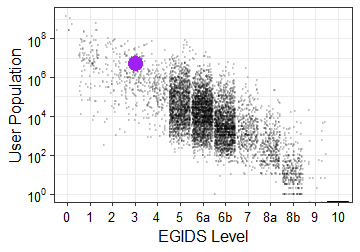
Full explanation
A language of Ghana
- ISO 639
- ewe
- Alternate Names
- Ebwe, Efe, Eibe, Eue, Eve, Gbe, Krepe, Krepi, Popo, Vhe
- Autonym
- Èʋegbe (Èwegbe)
- Population
- 3,820,000 in Ghana, all users. L1 users: 3,320,000 in Ghana (2013 UNSD), increasing. L2 users: 500,000. Total users in all countries: 5,525,320 (as L1: 5,025,320; as L2: 500,000).
- Location
- Eastern region: Askuma town area, west of Lake Volta; Greater Accra region: easternmost; Volta region: easternmost.
- Language Maps
- Eastern Ghana, Ghana, Togo
- Language Status
- 3 (Wider communication). Recognized language (1951, Laws of the Gold Coast, Vernacular Literature Board Ordinance, as amended by Ordinance No. 44). Widely used throughout southeastern Ghana and southern Togo, it is believed that the Éwé migrated south from Nigeria in the 13th century into the Tado region of present-day Togo. In the 18th century, they came in contact with Europeans and were involved in slave trade. Éwé is an official language in both Ghana and Togo. Éwé culture and tradition is rich in folklore, poetry, myths, and songs. Éwé is used in cultural activities, in commerce, weaving, education, farming, and fishing.
- Classification
- Niger-Congo, Atlantic-Congo, Volta-Congo, Kwa, Left Bank, Gbe
- Dialects
- Anglo (Anlo), Awuna, Hudu, Kotafoa. Westernmost language of the Gbe language subgroup.
- Typology
- SVO; postpositions; noun head initial; no articles; no passives; tense and aspect; comparatives; 26 consonant and 12 vowel phonemes; tonal (3 phonemic tones: high, mid, low); verb serialization; whistle speech reported.
- Language Use
- Vigorous. All domains. Also use English [eng]. Used as L2 by Akposo [kpo], Avatime [avn], Logba [lgq], Nawdm [nmz], Nkonya [nko], Nyagbo [nyb], Sekpele [lip], Selee [snw], Tafi [tcd], Tuwuli [bov].
- Language Development
- Literacy rate in L1: 30%–60%. Literacy rate in L2: 75%–100%. Taught in primary and secondary schools through grade 3 and as subject thereafter. Literature. Newspapers. Radio. TV. Dictionary. Grammar. Texts. Bible: 1911–2011.
- Writing
- Braille script [Brai]. Latin script [Latn], used since 1850s, primary usage.
- Other Comments
- Christian, traditional religion.
- Language Resources
- OLAC resources in and about Éwé
Also Spoken in
- Language Status
- Unestablished
- Other Comments
- Non-indigenous. View other languages of Liberia
Language Name
Éwé
User Population
3,560 in Liberia (2020).
- Location
- Widespread. Maritime and Plateaux regions: south of Atakpamé. Kpalimé, Notsé, and Tsévié are main centers.
- Dialects
- Adan, Agu, Anglo (Anlo, Awlan), Aveno, Be, Gbin, Ho, Kpelen, Togo, Vlin, Vo.
- Language Status
- 3 (Wider communication)
- Language Use
- Predominant language in the south. Also use French [fra]. Used as L2 by Adele [ade], Aja [ajg], Akebu [keu], Fon [fon], Ginyanga [ayg], Ifè [ife], Igo [ahl], Ikposo [kpo], Kabiyè [kbp], Kpessi [kef], Lama [las], Nawdm [nmz], Waci Gbe [wci].
- Language Development
- Literacy rate in L1: 10%–60%. Taught as subject in some secondary schools. Officially, Éwé is permitted to be the LOI for primary education, but this policy has never been fully implemented (2021 SIL).
- Other Comments
- Christian, traditional religion. View other languages of Togo
Language Name
Éwé
User Population
1,700,000 in Togo (2019).