
haw ISO 639
’Olelo Hawai’i Autonyms
Hawaiian
Visualizations
Language Cloud
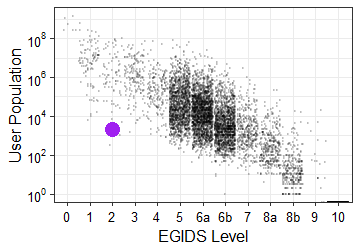
Full explanation
A language of United States
- ISO 639
- haw
- Alternate Names
- ’Olelo Hawai’i Makuahine
- Autonym
- ’Olelo Hawai’i
- Population
- 2,000 (Wurm 2007). 500 with Ni’ihau Island connections, another 500 in their 70s or 80s (1995 L. Wong). 8,000 can speak and understand it (1993 K. Haugen). In 1900 there were 37,000 L1 speakers (1995 Honolulu Advertiser). 2000 census lists 27,200. Ethnic population: 336,000. 237,000 in Hawaii (1996 Hawaii State Department of Health), 19% of the population (1990 Hawaii State Department of Health), and 99,000 ethnic Hawaiians on the United States mainland (1990 census), including 24,300 in California. Ethnic Hawaiians include 8,300 pure Hawaiian, 72,800 between 50% and 99% Hawaiian, 127,500 fewer than 50% Hawaiian in Hawaii (1984 Office of Hawaiian Affairs). In 1778 there were believed to have been more than 500,000 pure Hawaiians (1995 W. Harada).
- Location
- Hawaii: mainly Ni’ihau island, Island of Hawai’i, some on all other islands; some in every state.
- Language Maps
- United States of America, Alaska and Hawaii
- Language Status
- 2 (Provincial). Statutory provincial language in State of Hawaii (1978, Hawaii Constitution, Article 15(4)), co-official with English.
- Classification
- Austronesian, Malayo-Polynesian, Central-Eastern Malayo-Polynesian, Eastern Malayo-Polynesian, Oceanic, Central-Eastern Oceanic, Remote Oceanic, Central Pacific, East Fijian-Polynesian, Polynesian, Nuclear, East, Central, Marquesic
- Dialects
- None known. Lexical similarity: 79% with Rarotongan [rar], 77% with Tuamotuan [pmt], 76% with Tahitian [tah] (Elbert), 71% with Maori [mri] (Schütz), 70% with Marquesan [mqm], 64% with Rapa Nui [rap].
- Typology
- VSO; dual number; definite article; passives; causatives; 8 consonants, 10 vowels, 9 diphthongs; non-tonal; inclusive/exclusive pronouns.
- Language Use
- Young speakers are being trained in immersion courses and also very old speakers exist, but relatively few adult and middle-aged speakers, which results in lack of communication situations for active use. All domains. Some young people, all adults. 500 older adults; children 2 years old and older learn it as L2: 1,000 ages up to 15; 350 ages 15 to 25 (1997 R. Henze). Also use English [eng]. Also use Hawaii Pidgin [hwc].
- Language Development
- Taught in primary and secondary schools. The Hawaiian medium education system operates immersion schools from pre-K through grade 12. The College of Hawaiian Language at the University of Hawaii provides courses and programs entirely in Hawaiian, offering 2 Master’s degrees and a PhD. Dictionary. Grammar. Texts. Bible: 1868–2012.
- Writing
- Latin script [Latn].
- Other Comments
- Christian, traditional religion.
- Language Resources
- OLAC resources in and about Hawaiian