
icl ISO 639
Icelandic Sign Language
Visualizations
Language Cloud
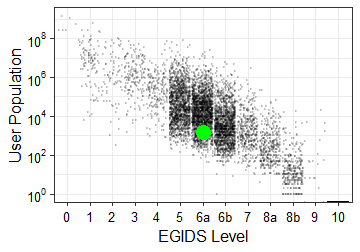
Full explanation
A language of Iceland
- ISO 639
- icl
- Alternate Names
- ITM, ÍTM, Íslenskt táknmál
- Population
- 1,525, all users. L1 users: 275 (Thorvaldsdóttir and Stefánsdóttir 2015). Estimated 250–300 deaf signers (less than 0.1%, Thorvaldsdóttir and Stefánsdóttir 2015:410). Other estimates: 250 (2014 EUD); 300 (Ministry of Education, Science and Culture); 1,400 (2014 IMB). L2 users: 1,250 (Thorvaldsdóttir and Stefánsdóttir 2015).
- Location
- Scattered, especially in and around Reykjavik.
- Language Maps
- Sign Languages of Europe
- Language Status
- 6a (Vigorous). Recognized language (2011, Act. No. 61, Articles 3, 5, 7, 9, 13), Establishes right of use for deaf people and their families; development and promotion; an Icelandic Sign Language Council; interpreters in courts.
- Classification
- Sign language, Deaf community sign language
- Dialects
- None known. Significant mutual intelligibility between Icelandic Sign Language and Danish Sign Language [dsl] (2014 R. Sverrisdóttir, McGregor et al 2015:197). Based on Danish Sign Language [dsl]. Until 1910, deaf children were sent to school in Denmark; but the languages have diverged since then (Aldersson and McEntee-Atalianis 2007). Lexical similarity: 66% with Danish Sign Language [dsl] (Aldersson and McEntee-Atalianis 2007). Fingerspelling system similar to French Sign Language [fsl].
- Typology
- SVO; One-handed fingerspelling.
- Language Use
- Used natively by hearing children of deaf parents and as L2 by many other hearing people (2014 R. Sverrisdóttir). The language is taught as a subject within one school in the language area. The language of introduction is Icelandic [isl] mixed with ÍTM. Home, school (mixed language use), media, community. Used by all. Neutral attitudes. Most also use Icelandic [isl], especially for writing.
- Language Development
- TV. Theater. Dictionary. Agency: Icelandic Association of the Deaf.
- Other Comments
- From 1820–1867, deaf children went to Copenhagen for school. Only deaf school in Iceland founded 1867 and closed 2002; currently deaf students are mainstreamed, with one elementary school specializing in deaf education (Stefánsdóttir et al 2019). Committee on national sign language. Research institute. The Communication Centre for the Deaf and Hard of Hearing provides interpreter services, ÍTM courses and consultation for families of deaf children. 25 working sign language interpreters (2019 EUD). Interpreter training began in 1985; government pays for 10 hours of interpreting per client per year (Stefánsdóttir et al 2019). Signed interpretation provided for college students. Interpreter training, ÍTM grammar and Deaf Studies are taught at the University of Iceland. Christian.