
ita ISO 639
Italiano Autonyms
Italian
Visualizations
Language Cloud
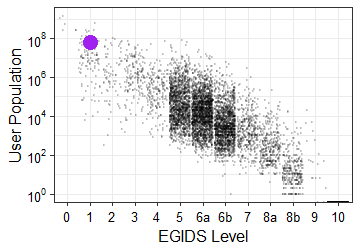
Full explanation
A language of Italy
- ISO 639
- ita
- Autonym
- Italiano
- Population
- 59,000,000 in Italy (European Commission 2012). Total users in all countries: 67,907,320 (as L1: 64,827,220; as L2: 3,080,100).
- Language Maps
- Andorra, France and Monaco, Liechtenstein and Switzerland
- Language Status
- 1 (National). Statutory national language (1999, Law No. 482, Article 1.1).
- Classification
- Indo-European, Italic, Romance, Italo-Western, Italo-Dalmatian
- Dialects
- Tuscan, Abruzzese, Pugliese (Salentino), Umbrian, Laziale, Central Marchigiano, Cicolano-Reatino-Aquilano, Molisano. Regional varieties coexist with the standard language; some are inherently unintelligible. Aquilano, Molisano, and Pugliese are very different from other Italian varieties. Piedmontese [pms] and Sicilian [scn] are distinct enough to be separate languages (1982 F. Agard). Venetian [vec] and Lombard [lmo] are also very different (1981 P. Cousson). The Napoletano dialect of Napoletano-Calabrese [nap] is reportedly unintelligible to standard Italian. Northern varieties are more similar to French and Occitan [oci] than to standard or southern varieties (1982 F. Agard, Vincent 1987). Lexical similarity: 89% with French [fra], 87% with Catalan [cat], 85% with Sardinian [srd], 82% with Spanish [spa], 78% with Ladin [lld] and Romansh [roh], 77% with Romanian [ron].
- Typology
- SVO; prepositions; gender (masculine/feminine); definite and indefinite articles; verb affixes mark person, number; passives; tense; comparatives; 23 consonant and 7 vowel phonemes; non-tonal; stress mostly on penultimate syllable.
- Language Use
- Most Italians use varieties along a continuum from standard to regional to local according to what is appropriate. Possibly nearly half the population do not use standard Italian as L1. Only 3% of Italy’s population could speak standard Italian when the nation unified in 1861. Some also use English [eng] (European Commission 2006). Some also use French [fra] (European Commission 2006). Also use Friulian [fur], in Friuli-Venezia Giulia region.
- Language Development
- Taught in all primary and secondary schools. Taught in all tertiary schools. Fully developed. Bible: 1471–1985.
- Writing
- Braille script [Brai], used since 1974. Latin script [Latn], primary usage.
- Language Resources
- OLAC resources in and about Italian
Also Spoken in
- Language Status
- 5 (Dispersed)
- Language Development
- Taught as subject in secondary schools.
- Other Comments
- Non-indigenous. View other languages of Albania
Language Name
Italian
User Population
7,870 in Albania (2017 J. Leclerc).
- Language Status
- 4 (Educational)
- Language Development
- Taught in some primary and secondary schools.
- Other Comments
- Non-indigenous. Three newspapers published and one radio station broadcast in Italian in Buenos Aires. Italian is widely taught in Argentina. View other languages of Argentina
Language Name
Italian
User Population
1,120,000 in Argentina (2018), based on nationality.
- Language Status
- 5 (Dispersed)
- Other Comments
- Non-indigenous. View other languages of Austria
Language Name
Italian
User Population
794,700 in Austria, all users. L1 users: 10,700 in Austria (2003 UNSD). L2 users: 784,000 (European Commission 2012).
- Location
- Widespread.
- Language Status
- 5 (Dispersed)
- Language Use
- Also use English [eng].
- Language Development
- Taught as subject in some primary and secondary schools.
- Other Comments
- Non-indigenous. During the early 20th century, European immigration was encouraged. Large numbers of Italian speakers were among those admitted. Italian remains as a heritage language. View other languages of Australia
Language Name
Italian
User Population
272,000 in Australia (2016 census).
- Language Status
- Unestablished
- Other Comments
- Non-indigenous. View other languages of Bosnia and Herzegovina
Language Name
Italian
User Population
3,600 in Bosnia and Herzegovina (2014 J. Leclerc).
- Language Status
- Unestablished
- Other Comments
- Non-indigenous. View other languages of Belgium
Language Name
Italian
User Population
279,000 in Belgium (2018 census), based on nationality.
- Location
- Scattered, in Minas Gerais, Rio Grande do Sul, São Paulo.
- Language Status
- 7 (Shifting)
- Language Use
- Shifting to Portuguese [por].
- Other Comments
- Non-indigenous. View other languages of Brazil
Language Name
Italian
User Population
39,300 in Brazil (2020 Registro Nacional Migratório no Brasil), based on nationality. Ethnic population: 22,000,000 (2020 S. Schwartzman).
- Language Status
- Unestablished
- Other Comments
- Non-indigenous. View other languages of Canada
Language Name
Italian
User Population
376,000 in Canada (2016 census).
- Location
- Graubünden and Ticino cantons.
- Language Status
- 1 (National)
- Language Development
- Taught in primary and secondary schools in Italian [ita] and Lombard (Ticino) [lmo] speaking areas. View other languages of Switzerland
Language Name
Italian
User Population
673,000 in Switzerland (2018 census).
- Language Status
- Unestablished
- Other Comments
- Non-indigenous. View other languages of Chile
Language Name
Italian
User Population
38,000 in Chile (2020 Joshua Project).
- Language Status
- Unestablished
- Other Comments
- Non-indigenous. View other languages of Czechia
Language Name
Italian
User Population
1,420 in Czechia (2011 census).
- Language Status
- Unestablished
- Other Comments
- Non-indigenous. View other languages of Germany
Language Name
Italian
User Population
647,000 in Germany (2021 census), based on nationality.
- Language Status
- Unestablished
- Other Comments
- Non-indigenous. View other languages of Denmark
Language Name
Italian
User Population
9,000 in Denmark (2020 census), based on nationality.
- Location
- Maekel region: Asmara area.
- Language Status
- 8b (Nearly extinct)
- Language Use
- Elderly only. Shifted to Tigrigna [tir].
- Other Comments
- Non-indigenous. View other languages of Eritrea
Language Name
Italian
User Population
A few monolinguals.
- Language Status
- Unestablished
- Language Use
- Used as L2 by Catalan [cat].
- Other Comments
- Non-indigenous. View other languages of Spain
Language Name
Italian
User Population
256,000 in Spain (2020 census), based on nationality.
- Language Status
- Unestablished
- Other Comments
- Non-indigenous. View other languages of Finland
Language Name
Italian
User Population
3,360 in Finland (2021 census).
- Location
- Auvergne-Rhône-Alpes and Provence-Alpes-Côte d’Azur regions: Nice, Provence, and Savoy.
- Language Status
- 5 (Dispersed)
- Language Use
- Also use French [fra].
- Other Comments
- Non-indigenous. View other languages of France
Language Name
Italian
User Population
829,000 in France (2008 census).
- Language Status
- Unestablished
- Other Comments
- Non-indigenous. View other languages of United Kingdom
Language Name
Italian
User Population
92,200 in United Kingdom (2011 census).
- Language Status
- Unestablished
- Other Comments
- Non-indigenous. View other languages of Greece
Language Name
Italian
User Population
7,700 in Greece (Leclerc 2020a), based on ethnicity.
- Location
- Istria county: northwest near Slovenia border, along west coast, Istrian peninsula.
- Language Status
- 2 (Provincial)
- Language Use
- Used as L2 by Venetian [vec].
- Language Development
- Taught in some primary schools, as part of the minority education program. View other languages of Croatia
Language Name
Italian
User Population
618,600 in Croatia, all users. L1 users: 18,600 in Croatia (2011 census). L2 users: 600,000 (European Commission 2006). Ethnic population: 37,000 (2016 G. Patanè).
- Language Status
- Unestablished
- Other Comments
- Non-indigenous. View other languages of Ireland
Language Name
Italian
User Population
2,210 in Ireland (2016 census).
- Language Status
- Unestablished
- Other Comments
- Non-indigenous. View other languages of Israel
Language Name
Italian
User Population
6,800 in Israel (Leclerc 2018a).
- Language Status
- Unestablished
- Other Comments
- Non-indigenous. View other languages of Lebanon
Language Name
Italian
User Population
6,520 in Lebanon (2020).
- Language Status
- Unestablished
- Language Development
- Taught as subject in secondary schools.
- Other Comments
- Non-indigenous. View other languages of Luxembourg
Language Name
Italian
User Population
18,400 in Luxembourg (2021).
- Language Status
- Unestablished
- Other Comments
- Non-indigenous. View other languages of Libya
Language Name
Italian
User Population
30,300 in Libya (2020).
- Location
- Widespread.
- Language Status
- 4 (Educational)
- Other Comments
- Non-indigenous. View other languages of Monaco
Language Name
Italian
User Population
7,110 in Monaco (2014).
- Language Status
- Unestablished
- Other Comments
- Non-indigenous. View other languages of Montenegro
Language Name
Italian
User Population
24,100 in Montenegro (2011 census), L2 users.
- Location
- Widespread.
- Language Status
- 5 (Dispersed)
- Language Use
- Some learn it from television.
- Language Development
- Taught as subject in secondary schools.
- Other Comments
- Non-indigenous. An official language of Malta until 1936. View other languages of Malta
Language Name
Italian
User Population
263,000 in Malta, all users. L1 users: 1,000 in Malta (2018). L2 users: 262,000 (European Commission 2012).
- Language Status
- Unestablished
- Other Comments
- Non-indigenous. View other languages of Mexico
Language Name
Italian
User Population
26,000 in Mexico (2021 Joshua Project), based on ethnicity.
- Language Status
- Unestablished
- Other Comments
- Non-indigenous. View other languages of Netherlands
Language Name
Italian
User Population
17,600 in Netherlands (2019).
- Language Status
- Unestablished
- Other Comments
- Non-indigenous. View other languages of Norway
Language Name
Italian
User Population
5,400 in Norway (2021 census), based on nationality.
- Language Status
- Unestablished
- Other Comments
- Non-indigenous. View other languages of New Zealand
Language Name
Italian
User Population
9,900 in New Zealand (2018 census).
- Language Status
- Unestablished
- Other Comments
- Non-indigenous. View other languages of Panama
Language Name
Italian
User Population
21,000 in Panama (2021 Joshua Project), based on ethnicity.
- Language Status
- Unestablished
- Other Comments
- Non-indigenous. View other languages of Poland
Language Name
Italian
User Population
7,730 in Poland (2013 UNSD).
- Language Status
- Unestablished
- Other Comments
- Non-indigenous. View other languages of Puerto Rico
Language Name
Italian
User Population
1,400 in Puerto Rico (2020).
- Language Status
- Unestablished
- Other Comments
- Non-indigenous. View other languages of Portugal
Language Name
Italian
User Population
5,990 in Portugal (2007 J. Leclerc).
- Location
- Timis county: historically in Transylvania region.
- Language Status
- 5 (Dispersed)
- Other Comments
- Non-indigenous. View other languages of Romania
Language Name
Italian
User Population
1,412,950 in Romania, all users. L1 users: 2,950 in Romania (2011 census). L2 users: 1,410,000 (European Commission 2012). Ethnic population: 3,200 (2011 census).
- Language Status
- Unestablished
- Other Comments
- Non-indigenous. View other languages of Serbia
Language Name
Italian
User Population
2,600 in Serbia (Leclerc 2020c).
- Language Status
- Unestablished
- Other Comments
- Non-indigenous. View other languages of Russian Federation
Language Name
Italian
User Population
83,200 in Russian Federation (2012 UNSD).
- Language Status
- Unestablished
- Other Comments
- Non-indigenous. View other languages of Sweden
Language Name
Italian
User Population
11,200 in Sweden (2020 census), based on nationality.
- Location
- Izola and Piran municipalities.
- Language Status
- 2 (Provincial)
- Language Use
- Used as L2 by Venetian [vec].
- Language Development
- Taught in primary and secondary schools in Italian-speaking areas.
- Other Comments
- Acknowledged as autochthonous communities and protected by the constitution. View other languages of Slovenia
Language Name
Italian
User Population
3,760 in Slovenia (2003 UNSD).
- Language Status
- 1 (National) View other languages of San Marino
Language Name
Italian
User Population
33,000 in San Marino (2020 Joshua Project).
- Location
- Scattered.
- Language Status
- 7 (Shifting)
- Language Use
- Lost official status in 2012. It is used mostly by the elderly, government officials, and in educated circles. Adults only. Shifting to Somali [som]. Used as L2 by Somali [som].
- Other Comments
- Non-indigenous. View other languages of Somalia
Language Name
Italian
User Population
6,500 in Somalia (2019).
- Language Status
- Unestablished
- Other Comments
- Non-indigenous. View other languages of Tunisia
Language Name
Italian
User Population
1,100 in Tunisia (2015 J. Leclerc).
- Language Status
- Unestablished
- Language Use
- Most also use English [eng].
- Other Comments
- Non-indigenous. View other languages of United States
Language Name
Italian
User Population
709,000 in United States (2015 census).
- Language Status
- Unestablished
- Other Comments
- Non-indigenous. View other languages of Uruguay
Language Name
Italian
User Population
89,900 in Uruguay (2016).
- Language Status
- 1 (National)
- Language Use
- Although most individuals in the Vatican State are temporary residents, speaking the languages of their native countries as their L1, Italian serves as the vehicular language and most speak it as their L2.
- Other Comments
- Non-indigenous. View other languages of Vatican State
Language Name
Italian
User Population
330 in Vatican State (2013).
- Language Status
- Unestablished
- Other Comments
- Non-indigenous. View other languages of South Africa
Language Name
Italian
User Population
20,000 in South Africa (2020 Joshua Project), based on ethnicity.
- Language Status
- Unestablished
- Other Comments
- Non-indigenous. View other languages of Zambia
Language Name
Italian
User Population
12,000 in Zambia (2017 J. Leclerc).