
jam ISO 639
Jamiekan Autonyms
Jamaican English Creole
Visualizations
Language Cloud
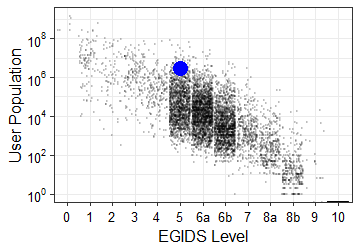
Full explanation
A language of Jamaica
- ISO 639
- jam
- Alternate Names
- Bongo Talk, Jamaican Patois, Jimiekn, Jimiekn Langwij, Jumieka Kruyol, Jumieka Languij, Jumieka Langwij, Jumieka Taak, Jumiekan, Jumiekan Kriol, Jumiekan languij, Langui Jumieka, Patois, Patua, Patwa, Patwah, Southwestern Caribbean English Creole, “Quashie Talk” (pej.)
- Autonym
- Jamiekan
- Population
- 2,670,000 in Jamaica (2001). Total users in all countries: 3,043,280.
- Location
- Widespread.
- Language Maps
- Costa Rica, Creole Languages of the Northern Caribbean, Panama
- Language Status
- 5* (Developing). De facto language of national identity.
- Classification
- Creole, English based, Atlantic, Western
- Dialects
- None known. The basilect and standard English mutually inherently unintelligible (Voegelin and Voegelin 1977, LePage 1960, Adler 1977). May be partly intelligible to speakers of Cameroon Pidgin [wes] and Krio [kri] of Sierra Leone, spoken by descendants of Jamaicans repatriated between 1787 and 1860. Inherently intelligible to creole speakers in Panama and Costa Rica. Reportedly very similar to Belize Creole [bzj], similar to Grenada, Saint Vincent, different from Tobago, very different from Guyana, Barbados, Leeward and Windward islands.
- Language Use
- Vigorous. Dominant language and gaining in prestige. Post-Creole continuum from distinct Creole to provincial English of town dwellers. Not widely accepted as a literary language. Positive attitudes. Most consider that they speak standard English [eng]. Also use English [eng]. Used as L2 by Konchri Sain [jcs].
- Language Development
- Literacy rate in L2: High in English. Literature. Dictionary. Grammar. NT: 2012.
- Writing
- Latin script [Latn].
- Other Comments
- There is a continuum of variation from basilectal Creole to acrolectal English of the educated. Linguistic influences from Akan [aka] languages in Ghana and Bantu languages (Hancock 1988).
- Language Resources
- OLAC resources in and about Jamaican English Creole
Also Spoken in
- Language Status
- Unestablished
- Other Comments
- Non-indigenous. View other languages of Bahamas
Language Name
Jamaican English Creole
User Population
6,180 in Bahamas (2018).
- Location
- Limón province: East of San José, principally railroad area between Limón and Siquirres, road south of Limón.
- Language Status
- 8a (Moribund)
- Language Use
- Older adults only. Most young people can understand Creole but either won’t use it or cannot. Conversations between most older adults are in Creole. Spanish [spa] is the first language of most children (Winkler 2013). Shifted to Spanish [spa]. Most also use English [eng], with limited comprehension.
- Language Development
- Creole is not considered proper for literary purposes. They consider Jamaican Creole more broken than their own.
- Other Comments
- Non-indigenous. Jamaican migrants settled in Limón and Panama middle of the 19th century, so those varieties are similar. Some say they do not understand Islander Creole English [icr] of San Andrés. View other languages of Costa Rica
Language Name
Southwestern Caribbean English Creole
User Population
55,100 in Costa Rica (Winkler 2013).
- Language Status
- Unestablished
- Other Comments
- Non-indigenous. View other languages of Dominican Republic
Language Name
Southwestern Caribbean English Creole
User Population
22,000 in Dominican Republic.
- Location
- Bocas del Toro province: Colón island; Colón province: Colón district; Panamá province: Rio Abajo in Panama City.
- Language Status
- 6a (Vigorous)
- Language Use
- Also use English [eng], formerly the medium of education. Also use Spanish [spa], as a medium of education. Used as L2 by Ngäbere [gym].
- Other Comments
- Non-indigenous. Ancestors came from Barbados and Jamaica in mid-19th century to work in fruit plantations, and later to build the railway and canal. Influences from both eastern and western Caribbean English Creole. View other languages of Panama
Language Name
Southwestern Caribbean English Creole
User Population
268,000 in Panama (2000).
- Location
- Florida: Miami area; Maryland: Baltimore; New York: New York City; Pennsylvania: Philadelphia.
- Language Status
- Unestablished
- Language Use
- Most also use English [eng].
- Other Comments
- Non-indigenous. View other languages of United States
Language Name
Southwestern Caribbean English Creole
User Population
22,000 in United States (2015 census). 4,390 in New York state.