
jya ISO 639
Jiarong
Visualizations
Language Cloud
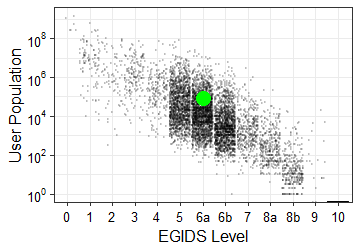
Full explanation
A language of China
- ISO 639
- jya
- Alternate Names
- Chiarong, Gyarong, Gyarung, Jarong, Jyarung, Keru, Rgyarong, dGyarung
- Population
- 83,000 (1999 Sun Hong Kai). 25,000 monolinguals. Ethnic population: 151,000 (Lin 1993). Includes 139,000 in Situ Jiarong, 12,200 in Chabao and Sidaba.
- Location
- Sichuan province: Dangba, Songgang, Suomo, Zhuokeji (Situ dialect); Aba county, Kehe and Rongan townships; Maerkang county, Chabao district, Dazang, Longerjia, and Shaerzong townships (Chabao); Maerkang county, Sidaba district, Caodeng, Kangshan, and Ribu townships (Sidaba); Rangtang county, between Shili and Wuyi and townships along middle Duke river; Seda county, a small town; Duke and Seda rivers’ confluence.
- Language Maps
- South Central China
- Language Status
- 6a (Vigorous). Language of recognized nationality: Tibetan.
- Classification
- Sino-Tibetan, Tibeto-Burman, Northeastern Tibeto-Burman, rGyalrongic
- Dialects
- Situ (Eastern Jiarong), Chabao (Central Jiarong, Dazang, Northern Jiarong), Showu (Caodeng, Sidaba, Western Jiarong), Japhug (Northeastern Jiarong), Tshobdun (Northwestern Jiarong). Varieties of Situ are: Ma’erkang, Lixian, Jinchuan (Dajin), and Xiaojin. Varieties of Sidaba are Caodeng and Ribu. Western and Northern phonology are fairly similar but differ greatly from Eastern. Dialects are likely three separate mutually unintelligible languages. Lexical similarity: 75% between Eastern and Northern Jiarong (with significant phonological differences), 60% between Western and Northern, 13% between the Situ dialect and Horpa [ero].
- Typology
- SOV; phonologically and lexically similar to Tibetan, grammatically more similar to Pumi and Qiang; complex consonant clusters; limited pitch contrast.
- Language Use
- Vigorous. All domains. Used by all. Positive attitudes, but intellectuals worry about diminishing use. Most also use Mandarin Chinese [cmn]. A few also use Central Tibetan [bod]. A few also use Northern Qiang [cng].
- Language Development
- Radio. Dictionary. Grammar. Texts. Bible portions: 1932.
- Writing
- Tibetan script [Tibt].
- Other Comments
- Traditional religion, Buddhist.
- Language Resources
- OLAC resources in and about Jiarong