
kdh ISO 639
Tem Autonyms
Tem
Visualizations
Language Cloud
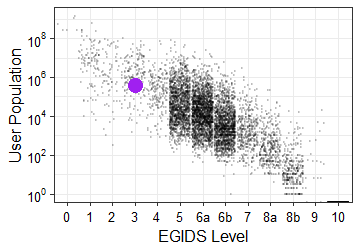
Full explanation
A language of Togo
- ISO 639
- kdh
- Alternate Names
- Cotocoli, Kotokoli, Temba, Tim, Timu
- Autonym
- Tem
- Population
- 234,000 in Togo (Gblem-Poidi and Kantchoa 2012). Total users in all countries: 390,200.
- Location
- Centrale region: Sotouboua and Tchaoudjo prefectures, Bafilo, Sokode, and Sotouboua; Kara region: Assoli and Bassar prefectures; Plateaux region: north Agou prefecture near Badou.
- Language Maps
- Benin, Eastern Ghana, Ghana, Togo
- Language Status
- 3 (Wider communication). Tem people emigrated from what is now Burkina Faso to Togo during the 16th and 17th centuries. Became widely used throughout Togo due to trade in local markets. Spoken throughout various parts of western Africa.
- Classification
- Niger-Congo, Atlantic-Congo, Volta-Congo, North, Gur, Central, Southern, Grusi, Eastern
- Language Use
- Vigorous. Home, neighborhood, market, work. Used by all. Positive attitudes. Also use French [fra]. Also use Standard Arabic [arb], at mosque. Used as L2 by Akaselem [aks], Anii [blo], Bago-Kusuntu [bqg], Ginyanga [ayg], Igo [ahl], Kabiyè [kbp], Kpessi [kef], Lama [las], Lukpa [dop], Northern Nago [xkb], Ntcham [bud].
- Language Development
- Literacy rate in L1: 1%–5%. Literature. Radio. Dictionary. Grammar. NT: 2019.
- Writing
- Arabic script, Naskh variant [Arab]. Latin script [Latn].
- Other Comments
- Muslim, Christian, traditional religion.
- Language Resources
- OLAC resources in and about Tem
Also Spoken in
- Location
- Widespread, especially north.
- Language Status
- 3 (Wider communication)
- Language Use
- Also use French [fra]. Used as L2 by Anii [blo], Foodo [fod], Kura Ede Nago [nqk].
- Language Development
- Literacy rate in L1: 1%–5%.
- Other Comments
- Non-indigenous. Muslim. View other languages of Benin
Language Name
Tem
User Population
22,200 in Benin (2018).
- Location
- Greater Accra region.
- Language Status
- 5 (Dispersed)
- Other Comments
- Non-indigenous. Muslim. View other languages of Ghana
Language Name
Tem
User Population
134,000 in Ghana (2013 UNSD).