
knf ISO 639
Uhula Autonyms
Mankanya
Visualizations
Language Cloud
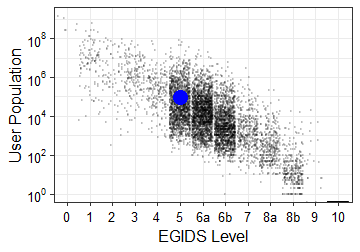
Full explanation
A language of Guinea-Bissau
- ISO 639
- knf
- Alternate Names
- Bola, Bramis, Mancang, Mancanha, Mankaañ, Mankanha
- Autonym
- Uhula
- Population
- 42,300 in Guinea-Bissau (2022 SIL). Ethnic population: 61,400 (2022 SIL). Total users in all countries: 85,360.
- Location
- Biombo region; Bolama region: Bolama island; Cacheu region: northwest of Bissau; Oio region; Quinara region: Rio Grande de Buba mouth; Tombali region: Cacine sector.
- Language Maps
- Guinea and Guinea-Bissau, Guinea-Bissau, Senegal and The Gambia
- Language Status
- 6b (Threatened).
- Classification
- Niger-Congo, Atlantic-Congo, Atlantic, Northern, Bak, Manjaku-Papel
- Dialects
- Uhula, Uwoh.
- Language Use
- Home, local market, friends, work, religion, music. Some of all ages. Growing shift towards Guinea-Bissau Creole [pov], particularly among children of mixed marriages, and those from families who moved to the capital of Bissau for education and economic opportunity (2022 I. Gruitibna). Neutral attitudes. Most also use Guinea-Bissau Creole [pov], as the language of interethnic unity, communication, and commerce. Many also use Portuguese [por], as the language of education and communication with foreigners. Some also use Balanta [ble]. Some also use Mandjak [mfv]. Some also use Papel [pbo].
- Language Development
- Literacy rate in L1: 10%. Literacy rate in L2: 70%. A national organization promotes adult L1 literacy and language use in churches. Literature. Radio. Videos. Dictionary. Grammar. NT: 2014.
- Writing
- Latin script [Latn].
- Other Comments
- Traditional religion, Christian.
- Language Resources
- OLAC resources in and about Mankanya
Also Spoken in
- Language Status
- Unestablished
- Other Comments
- Non-indigenous. View other languages of Gambia
Language Name
Mankanya
User Population
1,960 in Gambia (2016).
- Location
- Sédhiou region: Sédhiou city, Casamance river area; between Casamance and Soungrougrou rivers; Ziguinchior region: south along Casamance river, east and west of Ziguinchor city.
- Dialects
- Uhula, Uwoh.
- Language Status
- 5 (Developing)
- Language Use
- Home. Used by all. Positive attitudes. Many also use Wolof [wol], as the language of commerce and interethnic communication (Sarr and Thiaw 2012). Some also use French [fra], as the language of education and government (Diouf et al 2017). Also use Guinea-Bissau Creole [pov]. Also use Jola-Fonyi [dyo]. Also use Mandjak [mfv]. Used as L2 by Balanta-Ganja [bjt].
- Language Development
- Literacy rate in L1: 6%. Literacy rate in L2: 80% in French [fra]. Active cultural association involved in literacy.
- Other Comments
- Traditional religion, Christian. View other languages of Senegal
Language Name
Mankanya
User Population
41,100 in Senegal (2017), increasing. 3,000 monolinguals.