
lif ISO 639
यक्थुङ्पन (Yakthungpan) Autonyms
Limbu
Visualizations
Language Cloud
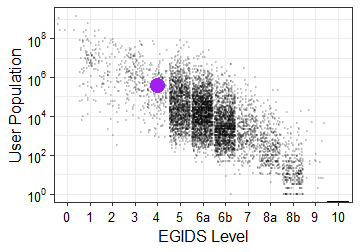
Full explanation
A language of Nepal
- ISO 639
- lif
- Alternate Names
- Yakthung Pan, Yakthungpan
- Autonym
- यक्थुङ्पन (Yakthungpan)
- Population
- 366,200 in Nepal, all users. L1 users: 344,000 in Nepal (2011 census), increasing. L2 users: 22,200 (2011 census). Relatively few monolinguals. Ethnic population: 387,000 (2011 census). Total users in all countries: 407,000 (as L1: 384,800; as L2: 22,200).
- Location
- Kosi province: east of the Arun river, north of the Mahendra Highway; Dhankuta, Ilam, Jhapa, Morang, Panchthar, Sankhuwasabha, Taplejung, and Terhathum districts.
- Language Maps
- Eastern Nepal, India, Map 4
- Language Status
- 6b (Threatened). Language of recognized indigenous nationality: Limbu.
- Classification
- Sino-Tibetan, Tibeto-Burman, Western Tibeto-Burman, Himalayan, Kiranti, Eastern
- Dialects
- Panchthare, Phedape, Taplejunge (Tamor Khola), Chaubise, Chhathare (Chhathar), Yanggrokke (Yanggruppe). Yanggrokke, Chaubise and Charkhole are minor variants of the Panthare dialect; Phedappe and Tamorkhole are similar. Chattare is less well understood by other dialect speakers. The dialect spoken in Sikkim, India, is same as Panthare. Intelligibility among all varieties 84% and higher.
- Typology
- SOV; postpositions; genitives, articles, adjectives, numerals before noun heads; noun head final; content question word in situ; bipolar question word final; maximum of 3 prefixes, 6 suffixes; affixes indicate case of noun phrases; verb affixes mark subjects, objects, indirect objects—obligatory; verbal affixation marks person and number; split ergativity; reflexes conjugated intransitively can be used as a kind of passive; passives and voice; antipassives; causatives; comparatives; 16 consonant and 13 vowel phonemes; V, CV, CVC, CCV, CCVC; nontonal.
- Language Use
- Vigorous. Limbu is not replaced in any domain, though children now speak more Nepali than Limbu (UNESCO 2002). A main group in eastern Nepal. Home, religion; mixed use: friends, work, education. Some young people, all adults, especially older adults and elderly. Some use among children, adolescents, and young adults. Positive attitudes. Panthare dialect is dominant in size, prestige, and language development. People prefer their own dialect, but are not negative toward others. Many also use Nepali [npi], especially among youth and educated. Some also use Yakkha [ybh], especially women due to intermarriage.
- Language Development
- Many adult speakers completed 5 years of school, and have good proficiency in Nepali [npi]. Motivation for development is high among all. Literacy programs in progress to teach Sirijonga script (Salminen 2007). Taught as subject in primary schools. Literature. Newspapers. Periodicals. Radio. TV. Videos. Dictionary. Grammar. Texts. NT: 2009.
- Writing
- Devanagari script [Deva], primary usage. Limbu (Kiranti, Sirijonga) script [Limb], dating from early 18th century.
- Other Comments
- Priestly high language, known by some older people and priests, is called Mundumban. Traditional religion, Christian.
- Language Resources
- OLAC resources in and about Limbu
Also Spoken in
- Location
- Assam state; Sikkim state: West district; West Bengal state: Darjeeling district.
- Language Status
- 4 (Educational)
- Language Use
- Many also use Nepali [npi]. Some also use English [eng].
- Language Development
- Taught as subject in primary and secondary schools from grade 6 in Sikkim state. Taught as subject in tertiary schools.
- Other Comments
- Traditional religion, Buddhist, Hindu. View other languages of India
Language Name
Limbu
User Population
40,800 in India (2011 census). Ethnic population: 177,000 (2007).