
mic ISO 639
L’nui’simk, Míkmawísimk Autonyms
Mi’kmaq
Visualizations
Language Cloud
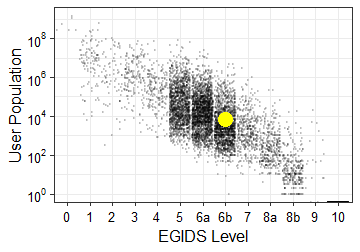
Full explanation
A language of Canada
- ISO 639
- mic
- Alternate Names
- Mi’gmaq, Mi’gmaw, Mi’gmawi’simg, Mi’kmaw, Micmac, Miigmao, Mikmak, Mikmaw, Mìgmaq, Mìkmaq
- Autonym
- L’nui’simk, Míkmawísimk
- Population
- 6,690 in Canada (2016 census), decreasing. No monolinguals. Ethnic population: 14,200 (1998 SIL). 1,500 are in mainland Nova Scotia, 4,000 on Cape Breton Island, Nova Scotia, 800 on Prince Edward Island and Lennox Island, 4,550 on the east coast of New Brunswick, 3,150 on the Gaspe Peninsula, Quebec, 200 in Newfoundland. Total users in all countries: 6,900.
- Location
- New Brunswick province: Big Cove, Burnt Church, Eel Ground, Eel River Bar, Fort Folly, Indian Island, Pabino Falls, and Red Bank; Newfoundland and Labrador province: Newfoundland Island, 1 settlement south of Millertown; Nova Scotia: Afton, Bear River, Shubenagadie, Pictou, Truro, and Yarmouth, on Cape Breton Island: Chapel Island, Eskasoni, Memberto, Waikoqomaq, and Wakmatkuq; Prince Edward Island province; Quebec province: Gesgapeqiaq, Gespe’q, and Listuguj on east Gaspé peninsula.
- Language Maps
- Canada, Northeastern United States of America
- Language Status
- 6b (Threatened). Language of recognized indigenous peoples: Abegweit, Acadia, Annapolis Valley, Bear River, Buctouche MicMac, Eel Ground, Eel River Bar, Elsipogtog, Esgenoopetitj, Eskasoni, Fort Folly, Glooscap, Indian Island, Micmac de Gespeg, Lennox Island, Listuguj Mi’gmaq Government, Membertou, Metepenagiag Mi’kmaq, Miawpukek, Micmacs of Gesgapegiag, Millbrook, Pabineau, Paqtnkek Mi’kmaw, Pictou Landing, Potlotek, Qalipu Mi’kmaq, Sipekne’katik, Wagmatcook, We’koqma’q.
- Classification
- Algic, Algonquian, Eastern Algonquian
- Dialects
- Northern Micmac, Southern Micmac, Listuguj. Generally dialects are intelligible, but there are lexical, inflectional, word order, and spelling differences.
- Typology
- Polysynthetic language; fairly free word order; 13 consonant and 11 vowel (6 short, 5 long) phonemes; non-tonal.
- Language Use
- In some communities, only older adults. Virtually extinct in 5 communities, 4 of which are in English-speaking areas (Shubenagadie, Truro, Eel River Bar, Pabineo Falls) and the 5th in French-speaking Gaspé, Quebec. In larger areas children tend to begin speaking some Micmac, except in Listuguj, where some families educate children in French. In communities such as Gesgapegiaq, use is more vigorous. Each community has a committee or group whose task is to help enhance the language and culture. Prayers, songs, readings. Some young people, all adults. Positive attitudes. All also use English [eng]. A few also use French [fra].
- Language Development
- Literacy rate in L1: 1%–17%. Literacy rate in L2: 50%–75%. 800 or more readers of Micmac, 200 write it. Taught as subject in most primary schools. Radio. Dictionary. Grammar. Texts. NT: 1874–1998.
- Writing
- Latin script [Latn]. Micmac Hieroglyphs (Kauder ideograms) script [Qabg], no longer in use.
- Other Comments
- Christian, traditional religion.
- Language Resources
- OLAC resources in and about Mi’kmaq
Also Spoken in
- Location
- Maine : north near Fort Fairfield; Massachusetts: Boston; scattered elsewhere.
- Language Status
- 6b (Threatened)
- Language Use
- Also use English [eng].
- Language Development
- Literacy rate in L1: 1%–5%. Literacy rate in L2: 50%–75%.
- Other Comments
- Non-indigenous. View other languages of United States
Language Name
Mi’kmaq
User Population
210 in United States (2015 census). 8,150 L1 speakers in Canada and the United States(Golla 2007). Ethnic population: 6,800 (Golla 2007).