
miq ISO 639
Mískitu Autonyms
Mískito
Visualizations
Language Cloud
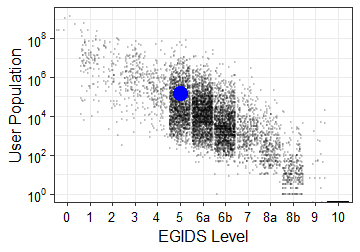
Full explanation
A language of Nicaragua
- ISO 639
- miq
- Alternate Names
- Marquito, Miskuto, Mosquito, Mísquito
- Autonym
- Mískitu
- Population
- 114,000 in Nicaragua (2009 UNSD). Ethnic population: 121,000 (2005 census). Total users in all countries: 143,000.
- Location
- Jinotega department; North Caribbean Coast Autonomous Region and South Caribbean Coast Autonomous Region; Bihmuna, Bocana de Paiwas, Bonanza, Karawala, Leimus, Prinzapolka, Puerto Cabeza city, Rosita, San Carlos (Río Coco), Sangnilaya, Sisin, Siuna, Tronquera, Wasla, Waspam; Río Coco area and Pearl lagoon to Black river coast and lowlands.
- Language Maps
- El Salvador and Honduras, Nicaragua
- Language Status
- 6b (Threatened). Recognized language (1993, Official Language Use, Atlantic Autonomous Regions, Law No. 162, Article 4).
- Classification
- Misumalpan
- Dialects
- Honduran Mískito (Mam), Tawira (Tauira), Baymuna (Baldam, Baymunana), Wanki (Wangki), Cabo (Kabo). Reportedly most similar to Mayangna [yan]. Wanki dialect spoken in Puerto Cabeza area; other dialects in settlements southwest.
- Typology
- SOV; articles, relatives after noun heads, word order distinguishes subject and object; verb affixes mark person and number; ergative; passive; CVC; nontonal.
- Language Use
- Some young people, all adults. Also use English [eng]. Also use Nicaragua English Creole [bzk]. Also use Spanish [spa]. Used as L2 by Mayangna [yan], Spanish [spa], Ulwa [ulw].
- Language Development
- Literacy rate in L1: 52%–58%. Taught in primary schools. Dictionary. Grammar. Bible: 1999.
- Writing
- Latin script [Latn].
- Other Comments
- Educational materials in Wanki. Christian.
- Language Resources
- OLAC resources in and about Mískito
Also Spoken in
- Location
- Colón department; Gracias a Dios and Olancho departments, south, Coco river watershed; coastal area, and northwest from Puerto Lempira.
- Language Status
- 5 (Developing)
- Language Use
- Used by all. Also use Spanish [spa].
- Language Development
- Literacy rate in L1: 1%–10%. Literacy rate in L2: 5%–25%. View other languages of Honduras
Language Name
Mískito
User Population
29,000 in Honduras (Rivas 1993). Ethnic population: 80,000 (2013 census).