
mri ISO 639
te reo Māori Autonyms
Maori
Visualizations
Language Cloud
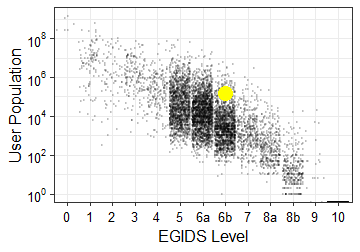
Full explanation
A language of New Zealand
- ISO 639
- mri
- Alternate Names
- New Zealand Maori, te reo
- Autonym
- te reo Māori
- Population
- 186,000 in New Zealand (2018 census). 100,000 understand but do not speak it (1995 Maori Language Commission); 30,000–50,000 adult speakers over 15 years old (1995). Ethnic population: 599,000 (2013 census). Total users in all countries: 197,700.
- Location
- Far north, North Island, east coast.
- Language Maps
- New Zealand
- Language Status
- 6b (Threatened). Statutory language of national identity (1987, Maori Language Act, No. 176, Article 3), legal domains mostly.
- Classification
- Austronesian, Malayo-Polynesian, Central-Eastern Malayo-Polynesian, Eastern Malayo-Polynesian, Oceanic, Central-Eastern Oceanic, Remote Oceanic, Central Pacific, East Fijian-Polynesian, Polynesian, Nuclear, East, Central, Tahitic
- Dialects
- North Auckland, South Island, Taranaki, Wanganui, Bay of Plenty, Rotorua-Taupo, Moriori. Formerly fragmented into regional dialects, some of which diverged quite radically from what became the standard dialect. Lexical similarity: 71% with Hawaiian [haw], 57% with Samoan [smo].
- Typology
- VSO; prepositions; noun head final; dual number; definite and indefinite articles; passives; 10 consonants, 10 vowels, 7 diphthongs; non-tonal; stress on first long vowel or diphthong.
- Language Use
- Until 20th century, Maori was spoken throughout New Zealand. There is a recent reluctance of the young generation to use Maori (Wurm 2007). Some young people, all adults. All also use English [eng] (Wurm 2007).
- Language Development
- 322 government-funded Maori language schools, including preschool. Grammar. Bible: 1858–1952.
- Writing
- Latin script [Latn].
- Other Comments
- Moriori dialect in Chatham Islands has no remaining speakers. Christian.
- Language Resources
- OLAC resources in and about Maori
Also Spoken in
- Language Status
- Unestablished
- Other Comments
- Non-indigenous. View other languages of Australia
Language Name
Maori
User Population
11,700 in Australia (2016 census).