
muk ISO 639
Mugom-Karmarong
Visualizations
Language Cloud
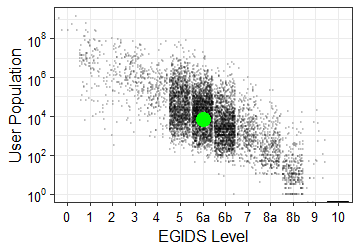
Full explanation
A language of Nepal
- ISO 639
- muk
- Alternate Names
- Mugom, Mugu Tibetan, Mugum
- Population
- 7,000 in Nepal (2011). census. 1,630 monolinguals (2002 UNESCO). Ethnic population: 7,000 (2011). Total users in all countries: 7,500.
- Location
- Karnali province: Mugu district, Mugum Karmarong municipality; Jumla district, Jumla.
- Language Maps
- India, Map 1, Western Nepal
- Language Status
- 6a (Vigorous). Language of recognized indigenous nationality: Mugali.
- Classification
- Sino-Tibetan, Tibeto-Burman, Western Tibeto-Burman, Bodish, Central Bodish, Central, gTsang
- Dialects
- Mugom (Moe-ket, Mugali, Mugomba, Mumbai-kat), Karmarong (Kamarongki, Kar-ket, Karani, Karmai-kat). Intelligibility 89%–93% between dialect speakers (possibly higher). Definitely sufficient to understand complex and abstract discourse. Reportedly similar to Humla [hut], Dolpo [dre], and Lhowa [loy]. Lexical similarity: more than 85% between dialects, 75% with Tibetan [bod].
- Typology
- SOV; postpositions; content q-word in situ; clause constituents indicated by case-marking; ergativity; no passives or voice; tonal.
- Language Use
- Vigorous. Home, friends; mixed use: Religion, work, education. Used by all. Positive attitudes. Some also use English [eng], especially children. Some also use Hindi [hin], especially men. Also use Central Tibetan [bod]. Also use Nepali [npi].
- Language Development
- Literacy rate in L2: Up to 22% in Nepali [npi]; men 30%, women 5%. Mugu District ranks very low in literacy among Nepal districts, especially among children and women. Strong affinity felt towards Tibetan [bod] and its writing system because of high lexical similarity. Literature. Newspapers.
- Writing
- Tibetan script [Tibt].
- Other Comments
- Karanis want recognition as a separate ethnic group. Mugalis may not accept materials written in Karani, and vice versa. Mugom value Nepali and English as a way to higher education. Mugalis see themselves a bit higher than Karanis, and are more influential as they travel and trade more. Buddhist.
- Language Resources
- OLAC resources in and about Mugom-Karmarong
Also Spoken in
- Location
- Himachal Pradesh state: Kinnaur, Dharmshala and Ladakh; Kullu, Manali.
- Language Status
- 6a (Vigorous)
- Language Use
- Youth born in India still use Mugom at home. Home, with friends. Used by all.
- Other Comments
- Non-indigenous. Migrate from Nepal temporarily for work, but many stay 20 to 30 years. View other languages of India
Language Name
Mugom
User Population
500 in India (2006 SIL). 75 families in India, 60 Mugom and 15 Karmarong. In addition, there are many seasonal workers.