
nya ISO 639
Chicheŵa Autonyms
Chichewa
Visualizations
Language Cloud
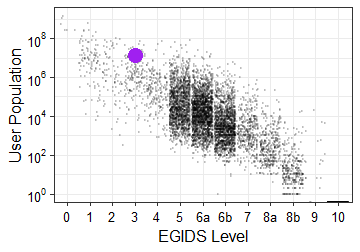
Full explanation
A language of Malawi
- ISO 639
- nya
- Alternate Names
- Chewa, Chinyanja, Nyanja, Nyanja-Chewa
- Autonym
- Chicheŵa
- Population
- 10,500,000 in Malawi (2020 World Factbook), based on ethnicity. 7,271,000 Chewa, 2,200,000 Ngoni, 678,000 Manganja, and 382,000 Nyanja (2020 World Factbook). Total users in all countries: 14,380,700.
- Location
- West central and southwest.
- Language Maps
- Malawi, Mozambique, Zambia
- Language Status
- 3 (Wider communication). De facto language of national identity. Originated in what is today the Democratic Republic of Congo, and brought to Malawi in the 14th or 15th century. Gained speakers when Dutch Reformed missionaries came to the Chewa area of Malawi in 1888 from South Africa. In 1968, was made an official language. Used in media and education.
- Classification
- Niger-Congo, Atlantic-Congo, Volta-Congo, Benue-Congo, Bantoid, Southern, Narrow Bantu, Central, N, Chewa-Nyanja (N.31)
- Dialects
- Chewa (Cheva, Chichewa, Sheva), Ngoni, Manganja (Cimanganja, Waganga), Nyasa, Peta (Cipeta, Malawi, Marave, Maravi). Manganja is also a Chewa-influenced dialect of Sena [swk].
- Typology
- SVO.
- Language Use
- Most Ngoni in Malawi speak the Chewa dialect or Tumbuka [tum]. Used as L2 by Kokola [kzn], Malawi Lomwe [lon], Malawian Sign Language [lws], Yao [yao].
- Language Development
- Taught in all primary schools in grades 1–4. Newspapers. Radio. Dictionary. Grammar. Bible: 1905–1998.
- Writing
- Braille script [Brai]. Latin script [Latn], primary usage.
- Other Comments
- Traditional religion, Christian.
- Language Resources
- OLAC resources in and about Chichewa
Also Spoken in
- Language Status
- 4 (Educational)
- Other Comments
- Non-indigenous. View other languages of Botswana
Language Name
Chichewa
- Language Status
- Unestablished
- Other Comments
- Non-indigenous. View other languages of Eswatini
Language Name
Chichewa
User Population
5,700 in Eswatini (2019).
- Location
- Central and Eastern provinces.
- Dialects
- Chewa (Cewa), Peta (Chipeta, Cipeta, Malawi, Marave, Maravi), Chingoni (Ngoni), Manganja (Waganga), Nyasa, Kunda.
- Language Status
- 4 (Educational)
- Language Use
- All domains. Used by all. Used as L2 by Yao [yao].
- Language Development
- Literacy rate in L1: 60%. Taught as subject in primary schools in grades 1–4.
- Other Comments
- Kunda dialect is distinct from Kunda [kdn] of Mozambique. View other languages of Zambia
Language Name
Chichewa
User Population
2,180,000 in Zambia (2010 census). 500,000 Chewa, 40,000 Kunda 1,640,000 Nyanja (2010 census). Ethnic population: 1,060,000 (2010 census). 930,000 Chewa, 83,500 Kunda, 50,800 Nyanja (2010 census).
- Location
- Mashonaland Central province; possible communities in Harare and other urban areas.
- Language Status
- 6a (Vigorous)
- Language Use
- Also use Ndebele [nde] (Hachipola 1998). Also use Shona [sna] (Hachipola 1998).
- Other Comments
- Non-indigenous. View other languages of Zimbabwe
Language Name
Chichewa
User Population
405,000 in Zimbabwe (2012).
- Location
- Niassa, Tete, and Zambezia provinces. Macanga district, Tete (Angoni and Chewa dialects); Niassa province: Lago and Sanga (Ngoni dialect); Niassa and Tete, along Lake Niassa (Nyanja dialect).
- Dialects
- Chewa (Cewa, Chichewa, Cicewa), Ngoni (Cingoni), Nyanja (Cinyanja), Angoni, Nyasa (Nyasa-Cewa).
- Language Status
- 5 (Dispersed)
- Language Use
- Used as L2 by Phimbi [phm], Sena [seh].
- Other Comments
- Ngoni people in Angonia District of Tete Province in western Mozambique have shifted to Nyanja. Traditional religion, Christian. View other languages of Mozambique
Language Name
Nyanja
User Population
1,290,000 in Mozambique (2017).