
ola ISO 639
Walungge
Visualizations
Language Cloud
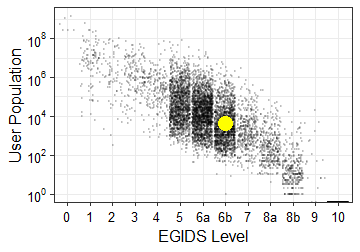
Full explanation
A language of Nepal
- ISO 639
- ola
- Alternate Names
- Halung, Halungge, Olangchung Gola, Waling, Walongchung Gola, Walung, Walungchung Gola, Walunggi Keccya
- Population
- 3,500 in Nepal (2019 SIL), decreasing. Mostly in original area. High language loss among those who have left the language area. Ethnic population: 4,000 (2019 SIL). Total users in all countries: 4,500.
- Location
- Kosi province: Sankhuwasabha district, Makalu municipality, Pawakhola village; Taplejung district, Mikwakhola municipality, Simbuk, and Papung villages; Phaktanglung municipality, Ghunsa, Lungthung, and Olangchung Gola villages; Sirijangha municipality, Yamphudin village.
- Language Maps
- Eastern Nepal, India, Map 4
- Language Status
- 6b (Threatened). Language of recognized indigenous nationality: Walung, Thudam, Topkegola.
- Classification
- Sino-Tibetan, Tibeto-Burman, Western Tibeto-Burman, Bodish, Central Bodish, Unclassified
- Dialects
- Walungge, Dhokpya (Topke Gola), Thudam. Reportedly similar to Tibetan dialect in Tingay District of Tibet. Lexical similarity: 71% with Lhasa Tibetan [bod], 68% with Dolpo [dre], Lhowa [loy], and Kyerung (Kyirong) [kgy], 66% with Lhomi [lhm] and Helambu Sherpa [scp], 64% with Nubri [kte], 57% with Jirel [jul], 55% with Sherpa [xsr]. Tokpe Gola (Dhokpya), Walungge, and Thudam all have lexical similarities above 60% with a range from 75%–85%.
- Typology
- SOV; postpositions; content q-word in situ; clause constituents indicated by case-marking; ergativity; no passives or voice; tonal (Thudam dialect).
- Language Use
- Many school age children are shifting to Nepali [npi] when they are educated outside their homeland. There is widespread growing bilingualism, but it may not be a stable Diglossia (2019 SIL). Home, Community, and Religion. Some young people, all adults. Positive attitudes. Also use Nepali [npi].
- Language Development
- Literacy rate in L2: 43%–72% in Nepali [npi]. Taught as subject in primary schools, in one school for teaching the Tibetan writing system starting from Class 1.
- Writing
- Tibetan script [Tibt].
- Other Comments
- Cut off from the Lhomi, with more links to Tibet. Some intermarriage with Lhomi and Tibetan. The people call themselves Sherpa. They do not have a specific language name which groups all varieties of the language together and distinguishes the language from other Tibetan languages. The word ‘Walungge’ comes from a name of one of the main villages in the language area. The Thudam are tenant farmers for the Walungge and Lhomi [lhm]. Buddhist.
- Language Resources
- OLAC resources in and about Walungge
Also Spoken in
- Location
- Xizang Autonomous Region: Dinggyê county, Xigazê prefecture, Goma, Luda, Rhiu, Salmaru, and Samdok villages.
- Language Status
- 6b (Threatened)
- Other Comments
- Non-indigenous. View other languages of China
Language Name
Walungge
- Location
- West Bengal state: Darjeeling district, Pankhabari area.
- Language Status
- 6b (Threatened)
- Other Comments
- Non-indigenous. View other languages of India
Language Name
Walungge
User Population
1,000 in India (Hattaway 2005).