
pkp ISO 639
Te Leo Wale Autonyms
Pukapuka
Visualizations
Language Cloud
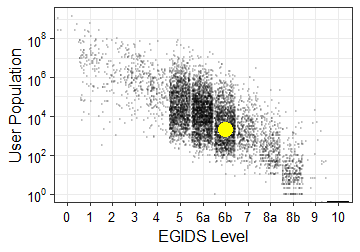
Full explanation
A language of Cook Islands
- ISO 639
- pkp
- Alternate Names
- Bukabukan, Pukapukan
- Autonym
- Te Leo Wale
- Population
- 700 in Cook Islands (2011 census), decreasing. 451 Pukapuka, 73 Nassau Island (Census), plus approximately 200 L1 speakers on Rarotonga (Pue village), less a few non-Pukapukan spouses most of whom speak Pukapuka as L2 (2015 M. Salisbury). Ethnic population: 700 (2011 census). Total users in all countries: 3,100.
- Location
- Nassau, Pukapuka, and Rarotonga.
- Language Maps
- Cook Islands
- Language Status
- 6b* (Threatened). Recognized language (2003, Te Reo Maori Act, Articles 2(b) and 4), Te Reo Maori is deemed to include Pukapukan as spoken or written in Pukapuka.
- Classification
- Austronesian, Malayo-Polynesian, Central-Eastern Malayo-Polynesian, Eastern Malayo-Polynesian, Oceanic, Central-Eastern Oceanic, Remote Oceanic, Central Pacific, East Fijian-Polynesian, Polynesian, Nuclear, Samoic-Outlier, Pukapuka
- Dialects
- None known. Not intelligible with Rarotongan [rar] or other Cook Islands languages. Related to Samoan [smo].
- Typology
- VSO, VOS.
- Language Use
- While it is spoken by almost everyone on the island including children and non-native spouses, it has few written resources and is in a diglossic relationship with Cook Islands Maori, the national language. Positive attitudes. All also use Cook Islands Maori [rar], in church and village meetings, in diglossic situations, and is taught in school. Most also use English [eng], only when communicating with outsiders and in written communication (emails, documents) in some government work situations.
- Writing
- Latin script [Latn].
- Other Comments
- Hurricane in 2007, ongoing migration to New Zealand and Australia. Christian.
- Language Resources
- OLAC resources in and about Pukapuka
Also Spoken in
- Location
- Primarily in Auckland, smaller communities in Hastings, Christchurch, Palmerston North, Porirua, Shannon.
- Language Status
- Unestablished
- Language Use
- Attempts are being made to preserve and revitalise the language: preschool language nests, after school activities, as well as private tertiary courses teaching the language and culture. Some young people, all adults, few children and adolescents.
- Other Comments
- Non-indigenous. Christian. View other languages of New Zealand
Language Name
Pukapuka
User Population
1,500 in New Zealand (2016 M. Salisbury). Ethnic population: 3,000 (2016 M. Salisbury).