
por ISO 639
Português Autonyms
Portuguese
Visualizations
Language Cloud
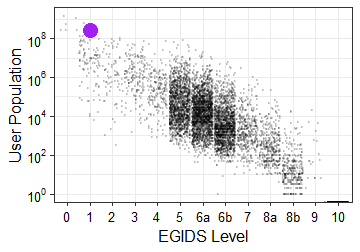
Full explanation
A language of Portugal
- ISO 639
- por
- Autonym
- Português
- Population
- 9,900,000 in Portugal (European Commission 2012). Total users in all countries: 258,292,150 (as L1: 232,866,150; as L2: 25,426,000).
- Location
- Widespread.
- Language Maps
- Andorra, France and Monaco, Portugal and Spain, Sao Tome & Principe
- Language Status
- 1 (National). Statutory national language (2005, Constitution, Article 11(3)).
- Classification
- Indo-European, Italic, Romance, Italo-Western, Western, Gallo-Iberian, Ibero-Romance, West Iberian, Portuguese-Galician
- Dialects
- Beiran (Beirão), Alentejan (Alentejano), Algarvian (Algarvio), Minhotan (Minhoto), Transmontan (Transmontano), Madeirese (Madeirense), Azorean (Açoriano), Estremenho, Brazilian Portuguese. Standard Portuguese of Portugal based on Estremenho dialect (Lisbon and Coimbra). Lexical similarity: 89% with Spanish [spa], 85% with Catalan [cat], 78% with Logudorese Sardinian [src], 75% with French [fra], 74% with Romansh [roh], 72% with Romanian [ron], 20% with English [eng].
- Typology
- SVO; prepositions; gender (masculine/feminine); definite and indefinite articles; verb affixes mark person, number; passives; tense; comparatives; 21 consonants, 13 vowels, 11 diphthongs; non-tonal.
- Language Use
- Some also use English [eng] (European Commission 2006). Some also use French [fra] (European Commission 2006). A few also use Kabuverdianu [kea], with some Portuguese children learning Kabuverdianu in the schools with predominant Cape Verdean populations. A few also use Spanish [spa] (European Commission 2006).
- Language Development
- Literacy rate in L2: 83%–84%. Taught in all primary and secondary schools. Taught in all tertiary schools. Fully developed. Bible: 1751–2017.
- Writing
- Braille script [Brai]. Latin script [Latn], primary usage.
- Other Comments
- Christian.
- Language Resources
- OLAC resources in and about Portuguese
Also Spoken in
- Location
- Scattered.
- Language Status
- 5 (Dispersed)
- Other Comments
- Non-indigenous. View other languages of Andorra
Language Name
Portuguese
User Population
11,700 in Andorra (2005 census). Ethnic population: 13,800 (2008 census).
- Language Status
- 1 (National)
- Language Use
- An African, Bantuïzed form of Portuguese [por] is slowly making inroads.
- Language Development
- Taught in all primary and secondary schools. Taught in most tertiary schools.
- Other Comments
- Non-indigenous. View other languages of Angola
Language Name
Portuguese
User Population
18,700,000 in Angola, all users. L1 users: 12,500,000 in Angola (2020). Includes 60,000 foreign L1 users. In cities, Portuguese increasingly L1 of younger generation. 60% of Angolans use Portuguese, 40% as L1. High level of urbanization due to civil war led to increased use. L2 users: 6,200,000 (2020).
- Language Status
- Unestablished
- Other Comments
- Non-indigenous. View other languages of Argentina
Language Name
Portuguese
User Population
58,000 in Argentina (2018), based on nationality.
- Language Status
- Unestablished
- Other Comments
- Non-indigenous. View other languages of Austria
Language Name
Portuguese
User Population
3,200 in Austria (2003 UNSD).
- Language Status
- Unestablished
- Other Comments
- Non-indigenous. View other languages of Australia
Language Name
Portuguese
User Population
48,900 in Australia (2016 census).
- Language Status
- Unestablished
- Other Comments
- Non-indigenous. View other languages of Belgium
Language Name
Portuguese
User Population
59,900 in Belgium (2020 census), based on nationality.
- Language Status
- Unestablished
- Other Comments
- Non-indigenous. View other languages of Bermuda
Language Name
Portuguese
User Population
2,300 in Bermuda (2019).
- Location
- Widespread.
- Language Status
- 1 (National)
- Language Development
- Literacy rate in L1: 71%. Taught in all primary and secondary schools. Taught in all tertiary schools.
- Other Comments
- Non-indigenous. Christian, traditional religion. View other languages of Brazil
Language Name
Portuguese
User Population
211,200,000 in Brazil, all users. L1 users: 201,000,000 in Brazil (2020). L2 users: 10,200,000 (2020).
- Language Status
- Unestablished
- Other Comments
- Non-indigenous. View other languages of Canada
Language Name
Portuguese
User Population
222,000 in Canada (2016 census).
- Language Status
- Unestablished
- Other Comments
- Non-indigenous. View other languages of Switzerland
Language Name
Portuguese
User Population
210,000 in Switzerland (2012 UNSD).
- Location
- Major cities.
- Dialects
- Português continental, Portugues brasileiro, Português africano.
- Language Status
- 1 (National)
- Language Use
- L1 Portuguese [por] tends to be limited to foreigners from other Portuguese speaking countries. Cape Verdeans learn Portuguese [por] as L2 in the national school system. Some do not attend school, and some fail to learn Portuguese adequately during their time in the school system. Education, government, formal functions, formal media communication.
- Language Development
- Literacy rate in L2: 83%. Taught in all primary and secondary schools. Taught in tertiary schools.
- Other Comments
- Non-indigenous. Christian. View other languages of Cape Verde Islands
Language Name
Portuguese
User Population
367,800 in Cape Verde Islands, all users. L1 users: 11,800 in Cape Verde Islands (2010 census). L2 users: 356,000 (2010 census).
- Language Status
- Unestablished
- Other Comments
- Non-indigenous. View other languages of Germany
Language Name
Portuguese
User Population
196,000 in Germany (2020 census), based on nationality.
- Language Status
- Unestablished
- Other Comments
- Non-indigenous. View other languages of Denmark
Language Name
Portuguese
User Population
6,930 in Denmark (2020 census), based on nationality.
- Location
- Castille and Leon autonomous community, Extremadura autonomous community.
- Language Status
- 5 (Dispersed) View other languages of Spain
Language Name
Portuguese
User Population
197,000 in Spain (2020 census), based on nationality.
- Language Status
- Unestablished
- Other Comments
- Non-indigenous. View other languages of Finland
Language Name
Portuguese
User Population
3,840 in Finland (2021 census).
- Location
- Scattered. Corsica region; Hauts-de-France region: Roubaix, near Belgian border; Île-de-France region: Paris; Nouvelle-Aquitaine region: Bordeaux; Occitania region: Toulouse.
- Language Status
- 5 (Dispersed)
- Language Use
- Also use French [fra].
- Language Development
- Literacy rate in L2: Relatively low.
- Other Comments
- Non-indigenous. View other languages of France
Language Name
Portuguese
User Population
959,000 in France (2008 census).
- Language Status
- Unestablished
- Other Comments
- Non-indigenous. View other languages of United Kingdom
Language Name
Portuguese
User Population
135,000 in United Kingdom (2011 census). England and Wales 133,000, Northern Ireland 2,260.
- Language Status
- Unestablished
- Language Use
- Used as L2 by Tekó [eme], Wayampi [oym].
- Other Comments
- Non-indigenous. View other languages of French Guiana
Language Name
Portuguese
User Population
14,200 in French Guiana (2019), based on ethnicity.
- Location
- Major cities.
- Dialects
- None known. Fa d’Ambu, a Portuguese-based creole, is spoken on Annobón island and northern Bioko island.
- Language Status
- 4 (Educational)
- Language Use
- Commerce, education. Used as L2 by Fa d’Ambu [fab].
- Other Comments
- Non-indigenous. The training of teachers, the broadcasting of Portuguese-language television programs and the creation of cultural centers are measures provided by Equatorial Guinea to promote the Portuguese language, one of the conditions for joining the Community of Portuguese-Speaking Countries (CPLP). Portuguese was made official in order to accomplish these goals. View other languages of Equatorial Guinea
Language Name
Portuguese
- Location
- Bissau region.
- Language Status
- 1 (National)
- Language Use
- With foreigners, written materials, higher education.
- Language Development
- Officially used in schools, but mostly poorly spoken. Taught in all primary and secondary schools.
- Other Comments
- Non-indigenous. Christian. View other languages of Guinea-Bissau
Language Name
Portuguese
User Population
396,450 in Guinea-Bissau, all users. L1 users: 5,450 in Guinea-Bissau (2018). L2 users: 391,000 (2015 UNSD).
- Language Status
- Unestablished
- Other Comments
- Non-indigenous. View other languages of Ireland
Language Name
Portuguese
User Population
4,620 in Ireland (2016 census).
- Location
- Goa state, Daman and Diu, Dadra and Nagar Haveli.
- Language Status
- 5 (Dispersed)
- Language Use
- Used as L2 by Indo-Portuguese [idb].
- Other Comments
- Non-indigenous. View other languages of India
Language Name
Portuguese
User Population
250,000 in India.
- Language Status
- Unestablished
- Other Comments
- Non-indigenous. View other languages of Jersey
Language Name
Portuguese
User Population
4,530 in Jersey (2016 World Factbook).
- Language Status
- Unestablished
- Other Comments
- Non-indigenous. View other languages of Jamaica
Language Name
Portuguese
User Population
6,000 in Jamaica (2021 Joshua Project), based on ethnicity.
- Language Status
- Unestablished
- Other Comments
- Non-indigenous. View other languages of Japan
Language Name
Portuguese
User Population
266,000 in Japan (Leclerc 2020b).
- Language Status
- Unestablished
- Other Comments
- Non-indigenous. View other languages of Lebanon
Language Name
Portuguese
User Population
2,960 in Lebanon (2020).
- Location
- Diekirch district: Diekirch canton; Luxembourg district: Esch-sur-Alzette canton, Luxembourg canton.
- Language Status
- 5 (Dispersed)
- Language Use
- A 1972 law that allows family unification for Portuguese immigrants in Luxembourg has turned the Portuguese community into a demographically self-sustaining unit, marking it out from other groups who did not wish to move permanently or who did not enjoy this special status.
- Language Development
- Taught as subject in secondary schools.
- Other Comments
- Non-indigenous. View other languages of Luxembourg
Language Name
Portuguese
User Population
99,700 in Luxembourg (2021).
- Location
- Scattered.
- Language Status
- 2 (Provincial)
- Language Development
- Taught in primary and secondary schools, in one school; taught as subject in other schools.
- Other Comments
- Non-indigenous. View other languages of China–Macao
Language Name
Portuguese
User Population
18,680 in China–Macao, all users. L1 users: 3,680 in China–Macao (2017 UNSD). L2 users: 15,000 (2016 census). Ethnic population: 11,700 (2016 census).
- Language Status
- Unestablished
- Other Comments
- Non-indigenous. View other languages of Malawi
Language Name
Portuguese
User Population
18,000 in Malawi (2020 Joshua Project), based on ethnicity.
- Language Status
- Unestablished
- Other Comments
- Non-indigenous. View other languages of Mexico
Language Name
Portuguese
User Population
5,100 in Mexico (2021 Joshua Project), based on ethnicity.
- Language Status
- 1 (National)
- Other Comments
- Non-indigenous. View other languages of Mozambique
Language Name
Portuguese
User Population
13,130,000 in Mozambique, all users. L1 users: 5,000,000 in Mozambique (2020). L2 users: 8,130,000 (2020).
- Language Status
- Unestablished
- Other Comments
- Non-indigenous. View other languages of Netherlands
Language Name
Portuguese
User Population
16,600 in Netherlands (2019).
- Language Status
- Unestablished
- Other Comments
- Non-indigenous. View other languages of Norway
Language Name
Portuguese
User Population
10,700 in Norway (2021 census), based on nationality.
- Language Status
- Unestablished
- Other Comments
- Non-indigenous. View other languages of New Zealand
Language Name
Portuguese
User Population
10,600 in New Zealand (2018 census).
- Location
- Boquerón deparment: Chaco region into Filadelfia.
- Language Status
- Unestablished
- Language Use
- Used as L2 by Chamacoco [ceg].
- Other Comments
- Non-indigenous. View other languages of Paraguay
Language Name
Portuguese
User Population
235,000 in Paraguay (2020).
- Language Status
- Unestablished
- Other Comments
- Non-indigenous. View other languages of Russian Federation
Language Name
Portuguese
User Population
11,200 in Russian Federation (2012 UNSD).
- Language Status
- Unestablished
- Other Comments
- Non-indigenous. View other languages of Sweden
Language Name
Portuguese
User Population
7,230 in Sweden (2020 census), based on nationality.
- Language Status
- 1 (National)
- Language Use
- Used by many as L1 until their late 20s, when they become more active in São Tomense society, and relearn Sãotomense [cri], the language of social networks above age 30.
- Language Development
- Taught in all primary and secondary schools.
- Other Comments
- Non-indigenous. São Tomé and Príncipe was settled in the 1500s by Portuguese Jews exiled by the Inquisition. Their descendents are ethnic mesticos. Later immigrants were servicais (Luso Africans from Mozambiqe, Angola, and Cape Verde). Most are L1 speakers of Portuguese [por]. View other languages of São Tomé e Príncipe
Language Name
Portuguese
User Population
197,000 in São Tomé e Príncipe, all users. L1 users: 68,000 in São Tomé e Príncipe (2016 World Factbook). L2 users: 129,000 (2016 World Factbook).
- Language Status
- 1 (National)
- Language Use
- Very few fluent users.
- Language Development
- Taught as subject in primary schools in grades 1 and 2 and gradually introduced as a language of instruction with Tetun Dili [tdt] in the higher grades (2021 SIL).
- Other Comments
- Non-indigenous. Christian. View other languages of East Timor
Language Name
Portuguese
User Population
5,700 in East Timor, all users. L1 users: 700 in East Timor (2011 UNSD). L2 users: 5,000 (2006 J. Leclerc).
- Location
- Massachusetts: Cambridge, Sommerville; Rhode Island: Fall River, New Bedford, Provincetown. Scattered elsewhere.
- Language Status
- Unestablished
- Language Use
- Many also use English [eng].
- Other Comments
- Non-indigenous. View other languages of United States
Language Name
Portuguese
User Population
693,000 in United States (2015 census).
- Language Status
- 5 (Dispersed)
- Other Comments
- Non-indigenous. View other languages of Uruguay
Language Name
Portuguese
User Population
30,600 in Uruguay (2016).
- Language Status
- Unestablished
- Other Comments
- Non-indigenous. View other languages of Venezuela
Language Name
Portuguese
User Population
254,000 in Venezuela (2005).
- Language Status
- Unestablished
- Other Comments
- Non-indigenous. View other languages of South Africa
Language Name
Portuguese
User Population
300,000 in South Africa (2010 Observatório da Emigração). Ethnic population: 1,850,000 (2020 Joshua Project).
- Language Status
- Unestablished
- Other Comments
- Non-indigenous. View other languages of Zambia
Language Name
Portuguese
User Population
5,000 in Zambia (2017 J. Leclerc).
- Language Status
- Unestablished
- Other Comments
- Non-indigenous. View other languages of Zimbabwe
Language Name
Portuguese
User Population
17,000 in Zimbabwe (2020 Joshua Project), based on ethnicity.