
rab ISO 639
चाम्लिङ (Caamliṅa) Autonyms
Chamling
Visualizations
Language Cloud
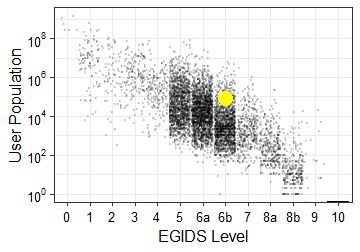
Full explanation
A language of Nepal
- ISO 639
- rab
- Alternate Names
- Camling, Chamlinge Rai, Rodong
- Autonym
- चाम्लिङ (Caamliṅa)
- Population
- 83,200 in Nepal, all users. L1 users: 76,800 in Nepal (2011 census), decreasing. L2 users: 6,400 (2011 census). Very few monolinguals. Total users in all countries: 83,200 (as L1: 76,800; as L2: 6,400).
- Location
- Kosi province: Bhojpur, Ilam, Jhapa, Khotang, Morang, Panchthar, Sankhuwasabha, Sunsari, and Udayapur districts.
- Language Maps
- Eastern Nepal, India, Map 4
- Language Status
- 6b (Threatened). Language of recognized indigenous nationality: Rai.
- Classification
- Sino-Tibetan, Tibeto-Burman, Western Tibeto-Burman, Himalayan, Kiranti, Eastern
- Dialects
- Balamtali, Ratanchhali, Halesi. Ratanchhali and Halesi dialects are similar to each other but Balamtali is very different. Reportedly most similar to Bantawa [bap] and Puma [pum] linguistically. Many speak a variety mixed with Nepali [npi].
- Typology
- SOV; postpositions; noun head final; no noun classes or genders; content q-word in situ; up to 2 prefixes, up to 7 suffixes; clause constituents indicated by case-marking; verbal affixation marks person and number; split and inverse ergativity; mixed tense-aspect; no passives or voice; nontonal; 28 consonant and 5 vowel phonemes.
- Language Use
- Home, religion; mixed use: friends, work. Some young people, all adults. Used as L2 by Puma [pum].
- Language Development
- Literature. Periodicals. Radio. Videos. Dictionary. Grammar. Texts. NT: 2015.
- Writing
- Devanagari script [Deva], recently developed.
- Other Comments
- Many ethnic subgroups, but linguistically homogeneous. Traditional religion, Hindu.
- Language Resources
- OLAC resources in and about Chamling
Also Spoken in
- Location
- Sikkim state: South district; West Bengal state: Darjeeling, Regu and other parts of the state.
- Language Status
- 6b (Threatened)
- Other Comments
- Non-indigenous. View other languages of India
Language Name
Chamling
User Population
Ethnic population: 10,500 (2011 census).