
rau ISO 639
Raute
Visualizations
Language Cloud
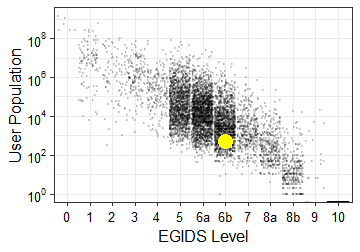
Full explanation
A language of Nepal
- ISO 639
- rau
- Alternate Names
- Boto boli, Khamchi, Ra’te, Raji, Rajwar, Rautya, Rautye
- Population
- 501, all users. L1 users: 460 (2011 census), decreasing. L2 users: 41 (2011 census). All nomadic Raute are monolingual.
- Location
- Sudur Pashchimanchal province: Dadeldhura district, Parashuram municipality.
- Language Maps
- Western Nepal
- Language Status
- 6b (Threatened). Language of recognized indigenous nationality: Raute.
- Classification
- Sino-Tibetan, Tibeto-Burman, Western Tibeto-Burman, Himalayan, Central Himalayan, Raute-Raji
- Dialects
- None known. There are reportedly many similarities with Raji [rji], but the relationship of Raute with and intelligibility between Rawat [jnl] and Raji [rji] needs further investigation. Lexical similarity: 80% with Rawat [jnl], 60% with Chepang [cdm], 25% with Kham.
- Typology
- SOV; postpositions; noun head final; no noun classes or gender; content q-word in situ; clause constituents indicated by case-marking; verbal affixation marks person and number; ergativity; both tense and aspect; nontonal; 35 consonant and 7 vowel phonemes.
- Language Use
- Home, friends, religion, work. Some young people, all adults. Used mostly by younger children, older adults, and elderly. Some use among adolescents and young adults. Some also use Hindi [hin], especially youth. Some also use Nepali [npi], especially settled Raute, youth.
- Language Development
- Dictionary. Texts.
- Writing
- Unwritten [Qaax].
- Other Comments
- The name may be of Tibeto-Burman origin, from ra- meaning human plus a person marker, -to or -te. Other scholars suggest it derives from the Sanskrit Indo-Aryan word raut from Sanskrit, rajaputra, prince. Rautes deem their language sacred and are linguistically conservative toward adopting non-Raute words or grammatical features. Only the headman communicates with outsiders. Traditional religion.
- Language Resources
- OLAC resources in and about Raute