
rav ISO 639
Sampang
Visualizations
Language Cloud
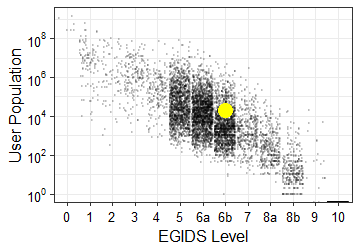
Full explanation
A language of Nepal
- ISO 639
- rav
- Alternate Names
- Sampang Gun, Sampang Gung, Sampang Kha, Sampange Rai, Sangpang, Sangpang Gun, Sangpang Gîn, Sangpang Kha
- Population
- 20,300, all users. L1 users: 18,300 (2011 census), decreasing. Phali dialect spoken by a few elderly speakers. L2 users: 2,000 (2011 census). No monolinguals.
- Location
- Kosi province: Bhojpur district, Shadananda municipality, Dingla bazaar; Khotang district, along Tap river, Baspani, Khartamcha, Patheka, and Phedi villages.
- Language Maps
- Eastern Nepal
- Language Status
- 6b (Threatened). Language of recognized indigenous nationality: Rai.
- Classification
- Sino-Tibetan, Tibeto-Burman, Western Tibeto-Burman, Himalayan, Kiranti, Eastern
- Dialects
- Phali, Khotang. Mutual intelligibility between the Khartamcha variety and the Patheka variety of the Khotang dialect is high. Mutual intelligibility between the Khotang and Phali Sampang dialect is difficult to estimate but appears to be low.
- Typology
- SOV; postpositions; noun head final; noun classes or gender; content q-word in situ; 1 prefix, up to 6 suffixes; word-order clause constituents; verbal affixation marks person and number; split ergativity; tense and aspect; passives and voice; nontonal; 28 consonant and 20 vowel phonemes; distinctive pitch-accent, nasal vowel phonemes and syllabic nasals; a prominent role is played in the grammar by an imperfective nominalizing suffix; in nominal morphology, the ergative structure is breaking down through the introduction of the Nepali [npi] oblique case marker.
- Language Use
- Mixed use: Home, friends, religion, work. Some young people, all adults. Positive attitudes. Also use Nepali [npi], with some shifting, especially men, educated, and younger people. Valued as a language of education.
- Language Development
- Literacy rate in L2: 80%. Literature. Dictionary. NT: 2008.
- Writing
- Devanagari script [Deva].
- Other Comments
- Traditional religion, Christian, Hindu.
- Language Resources
- OLAC resources in and about Sampang