
rmy ISO 639
Romani Autonyms
Romani, Vlax
Visualizations
Language Cloud
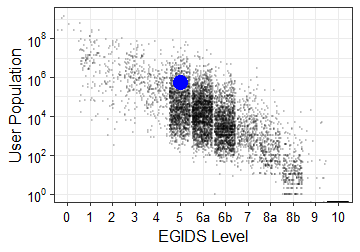
Full explanation
A language of Romania
- ISO 639
- rmy
- Alternate Names
- Danubian, Gypsy, Roma, Romanese, Tsigene, Vlax Romany
- Autonym
- Romani
- Population
- 246,000 in Romania (2011 census). 6,000,000 to 11,000,000 Roma worldwide (1987 I. Hancock). Ethnic population: 622,000 (2011 census). Total users in all countries: 575,050.
- Location
- Caras-Severin and Dolj counties: largest concentrations; scattered elsewhere south and southeast.
- Language Maps
- Bosnia and Herzegovina, Croatia and Slovenia, Hungary, Northern Moldova and Northeast Romania, Romania Romani Language Extent
- Language Status
- 6b (Threatened). Recognized language (2001, Local Public Administration Law No. 215, Article 40(7), others).
- Classification
- Indo-European, Indo-Iranian, Indo-Aryan, Intermediate Divisions, Western, Romani, Vlax
- Dialects
- Sedentar Romani, Romanian Kalderash (Coppersmith, Kalderari, Kalderash, Kelderash, Kelderashícko), Ukraine-Moldavia, Eastern Vlax Romani (Bisa), Churari (Churarícko, Sievemakers), Lovari (Lovarícko), Machvano (Machvanmcko), Serbo-Bosnian, Zagundzi, Sedentary Bulgarian, Ghagar, Gabor, Vallachian, Oltenian Ursari. Kalderash and Churari are occupational ethnonyms; Machvano is a geographical one. Other names are ‘Argintari’, silversmith and ‘Lingurari’, spoonmakers. Machvano and Serbian Kalderash have south Slavic superstratum; Lovari influenced by Hungarian [hun]. All 20 or more Vlax dialects are inherently intelligible; differences are mainly lexical and sociolinguistic (I. Hancock). A member of macrolanguage Romany [rom].
- Language Use
- Some children are not learning the language. Some young people, all adults.
- Language Development
- Printed or pre-recorded Romani language materials may not be understandable outside the country (or context of surrounding languages) in which they were produced. Grammar. Bible: 2008.
- Writing
- Cyrillic script [Cyrl], used by Kalderash dialect. Latin script [Latn].
- Other Comments
- Christian.
- Language Resources
- OLAC resources in and about Romani, Vlax
Also Spoken in
- Location
- Berat, Durrës, Elbasan, Korçë, Lezhë, Shkodër, Tiranë, and Vlorë counties.
- Dialects
- South Albanian (Fieri, Korça), North Albanian, Gurbet.
- Language Status
- 5 (Dispersed)
- Language Use
- Also use Gheg Albanian [aln]. Also use Tosk Albanian [als].
- Language Development
- Printed or pre-recorded Romani language materials may not be understandable outside the country (or context of surrounding languages) in which they were produced.
- Other Comments
- Non-indigenous. Ethnic groups are Ҫergar, Herli, Kurtof, and Meçkar. Christian. View other languages of Albania
Language Name
Romani, Vlax
User Population
4,000 in Albania (2012 census). Ethnic population: 8,300 (2012 census).
- Dialects
- Russian Kalderash.
- Language Status
- Unestablished
- Language Development
- Printed or pre-recorded Romani language materials may not be understandable outside the country (or context of surrounding languages) in which they were produced.
- Other Comments
- Non-indigenous. View other languages of Argentina
Language Name
Romani, Vlax
User Population
59,000 in Argentina (2018), based on nationality.
- Location
- Burgenland state: Oberwart district and Oberwart city.
- Dialects
- Austrian Lovari.
- Language Status
- 6b (Threatened)
- Language Development
- Printed or pre-recorded Romani language materials may not be understandable outside the country (or context of surrounding languages) in which they were produced.
- Other Comments
- Non-indigenous. View other languages of Austria
Language Name
Romani, Vlax
- Location
- Scattered.
- Dialects
- Serbo-Bosnian (Machvano, Machwaya), Kalderash, Southern Vlax, Gurbet.
- Language Status
- 5 (Dispersed)
- Language Development
- Printed or pre-recorded Romani language materials may not be understandable outside the country (or context of surrounding languages) in which they were produced.
- Other Comments
- Non-indigenous. Christian. View other languages of Bosnia and Herzegovina
Language Name
Romani, Vlax
User Population
4,000 in Bosnia and Herzegovina (2012 R. Hasic).
- Location
- Sofiya province: Ihtiman.
- Dialects
- Ihtiman.
- Language Status
- 5 (Dispersed)
- Language Use
- Also use Bulgarian [bul].
- Language Development
- Printed or pre-recorded Romani language materials may not be understandable outside the country (or context of surrounding languages) in which they were produced.
- Other Comments
- Non-indigenous. Christian. View other languages of Bulgaria
Language Name
Romani, Vlax
User Population
1,830 in Bulgaria (2011 census).
- Location
- Pernambuco state.
- Dialects
- Russian Kalderash.
- Language Status
- Unestablished
- Language Use
- All also use Portuguese [por].
- Language Development
- Printed or pre-recorded Romani language materials may not be understandable outside the country (or context of surrounding languages) in which they were produced.
- Other Comments
- Non-indigenous. View other languages of Brazil
Language Name
Romani, Vlax
User Population
20,000 in Brazil (2021 Joshua Project), based on ethnicity.
- Language Status
- Unestablished
- Language Development
- Printed or pre-recorded Romani language materials may not be understandable outside the country (or context of surrounding languages) in which they were produced.
- Other Comments
- Non-indigenous. Christian. View other languages of Colombia
Language Name
Romani, Vlax
User Population
4,850 in Colombia (2005 census). Several hundred thousand throughout Latin America (Hancock 1984a).
- Location
- Scattered.
- Dialects
- Lallere.
- Language Status
- 5 (Dispersed)
- Language Development
- Printed or pre-recorded Romani language materials may not be understandable outside the country (or context of surrounding languages) in which they were produced.
- Other Comments
- Non-indigenous. Ethnic group: Sasítka Romá. Christian. View other languages of Czechia
Language Name
Romani, Vlax
User Population
8,070 in Czechia (2011 census).
- Location
- Scattered.
- Dialects
- Lovari, Kalderash.
- Language Status
- Unestablished
- Language Use
- Also use Standard German [deu].
- Language Development
- Printed or pre-recorded Romani language materials may not be understandable outside the country (or context of surrounding languages) in which they were produced.
- Other Comments
- Non-indigenous. Christian. View other languages of Germany
Language Name
Romani, Vlax
User Population
5,000 in Germany. 2,500 Lovari, 2,500–4,000 Kalderash.
- Dialects
- Kalderash.
- Language Status
- Unestablished
- Language Use
- Also use Spanish [spa].
- Language Development
- Printed or pre-recorded Romani language materials may not be understandable outside the country (or context of surrounding languages) in which they were produced.
- Other Comments
- Non-indigenous. View other languages of Spain
Language Name
Romani, Vlax
User Population
1,000 in Spain (2000).
- Dialects
- Kalderash, Lovari.
- Language Status
- Unestablished
- Language Use
- Also use French [fra].
- Language Development
- Printed or pre-recorded Romani language materials may not be understandable outside the country (or context of surrounding languages) in which they were produced.
- Other Comments
- Non-indigenous. Christian. View other languages of France
Language Name
Romani, Vlax
User Population
10,000 in France. 8,000 Kalderash, 2,000 Lovari.
- Location
- Attica region: Ajia Varvara, suburb of Athens; Epirus region: Parakalamos; Thessaly region: Karditsa regional unit, Sofades; Trikala regional unit.
- Dialects
- Lovari, Grekurja (Greco), Kalpazea, Filipidzía, Xandurja. Grekurja is probably Turkish [tur] influenced, distinct from Greek Romani dialect of Balkan Romani [rmn] (I. Hancock).
- Language Status
- 5 (Dispersed)
- Language Use
- Also use Greek [ell], especially the settled population.
- Language Development
- Printed or pre-recorded Romani language materials may not be understandable outside the country (or context of surrounding languages) in which they were produced.
- Other Comments
- Non-indigenous. Nonsettled Gypsies are called Yifti. Distinct from Rumanovlach, a variety of Romanian. Christian. View other languages of Greece
Language Name
Romani, Vlax
User Population
1,000 in Greece.
- Location
- Bács-Kiskun, Baranya, Békés, and Csongrád-Csanád counties.
- Dialects
- Lovari (Hungarian Lovari), Cerhari.
- Language Status
- 4 (Educational)
- Language Use
- Also use Hungarian [hun].
- Language Development
- Printed or pre-recorded Romani language materials may not be understandable outside the country (or context of surrounding languages) in which they were produced. Taught as subject in primary and secondary schools.
- Other Comments
- Non-indigenous. View other languages of Hungary
Language Name
Romani, Vlax
User Population
54,300 in Hungary (2011 census). Ethnic population: 309,000 (2011 census).
- Location
- Major cities.
- Dialects
- Kalderash (Italian Kalderash), Lovari, Italian Xoraxane.
- Language Status
- 5 (Dispersed)
- Language Use
- Also use Italian [ita].
- Language Development
- Printed or pre-recorded Romani language materials may not be understandable outside the country (or context of surrounding languages) in which they were produced.
- Other Comments
- Non-indigenous. Christian. View other languages of Italy
Language Name
Romani, Vlax
User Population
4,000 in Italy. 1,000–3,000 Kalderash, 1,000 Lovari.
- Location
- Bitola, Dolneni, Ohrid, Prilep, and Resen municipalities.
- Dialects
- Gurbet (Das, Džambazi).
- Language Status
- 6a (Vigorous)
- Language Use
- Also use Macedonian [mkd].
- Language Development
- Printed or pre-recorded Romani language materials may not be understandable outside the country (or context of surrounding languages) in which they were produced.
- Other Comments
- Non-indigenous. View other languages of North Macedonia
Language Name
Romani, Vlax
- Location
- Oaxaca state.
- Dialects
- Mexican Vlax.
- Language Status
- 5 (Dispersed)
- Language Use
- Also use Spanish [spa].
- Language Development
- Printed or pre-recorded Romani language materials may not be understandable outside the country (or context of surrounding languages) in which they were produced.
- Other Comments
- Non-indigenous. View other languages of Mexico
Language Name
Romani, Vlax
User Population
5,000 in Mexico (1993).
- Dialects
- Kalderash, Lovari.
- Language Status
- Unestablished
- Language Use
- Also use Dutch [nld].
- Language Development
- Printed or pre-recorded Romani language materials may not be understandable outside the country (or context of surrounding languages) in which they were produced.
- Other Comments
- Non-indigenous. Christian. View other languages of Netherlands
Language Name
Romani, Vlax
User Population
1,000 in Netherlands. 500 Kalderash, 500 Lovari.
- Location
- Oslo county.
- Dialects
- Lovari (Norwegian Lovari).
- Language Status
- 5 (Dispersed)
- Language Use
- Also use Norwegian [nor].
- Language Development
- Literacy rate in L1: 30%–60%. Literacy rate in L2: 75%–100%. Printed or pre-recorded Romani language materials may not be understandable outside the country (or context of surrounding languages) in which they were produced.
- Other Comments
- Non-indigenous. Christian. View other languages of Norway
Language Name
Romani, Vlax
User Population
500 in Norway (Johnstone 1993). Ethnic population: 3,500.
- Location
- Scattered.
- Dialects
- Lovari (Polish Lovari).
- Language Status
- 5 (Dispersed)
- Language Use
- Most also use Polish [pol].
- Language Development
- Printed or pre-recorded Romani language materials may not be understandable outside the country (or context of surrounding languages) in which they were produced.
- Other Comments
- Non-indigenous. Christian. View other languages of Poland
Language Name
Romani, Vlax
User Population
5,000 in Poland.
- Location
- Scattered.
- Dialects
- Kalderash.
- Language Status
- 5 (Dispersed)
- Language Use
- All also use Portuguese [por], as the language of education, government, business, and upward mobility.
- Language Development
- Printed or pre-recorded Romani language materials may not be understandable outside the country (or context of surrounding languages) in which they were produced.
- Other Comments
- Non-indigenous. Christian. View other languages of Portugal
Language Name
Romani, Vlax
User Population
500 in Portugal.
- Location
- Widespread.
- Dialects
- Lovari, Kalderash (Serbian Kalderash), Gurbet (Dzambazi, Gurbetsky).
- Language Status
- 6a (Vigorous)
- Language Use
- Also use Serbian [srp].
- Language Development
- Printed or pre-recorded Romani language materials may not be understandable outside the country (or context of surrounding languages) in which they were produced.
- Other Comments
- Non-indigenous. View other languages of Serbia
Language Name
Romani, Vlax
- Location
- Scattered.
- Dialects
- Central Vlax Romani, Kalderash (Kelderash, Russian Kalderash), Lovari (Chokeshi Lovari). Russian Kalderash influenced by east Slavic, mainly Russian [rus] (I. Hancock).
- Language Status
- 6b (Threatened)
- Language Use
- Also use Russian [rus].
- Language Development
- Printed or pre-recorded Romani language materials may not be understandable outside the country (or context of surrounding languages) in which they were produced.
- Other Comments
- Non-indigenous. Vlax speakers from Russia are called Rusurja. Ethnic groups: Sárvi (left-bank Ukraine), Volóxuja (right-bank Ukraine), Chache (Moldavia), Kalderari (Moldavia, Ukraine, Odessa, Transcarpathia), Lovári (Ukraine). About 300,000 Gypsies from the former Soviet Union speak a variety of Romani, Lomavren, or Domari as L1 or L2 (Gunnemark and Kenrick 1985). Christian. View other languages of Russian Federation
Language Name
Romani, Vlax
User Population
128,000 in Russian Federation (2010 census). Census includes all Romani languages. Ethnic population: 205,000 (2010 census).
- Location
- Stockholm.
- Dialects
- Kalderash (Taikon Kalderash), Lovari, Machvano, Gurbet.
- Language Status
- 6b (Threatened)
- Language Development
- Printed or pre-recorded Romani language materials may not be understandable outside the country (or context of surrounding languages) in which they were produced.
- Other Comments
- Non-indigenous. Christian. View other languages of Sweden
Language Name
Romani, Vlax
User Population
12,000 in Sweden (2020 Joshua Project), based on ethnicity.
- Location
- Scattered.
- Dialects
- Lovari, Kalderash (Kaldarári), Slovak Bougesti.
- Language Status
- 5 (Dispersed)
- Language Use
- Also use Slovak [slk].
- Language Development
- Printed or pre-recorded Romani language materials may not be understandable outside the country (or context of surrounding languages) in which they were produced.
- Other Comments
- Non-indigenous. Christian. View other languages of Slovakia
Language Name
Romani, Vlax
- Location
- Odessa and Zakarpattia regions.
- Dialects
- Central Vlax Romani, Kalderash, Ukrainian Vlax.
- Language Status
- 6b (Threatened)
- Language Use
- Also use Ukrainian [ukr].
- Language Development
- Printed or pre-recorded Romani language materials may not be understandable outside the country (or context of surrounding languages) in which they were produced.
- Other Comments
- Non-indigenous. Vlax speakers from Russia are called Rusurja. Ethnic groups: Sárvi (left-bank Ukraine), Volóxuja (right-bank Ukraine), Chache (Moldavia), Kalderari (Moldavia, Ukraine, Odessa, Transcarpathia), Lovári (Ukraine). Christian. View other languages of Ukraine
Language Name
Romani, Vlax