
sav ISO 639
Saafi-Saafi Autonyms
Saafi-Saafi
Visualizations
Language Cloud
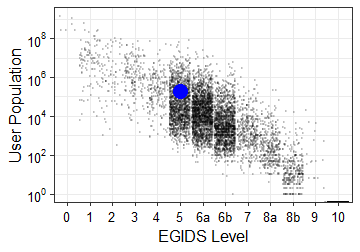
Full explanation
A language of Senegal
- ISO 639
- sav
- Alternate Names
- Saafen, Saafi, Safen, Safi, Safi-Safi, Sereer Saafen, Serer-Safen, Serere-Saafen
- Autonym
- Saafi-Saafi
- Population
- 200,000 (2012), increasing.
- Location
- Thiès region: between Nguekikh, Popenguine, and Thiès; Dakar region: airport area; 60 villages: 43 are over 80% Saafi, 8 are under 50%.
- Language Maps
- Senegal and The Gambia
- Language Status
- 5 (Developing). Recognized language (2005, Decree No. 2005-989 of 21 October).
- Classification
- Niger-Congo, Atlantic-Congo, Atlantic, Northern, Cangin
- Dialects
- Boukhou, Sebikotane, Sindia, Hasab, Diobass. Dialects named after villages and a zone (Diobass). Lexical similarity: 74% with Noon [snf], Lehar [cae], and Paloor [fap]; 68% with Ndut [ndv]; 22% with Serer-Sine [srr].
- Typology
- SVO; nontonal.
- Language Use
- Vigorous. Most domains. Used by all. Children initially monolingual. Positive attitudes. Most also use French [fra], as the language of education and government (Diouf et al 2017). Most also use Wolof [wol], as the language of commerce and interethnic communication (Sarr and Thiaw 2012). Also use Paloor [fap]. Also use Pulaar [fuc]. Also use Serer-Sine [srr]. Used as L2 by Ndut [ndv], Paloor [fap].
- Language Development
- Literacy rate in L1: 1%. Literacy rate in L2: 40% French [fra], 10% Arabic [arb]. Desire for Saafi-Saafi literature. 85 literacy classes of various types. Literature. Radio. Bible portions: 2020.
- Writing
- Arabic script, Naskh variant [Arab]. Latin script [Latn].
- Other Comments
- Families in Dakar may lose L1; the next generation will no longer consider itself Saafi. Often identified by themselves and the majority population as Serer, which is a widely used name for a cultural or linguistic group which includes the Serer-Sine language and the 5 Cangin languages. Muslim, Christian, traditional religion.
- Language Resources
- OLAC resources in and about Saafi-Saafi