
shn ISO 639
လိၵ်ႈတႆး (Lik Tai) Autonyms
Shan
Visualizations
Language Cloud
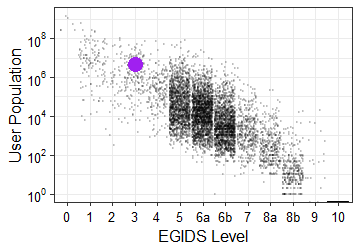
Full explanation
A language of Myanmar
- ISO 639
- shn
- Alternate Names
- Burmese Shan, Great Thai, Sam, Sha, Shan Bama, Shan Gyi, Tai, Tai Long, Tai Luang, Tai Shan, Tai Yai, Tai-Lon, Thai Yai, “Ngeo” (pej.), “Ngiao” (pej.), “Ngiaw” (pej.), “Ngio” (pej.), “Ngiow” (pej.)
- Autonym
- လိၵ်ႈတႆး (Lik Tai)
- Population
- 4,590,000 in Myanmar (Leclerc 2017d). Total users in all countries: 4,685,000.
- Location
- Kachin state: Mansi and Mogaung townships, Bhamo, Mohnyin, west Momauk, and south Myitkyina; Kayah state: Loikaw; Mandalay region: assorted north border areas; Sagaing region: Homalin and Tamu townships; Shan state: north in Konkyan, Muse, and Nanhkan townships, to south in Hsihseng, Langko, Mawkwa, and Mongpan townships; southeast in Matman, Mongkhet, Monghpyak, Mongyang, and Mongyawng townships. Myanmar-Yunnan border, Mu’ang Mao Long and Namkham (Tai Mao dialect).
- Language Maps
- Eastern Central Myanmar, Northern Myanmar, Northern Thailand, Southwestern China
- Language Status
- 3 (Wider communication). The Shan people migrated from Yunnan, China. Their presence in modern-day Burma dates back to the 10th century. In the second half of the 19th century Shan people migrated to northern Thailand. Under British colonial rule beginning around 1885, the Shan languages of Burma gained speakers and became widespread in different regions of Myanmar, Thailand, and China. Used in trade, agriculture, small business (artisans), interethnic communication, and religion.
- Classification
- Kra-Dai, Kam-Tai, Tai, Southwestern
- Dialects
- Tai Mao (Mao Shan, Tai Khe), Northern Shan State, Southern Shan State. Regional dialect differences. Low intelligibility of Lü [khb].
- Language Use
- Vigorous. All domains. Used by all. Positive attitudes. Also use Burmese [mya]. Used as L2 by Eastern Kayah [eky], Khün [kkh], Lahu [lhu], Lü [khb], Mok [mqt], Pa’o [blk], Parauk Wa [prk], Pyen [pyy], Riang Lai [yin], Riang Lang [ril], Ruching Palaung [pce], Rumai Palaung [rbb], Samtao [stu], Shwe Palaung [pll].
- Language Development
- Bible: 1892–2002.
- Writing
- Myanmar (Burmese) script [Mymr].
- Other Comments
- Tai Mao (Mao Shan, Tai Khe) is linguistically closer to Tai Nüa [tdd] but political and cultural factors lead them to identify with Shan. Buddhist.
- Language Resources
- OLAC resources in and about Shan
Also Spoken in
- Location
- Yunnan province: Myanmar border area, 1 village.
- Language Status
- 5 (Dispersed)
- Other Comments
- Non-indigenous. View other languages of China
Language Name
Shan
- Location
- Chiang Mai, Mae Hong Son, Mukdahan, and Tak provinces; Chiang Rai: Mae Sai district.
- Dialects
- Mae Hong Son.
- Language Status
- 5 (Dispersed)
- Language Use
- Also use Thai [tha].
- Other Comments
- Buddhist, Christian, traditional religion. View other languages of Thailand
Language Name
Shan
User Population
95,000 in Thailand (2006 Mahidol University).