
slv ISO 639
Slovenski jezik, Slovenščina Autonyms
Slovene
Visualizations
Language Cloud
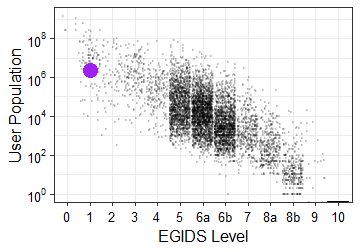
Full explanation
A language of Slovenia
- ISO 639
- slv
- Alternate Names
- Slovenian
- Autonym
- Slovenski jezik, Slovenščina
- Population
- 1,995,000 in Slovenia, all users. L1 users: 1,920,000 in Slovenia (European Commission 2012). L2 users: 75,000 (European Commission 2012). Total users in all countries: 2,229,450 (as L1: 2,045,450; as L2: 184,000).
- Location
- Widespread.
- Language Maps
- Austria, Bosnia and Herzegovina, Croatia and Slovenia, Hungary
- Language Status
- 1 (National). Statutory national language (1991, Constitution, Article 11).
- Classification
- Indo-European, Balto-Slavic, Slavic, South, Western
- Dialects
- Lower Carniola, Upper Carniola, Stajerski, Primorski, Prekmurski. The literary dialect between the 2 main dialects is based on Dolenjsko. Dialects diverse.
- Typology
- SVO; prepositions; noun head final; gender (masculine/feminine/neuter); dual number; no articles; case-marking (6 cases); verb affixes mark number, person; passives; tense and aspect; comparatives; 21 consonants, 8 vowels, 2 diphthongs; tonal (in some dialects); free stress.
- Language Use
- Many also use Croatian [hrv] (European Commission 2006). Many also use English [eng] (European Commission 2006). Many also use Standard German [deu] (European Commission 2006).
- Language Development
- Taught in all primary and secondary schools. Fully developed. Bible: 1584–2017.
- Writing
- Braille script [Brai]. Latin script [Latn], primary usage.
- Language Resources
- OLAC resources in and about Slovene
Also Spoken in
- Location
- Ciudad Autónoma de Buenos Aires; Rio Negro province: Bariloche.
- Language Status
- Unestablished
- Other Comments
- Non-indigenous. View other languages of Argentina
Language Name
Slovene
User Population
12,000 in Argentina (2018), based on nationality.
- Location
- Carinthia and Styria states.
- Language Status
- 5 (Dispersed)
- Language Use
- Some speak standard Slovene well; some use it only in church. Also use Standard German [deu].
- Other Comments
- Most do not consider themselves Slovenians, but Carinthians, belonging to the German culture. Separated by the Karawanken Mountains from the larger group of Slovenes in Slovenia. Formerly called “Windisch” pejoratively, an archaic form of Slovene, heavily influenced by German. Some use dialects, but others losing dialect knowledge. Many hear standard Slovene in church. View other languages of Austria
Language Name
Slovene
User Population
24,900 in Austria (2003 UNSD).
- Language Status
- Unestablished
- Other Comments
- Non-indigenous. View other languages of Australia
Language Name
Slovene
User Population
4,090 in Australia (2016 census).
- Language Status
- Unestablished
- Other Comments
- Non-indigenous. View other languages of Canada
Language Name
Slovene
User Population
9,790 in Canada (2016 census).
- Language Status
- Unestablished
- Other Comments
- Non-indigenous. View other languages of Germany
Language Name
Slovene
User Population
28,400 in Germany (2020 census), based on nationality.
- Language Status
- Unestablished
- Other Comments
- Non-indigenous. View other languages of Spain
Language Name
Slovene
User Population
1,700 in Spain (2020 census), based on nationality.
- Language Status
- Unestablished
- Other Comments
- Non-indigenous. View other languages of United Kingdom
Language Name
Slovene
User Population
1,240 in United Kingdom (2011 census).
- Location
- Istria and Primorje-Gorski Kotar counties: scattered; urban areas of Rijeka and Zagreb.
- Language Status
- 5 (Dispersed)
- Other Comments
- Non-indigenous. View other languages of Croatia
Language Name
Slovene
User Population
9,220 in Croatia (2011 census). Ethnic population: 10,500 (2011 census).
- Location
- Vas county; near Slovenia border.
- Dialects
- Prekmurski.
- Language Status
- 4 (Educational)
- Language Development
- Taught as subject in primary and secondary schools. View other languages of Hungary
Language Name
Slovene
User Population
1,720 in Hungary (2011 census). Ethnic population: 2,390 (2011 census).
- Location
- Friuli-Venezia Giulia region: Gorizia, Trieste, and Udine provinces, north and south along Slovenia border.
- Dialects
- Primorski, Cividale, Resia.
- Language Status
- 2 (Provincial)
- Language Use
- Also use Friulian [fur].
- Language Development
- Taught as subject in primary schools. View other languages of Italy
Language Name
Slovene
User Population
133,000 in Italy, all users. L1 users: 24,000 in Italy (European Commission 2012). L2 users: 109,000 (European Commission 2012).
- Language Status
- Unestablished
- Other Comments
- Non-indigenous. View other languages of Russian Federation
Language Name
Slovene
User Population
2,020 in Russian Federation (2012 UNSD).
- Location
- Illinois; Ohio; Pennsylvania.
- Language Status
- Unestablished
- Language Use
- Most shifting to English [eng].
- Other Comments
- Non-indigenous. Some traditional customs retained. View other languages of United States
Language Name
Slovene
User Population
6,370 in United States (2015 census).