
snk ISO 639
Sooninkanxanne Autonyms
Soninke
Visualizations
Language Cloud
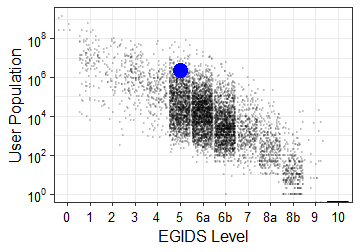
Full explanation
A language of Mali
- ISO 639
- snk
- Alternate Names
- Aswanek, Aswanik, Azer, Ceddo, Cheddo, Gangara, Genger, Kwara, Maraka, Marka, Markaajo, Markakan, Sarakole, Sarakolle, Sarakule, Sarakulle, Sarangkole, Sarangkolle, Saraxuli, Sebbe, Serahule, Serecole, Sooninke, Wakkore, Wankara
- Autonym
- Sooninkanxanne
- Population
- 1,280,000 in Mali (2009 census), increasing. Total users in all countries: 2,195,700.
- Location
- Kayes region: Kayes, Nioro, and Yélimané circles; Koulikoro region: Banamba, Kolokani, Koulikoro, and Nara circles; Ségou region: Baraouéli and Ségou circles. 6 principal towns, 163 villages.
- Language Maps
- Central Mali: Enlarged area, Guinea and Guinea-Bissau, Guinea-Bissau, Mauritania, Senegal and The Gambia, Southern Mali, Western Mali
- Language Status
- 5 (Developing). Recognized language (1982, Decree No. 159 of 19 July, Article 1).
- Classification
- Niger-Congo, Mande, Western, Northwestern, Soninke-Bobo, Soninke-Boso, Soninke
- Dialects
- Kinbakka, Kinxenna, Geriga (Giriga). Giriga dialect heavily influenced by Hassaniya Arabic [mey].
- Language Use
- Vigorous. Used by all. Positive attitudes. Also use Bamanankan [bam]. Also use French [fra]. Also use Hassaniyya [mey]. Also use Pulaar [fuc]. Used as L2 by Kagoro [xkg].
- Language Development
- Literacy rate in L1: 5%–10%. At Bamako university, there are now many more Soninke students who choose this language than before, and numbers are rising. The language is also used in adult education in the Soninke region, especially around Yelimané (2013 SIL). Taught as subject in some primary schools. Literature. Newspapers. Radio. TV. Videos. Dictionary. Grammar. Texts. Bible portions: 2001–2012.
- Writing
- Arabic script, Naskh variant [Arab]. Latin script [Latn].
- Other Comments
- Different from Marka [rkm]. Muslim.
- Language Resources
- OLAC resources in and about Soninke
Also Spoken in
- Location
- Boké region: Boké and Koundara; Kankan region: Kankan; Kindia region: Conakry and Kindia; Labé region: Badougoula, Linsan, and Manda.
- Language Status
- 7 (Shifting)
- Language Use
- Many Soninke/Sarakolé of Guinea no longer speak Soninke (2018 P. Jorgensen). Adults only. Shifting to Pulaar [fuc].
- Language Development
- Agency: L’Union des Sarakolés de la Guinée pour le développement. View other languages of Guinea
Language Name
Sarakolé
User Population
24,800 in Guinea (2017 census).
- Location
- Southeast corner, mainly MacCarthy Island and Upper River divisions. 17 villages.
- Dialects
- Kinxenna, Kinbakka.
- Language Status
- 5 (Developing)
- Language Use
- Vigorous. Used by all. Positive attitudes. Many also use English [eng], as the language of education and government (Biel 2014). Also use Gambian Wolof [wof], as the language of commerce and media (Biel 2014). Also use Mandinka [mnk], as the secondary LWC for commerce and media (Biel 2014).
- Other Comments
- Non-indigenous. The Soninke of The Gambia and those of southern Senegal, Kolda region, form one contiguous, cross-border language community. Muslim. View other languages of Gambia
Language Name
Serahule
User Population
130,000 in Gambia (2018), increasing.
- Location
- Major cities.
- Language Status
- Unestablished
- Other Comments
- Non-indigenous. Muslim. View other languages of Côte d’Ivoire
Language Name
Soninke
User Population
185,000 in Côte d’Ivoire (Leclerc 2017c).
- Location
- Gabu region: Pirada and Sonaco sectors; scattered in other major towns and cities. Bafatá region: Gamamudo town.
- Language Status
- 5 (Developing)
- Language Use
- Home, friends, religion, work. Used by all. Positive attitudes. All also use Guinea-Bissau Creole [pov], as the language of interethnic unity, communication, and commerce. All also use Pulaar [fuc]. Some also use Jahanka [jad]. Some also use Mandinka [mnk]. Some also use Portuguese [por], as the language of education and communication with foreigners.
- Language Development
- Literacy rate in L1: 20%. Literacy rate in L2: 55%. Beginning literacy classes.
- Other Comments
- Non-indigenous. Trace their origins to Gambia and Mali. Ethnic groups: Aser, Aswanik, Gadyaga, Marka, Markanka, Nono, Saracole, Sarawule, Serahuli, Tonbakai, Wakove. Muslim. View other languages of Guinea-Bissau
Language Name
Soninke
User Population
11,900 in Guinea-Bissau (2022 SIL). Ethnic population: 11,900 (2022 SIL).
- Location
- Dakhlet Nouadhibou, Gorgol, and Guidimaka regions: Kaedi and Selibaby towns; 45 villages.
- Dialects
- Azer (Adjer, Aser), Kinxenna, Kinbakka.
- Language Status
- 5 (Developing)
- Language Use
- Vigorous. Used by all. Positive attitudes. All also use French [fra], as the language of education, media and government. Most also use Hassaniyya [mey], as the language of commerce and interethnic communication. Many also use Standard Arabic [arb], as the language of government, media, and religion. Also use Pulaar [fuc].
- Language Development
- Literacy rate in L2: 20% in French [fra], 10% in Arabic [arb]. Used as a language of instruction in a few experimental schools (2010 J. Leclerc).
- Other Comments
- Muslim. View other languages of Mauritania
Language Name
Soninke
User Population
219,000 in Mauritania (2017), increasing.
- Location
- Kolda region: north of Velingara; Matam region: Kanel district; Tambacounda region: Koudi area along Senegal river south bank (Kinxenna dialect). 42 villages, Bakel, Moudéri, Ouaoundé, and Yaféra are principal towns.
- Dialects
- Kinxenna.
- Language Status
- 6a (Vigorous)
- Language Use
- Vigorous. Used by all. Positive attitudes. Many also use Wolof [wol], as the language of commerce and interethnic communication (Sarr and Thiaw 2012). Some also use French [fra], as the language of education and government (Diouf et al 2017). Also use Bamanankan [bam]. Also use Pulaar [fuc].
- Language Development
- Literacy rate in L1: 1%. Literacy rate in L2: 1%–42%.
- Other Comments
- Kolda region Soninke trace their origins back to the eastern dialect area of Mali (Kinbakka); northeastern Senegal group is part of the western Mali group (Kinxenna). Thus, significant differences exist between dialects of the 2 geographical groups in Senegal. Extensive interaction between Soninke of The Gambia and those of southern Senegal, Kolda region. Kolda region speakers are geographically isolated from those in northeastern Senegal. Muslim. View other languages of Senegal
Language Name
Soninke
User Population
340,000 in Senegal (2017), increasing.
- Location
- Ohio: Cincinnati, Columbus; New York: New York City; Pennsylvania: Philadelphia.
- Language Status
- Unestablished
- Other Comments
- Non-indigenous. View other languages of United States
Language Name
Soninke
User Population
5,000 in United States (2011 C. Clayman).