
taj ISO 639
तामाङ (tāmāng), རྟ་དམག (tāmāng) Autonyms
Tamang, Eastern
Visualizations
Language Cloud
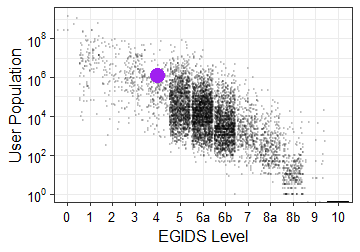
Full explanation
A language of Nepal
- ISO 639
- taj
- Alternate Names
- Ishang, Murmi, Sei, Tamang, “Bhotia” (pej.)
- Autonym
- तामाङ (tāmāng), རྟ་དམག (tāmāng)
- Population
- 1,213,500 in Nepal, all users. L1 users: 1,180,000 in Nepal (2001 census), increasing. Southwestern Tamang: 109,000 (1991 census). Population for all Tamang varieties: 1,350,000 (2011 census). L2 users: 33,500 (2011 census). In some remote communities, particularly women, children and elderly people are monolingual. Total users in all countries: 1,233,700 (as L1: 1,200,200; as L2: 33,500).
- Location
- Widespread across Bagmati and Kosi provinces.
- Language Maps
- Central Nepal, Eastern Nepal, India, Map 4
- Language Status
- 4 (Educational). Language of recognized indigenous nationality: Tamang.
- Classification
- Sino-Tibetan, Tibeto-Burman, Western Tibeto-Burman, Bodish, West Bodish, Gurung-Tamang, Tamang
- Dialects
- Outer-Eastern Tamang (Sailung Tamang), Central-Eastern Tamang (Temal Tamang), Southwestern Tamang (Kath-Bhotiya, Lama Bhote, Murmi, Rongba, Sain, Tamang Gyoi, Tamang Gyot, Tamang Lengmo, Tamang Tam). Central-Eastern most widely understood among all tested to date: 85% by both Trisuli and Rasuwa Western Tamang [tdg], 93%–98% by Outer-Eastern, 87% by Southwestern Tamang. Comprehension of Outer-Eastern 58% by Western Rasuwa Tamang [tdg], 64%–75% by Western Trisuli Tamang [tdg], 67%–54% by Southwestern Tamang, 88%–93% by Central-Eastern Tamang [taj], and 90%–98% among its own varieties. Southwestern Tamang may be a bridge between Eastern and Western Tamang (Varenkamp 1996). Lexical similarity: 88%–99% with Outer Eastern varieties; 89%–100% with Central Eastern; 79%–93% with Outer Eastern and Central Eastern, 77%–82% with Southwestern Tamang, 86%–93% with Southwestern and Central-Eastern, 74%–80% with Eastern and Western Trisuli Tamang [tdg], 69%–81% with Western Rasuwa Tamang [tdg], 72%–80% with Northwestern Dhading Tamang [tmk], 63%–77% with Eastern Gorkha Tamang [tge] (Varenkamp 1996).
- Typology
- SOV; postpositions, genitives after nouns; noun head final; no noun classes or genders; content q-word in situ; 1 prefix, up to 3 suffixes; clause constituents indicated by case-marking; ergative; aspect and tense; no passives or voice; 34 consonant and 16 vowel phonemes; CV, CVC, CCV, V, CCVC; tonal; vowel phonemes include 5 basic, 5 long, 6 diphthongs; aspiration and length are phonemic.
- Language Use
- Vigorous. Home, friends, religion; mixed use: Work, education. Used by all. Positive attitudes. Also use Bhojpuri [bho]. Also use Central Tibetan [bod], in religious contexts. Also use Lhomi [lhm]. Also use Maithili [mai]. Also use Nepali [npi], especially those who have been to school or traveled and in official contexts. Women, older adults, and children have limited proficiency. Used as L2 by Danuwar [dhw], Jirel [jul], Sunwar [suz].
- Language Development
- Literacy rate in L1: 1%–10%. Literacy rate in L2: 25%–75%. Some non-formal and formal literacy materials, textbooks and classes. Taught as subject in primary schools. Literature. Newspapers. Periodicals. Radio. TV. Videos. Dictionary. Grammar. Texts. NT: 2011. Agencies: Tamang Language and Literature Council; Nepal Tamung Association; Tamang Dajang.
- Writing
- Devanagari script [Deva], primary usage. Tibetan script [Tibt], Tamhig style.
- Other Comments
- Traditional religion, Buddhist, Christian, Hindu.
- Language Resources
- OLAC resources in and about Tamang, Eastern
Also Spoken in
- Location
- Arunachal Pradesh state; Sikkim state: Rangit and lower Teesta valleys; West Bengal state: Darjeeling.
- Language Status
- 5 (Dispersed)
- Other Comments
- Non-indigenous. Migrate from Nepal. View other languages of India
Language Name
Tamang, Eastern
User Population
20,200 in India (2011 census). Ethnic population: 272,000 (2006 FTT).