
tdg ISO 639
Tamang, Western
Visualizations
Language Cloud
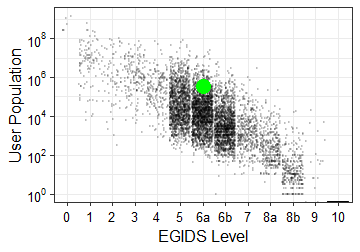
Full explanation
A language of Nepal
- ISO 639
- tdg
- Alternate Names
- Murmi, Sain, Tamang Gyot, Tamang Tam
- Population
- 356,500, all users. L1 users: 323,000 (2000), increasing. Population for all Tamang varieties: 1,350,000 (2011 census). L2 users: 33,500 (2011 census). Mostly monolingual below school age or over 60 years of age.
- Location
- Bagmati province: Dhading district, Gangajamuna, Kaniyabash, Netrawati, Nilkantha, and Rubi Valley municipalities, along Aku river; Nuwakot district, east of Trishuli river; Rasuwa district, widespread.
- Language Maps
- Central Nepal
- Language Status
- 5 (Developing). Language of recognized indigenous nationality: Tamang.
- Classification
- Sino-Tibetan, Tibeto-Burman, Western Tibeto-Burman, Bodish, West Bodish, Gurung-Tamang, Tamang
- Dialects
- Southern dialect of Western Tamang (Nuwakot, Trisuli), Northeastern dialect of Western Tamang (Rasuwa), Northwestern dialect of Western Tamang (Dhading). Preliminary results showed 86% intelligibility of Rasuwa dialect, 81%–88% of Central-Eastern [taj], 78%–88% of Outer-Eastern [taj], 86% of Southwestern [taj]; 80% of Rasuwa with Trisuli, up to 70% of Outer-Eastern [taj]. Lexical similarity: 94% between Trisuli dialect and Northwestern Tamang [tmk], 82%–83% with Rasuwa, 80% with Southwestern Tamang [taj], 77%–79% with Eastern Gorkha Tamang [tge], 82%–83% between Rasuwa and Northwestern [tmk], 78% with Southwestern [taj], 72% with Eastern Gorkha [tge], 69%–81% between Western varieties and Eastern Tamang varieties.
- Typology
- SOV; postpositions; noun head both initial and final; genitives after nouns, relatives before nouns; no noun classes or genders; content q-word initial; up to 2 prefixes, up to 11 suffixes; clause constituents indicated by word order; ergativity; no passives or voice; 24 consonant and 5 vowel phonemes; CV, CVC, CCV, V, CCVC, CVCCC; tonal.
- Language Use
- Home, friends, religion; mixed use: Work, education. Used by all. Also use Nepali [npi], especially younger people, as it is the medium of instruction in schools.
- Language Development
- Literacy rate in L2: 25%–75%. Taught as subject in primary schools. Literature. Newspapers. Periodicals. Radio. Videos. Dictionary. Texts. NT: 1990–2003. Agency: Nepal Tamang Ghedung.
- Writing
- Devanagari script [Deva], primary usage. Tibetan script [Tibt].
- Other Comments
- Murmi is the ethnonym used by the Lepcha and Kirati communities and Sain by the Newar. Traditional religion, Buddhist, Christian.
- Language Resources
- OLAC resources in and about Tamang, Western