
twm ISO 639
Monpa, Tawang
Visualizations
Language Cloud
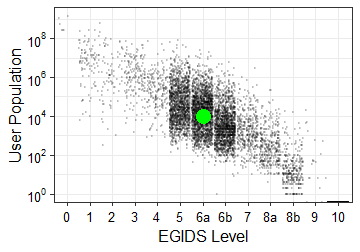
Full explanation
A language of India
- ISO 639
- twm
- Alternate Names
- Brahmi, Cuona Menba, Dwags, Monkit, Northern Monpa, Takpa, Tawan Monba
- Population
- 8,600 in India. Total users in all countries: 9,900.
- Location
- Arunachal Pradesh state: Tawang district.
- Language Maps
- China, India, Map 5
- Language Status
- 6a (Vigorous).
- Classification
- Sino-Tibetan, Tibeto-Burman, Western Tibeto-Burman, Bodish, East Bodish
- Typology
- Basic SOV.
- Language Use
- Vigorous. Home, village, religion. Used by all. Positive attitudes. Also use English [eng]. Also use Hindi [hin]. Used as L2 by Chug [cvg], Sherdukpen [sdp].
- Language Development
- Literacy rate in L2: 32% (2001 census).
- Writing
- Devanagari script [Deva].
- Other Comments
- Monpa (Moinba), ‘man of the lower country’, refers to several ethnically related peoples, which may not be related linguistically. Buddhist.
- Language Resources
- OLAC resources in and about Monpa, Tawang
Also Spoken in
- Location
- Xizang Autonomous Region: Shannan prefecture, Cuona county, Lebu district; Linzhi prefecture, Motuo county, Dexing district, Wenlang village.
- Dialects
- Northern Cuona, Southern Cuona.
- Language Status
- 6a (Vigorous)
- Language Use
- Vigorous. All domains. Used by all. Positive attitudes. Many also use Central Tibetan [bod], and about one-third are literate in the language. Used as L2 by Boga’er Luoba [adi].
- Language Development
- Literacy rate in L2: 44% (2000 census, Monba nationality). Most are literate in Tibetan [bod].
- Other Comments
- Cuona Monba [twm] differs from Tshangla in phonology, vocabulary, and grammar, and is not mutually intelligible. Shares many Tibetan language characteristics. Is the same as, or closely related to, Bumthangkha of Bhutan. May also be classified as North Assam, Monpa. Buddhist. View other languages of China
Language Name
Monba, Cuona
User Population
1,300 in China (2000 census). 600 Southern Cuona, 700 Northern Cuona. Less than half monolingual: Young children, older people, some young adults. Ethnic population: 10,600 (2010 census). Includes Tshangla [tsj] speakers.