
uig ISO 639
ئۇيغۇر تىلى (Uyghur tili), ئۇيغۇرچە (Uyghurche) Autonyms
Uyghur
Visualizations
Language Cloud
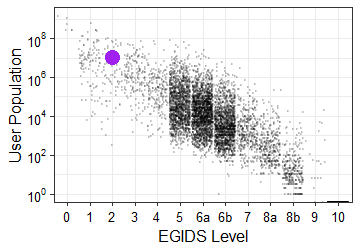
Full explanation
A language of China
- ISO 639
- uig
- Alternate Names
- Uighuir, Uighur, Uiguir, Uigur, Uygur, Weiwu’er, Wiga
- Autonym
- ئۇيغۇر تىلى (Uyghur tili), ئۇيغۇرچە (Uyghurche)
- Population
- 10,100,000 in China (2010 census). Some are monolingual. Ethnic population: 10,100,000 (2010 census). Total users in all countries: 10,408,822.
- Location
- Northwest, many separate enclaves in Xinjiang Uyghur Autonomous Region; also in northernmost Gansu Province, border enclave on Mongolia border; possibly scattered in other Chinese provinces and regions.
- Language Maps
- China, Kazakhstan
- Language Status
- 2 (Provincial). Language of recognized nationality: Uygur.
- Classification
- Turkic, Eastern
- Dialects
- Central Uyghur, Southern Uyghur (Hetian, Hotan), Lopnur (Luobu), Akto Turkmen, Dolan. Central Uyghur comprises the varieties immediately north and south of the Tianshan mountains (Ili (Gulja, Yili, Taranchi), Urumqi (Urumchi), Turfan (Tulufan), Kumul (Hami), Aqsu (Akesu), Qarashahr (Karaxahar), Kucha (Kuqa). Kashgar (Kashi), Yarkand (Shache) and Yengisar (Yengi Hissar) are also generally considered part of Central Uyghur. Southern Uyghur comprises Khotan (Hetian), Keriya (Yutian), and Charchan (Qiemo). Modern standard Uyghur currently encompasses a number of local Turkic varieties whose linguistic affiliations are contested. These include Ainu (Eynu) [aib], Aqto Türkmen, Dolan, and Ili Turki (Taranchi) [ili]. Ainu is a southern Uyghur variety whose lexifier language is partly Persian; it is used as a jargon. Dolan is a slightly Mongol-inflected variety in the Teklimakan desert east of Kashgar. South of Kashgar, in Aqto county, 2,000 residents in the villages of Kösarap and Oytak use a Turkmen-inflected variety dubbed ‘Aqto Türkmen’ by some. Ili Turki (Taranchi) is indistinguishable from the Central Uyghur spoken in that Ili (Ghulja) area. Minor dialect differences between China, Kazakhstan, Kyrgyzstan, and Uzbekistan, overwhelmingly in loan vocabulary (2015 A. Dwyer). Lexical similarity: 51% with Yakut [sah]; 52% with Chuvash [chv]; 55% with Tuvan [tyv]; 60% with Turkish [tur]; 61% with Khakas [kjh]; 62% with Northern Azerbaijani [azj]; 65% with Southern Altai [alt]; 68% with Turkmen [tuk]; 70% with Karachay-Balkar [krc]; 71% with Bashkort [bak]; 72% with Tatar [tat]; 76% with Kazakh [kaz]; 78% with Kyrgyz [kir]; 83% with North Uzbek [uzn].
- Typology
- SOV; postpositions; genitives, adjectives, numerals, relatives before noun heads; question words initial; word order distinguishes subjects and indirect objects, topic and comment; 8 noun cases shown by suffixes; verb suffixes mark subject person, number, second person marks plural and 3 levels of respect; passive, reflexive, reciprocal and causative; comparatives; 25 consonant and 15 vowel phonemes; CV, CVC, CVCC syllables; non-tonal; stress on final syllable; vowel harmony; evidentials.
- Language Use
- Vigorous, except in Urumqi. All domains. Used by all. Positive attitudes. Also use English [eng]. Also use Mandarin Chinese [cmn], especially young people, intellectuals, and city dwellers, but increasingly in rural areas as well. Also use Russian [rus]. Used as L2 by Ainu [aib], Ili Turki [ili], Kyrgyz [kir], Northern Uzbek [uzn], Peripheral Mongolian [mvf], Russian [rus], Salar [slr], Sarikoli [srh], Tatar [tat], Xibe [sjo].
- Language Development
- Literacy rate in L2: 91% in any language (2000 census, Uyghur nationality). Literacy based on Central Uyghur as spoken in the area between Yili (Ili) and Urumqi, and includes literates in Uyghur or Chinese or both. Taught in a few primary and secondary schools, though this is in decline; taught as subject in some scholols. Taught in tertiary schools. Newspapers. Radio. TV. Grammar. Bible: 1950–2018.
- Writing
- Arabic script, Naskh variant [Arab], official and primary usage in China, also used in Afghanistan. Cyrillic script [Cyrl], used in Kazakhstan, past usage in China. Latin script [Latn], used in China and Turkey.
- Other Comments
- Those in the north are more influenced by modern Chinese culture. Muslim.
- Language Resources
- OLAC resources in and about Uyghur
Also Spoken in
- Location
- Badakshan province: Baharak district, a few villages; Faizabad city; Kabul.
- Dialects
- Kashgar-Yarkand (Yarkandi).
- Language Status
- 9 (Dormant)
- Language Use
- Shifted to Dari [prs].
- Language Development
- Literacy rate in L2: 5%–15%.
- Other Comments
- Non-indigenous. Muslim. View other languages of Afghanistan
Language Name
Uyghur
User Population
No known L1 speakers in Afghanistan. Ethnic population: 3,500 (2022 Joshua Project).
- Location
- Jammu and Kashmir state: Srinagar; Ladakh, Leh.
- Language Status
- 8b (Nearly extinct)
- Language Use
- Elderly only. Shifted to Kashmiri [kas].
- Other Comments
- Non-indigenous. Border disputed with China. View other languages of India
Language Name
Uyghur
User Population
2 in India (2016 S. Kumar). Ethnic population: 150 (2016 S. Kumar).
- Language Status
- Unestablished
- Other Comments
- Non-indigenous. View other languages of Kyrgyzstan
Language Name
Uyghur
User Population
37,300 in Kyrgyzstan (2009 census). Ethnic population: 48,500 (2009 census).
- Location
- Almaty region.
- Dialects
- Kashgar-Yarkand.
- Language Status
- 5 (Dispersed)
- Language Use
- 86% speak it as L1. Used as L2 by Ili Turki [ili].
- Language Development
- Found in minority schools.
- Other Comments
- Muslim. View other languages of Kazakhstan
Language Name
Uyghur
User Population
191,000 in Kazakhstan (2009 census). Ethnic population: 225,000 (2009 census).
- Location
- Govi-Altay province: Altai and Thogta sums.
- Language Status
- 9 (Dormant)
- Language Use
- Shifted to Halh Mongolian [khk].
- Language Development
- Literacy is in Halh [khk] in Mongolia; the Uyghur are generally assimilated to Halh culture.
- Other Comments
- Muslim. View other languages of Mongolia
Language Name
Uyghur
User Population
No known L1 speakers in Mongolia. Ethnic population: 12,000 (2015).
- Language Status
- Unestablished
- Other Comments
- Non-indigenous. Muslim. View other languages of Pakistan
Language Name
Uyghur
User Population
10,000 in Pakistan (2018). A few families permanently settled in Pakistan.
- Language Status
- Unestablished
- Other Comments
- Non-indigenous. View other languages of Russian Federation
Language Name
Uyghur
User Population
1,050 in Russian Federation (2002 census).
- Language Status
- Unestablished
- Other Comments
- Non-indigenous. View other languages of Saudi Arabia
Language Name
Uyghur
User Population
8,730 in Saudi Arabia (2018), based on ethnicity.
- Language Status
- Unestablished
- Other Comments
- Non-indigenous. View other languages of Turkmenistan
Language Name
Uyghur
User Population
2,300 in Turkmenistan (Leclerc 2019b), based on ethnicity.
- Location
- Istanbul and Kayseri provinces.
- Language Status
- 5 (Dispersed)
- Other Comments
- Non-indigenous. Muslim. View other languages of Turkey
Language Name
Uyghur
- Location
- California; District of Columbia; Florida; Idaho; Maryland; New Jersey; New York; Pennsylvania; Texas; Virginia; Washington.
- Language Status
- Unestablished
- Language Use
- Some also use English [eng].
- Other Comments
- Non-indigenous. View other languages of United States
Language Name
Uyghur
User Population
8,900 in United States (2015 census).
- Location
- Andijon, Farg’ona, and Namangan regions; cultural centers: Andijon and Toshkent cities; scattered elsewhere.
- Language Status
- Unestablished
- Other Comments
- Non-indigenous. View other languages of Uzbekistan
Language Name
Uyghur
User Population
48,500 in Uzbekistan (2019).