
xsr ISO 639
शेर्वी तम्ङे (sherwi tamnge) Autonyms
Sherpa
Visualizations
Language Cloud
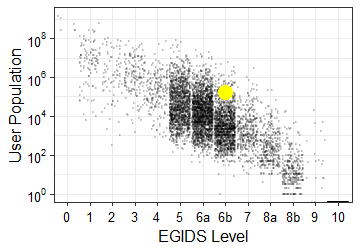
Full explanation
A language of Nepal
- ISO 639
- xsr
- Alternate Names
- Serwa, Sharpa, Sherwi tamnye, Xiaerba, “Sharpa Bhotia” (pej.)
- Autonym
- शेर्वी तम्ङे (sherwi tamnge)
- Population
- 153,180 in Nepal, all users. L1 users: 145,000 in Nepal (2011 census), decreasing. L2 users: 8,180 (2011 census). A few elderly monolinguals in remote villages (UNESCO). Total users in all countries: 170,180 (as L1: 162,000; as L2: 8,180).
- Location
- Bagmati province: Sindhupalchok district, Barhabise and Bhotekoshi municipalities; Dolakha district, Ghaurishankar and Jiri municipalities; Kosi province: Okaldunga district, Khijidemba, Likhu, Molung, and Siddhicharan municipalities; Ramechhap district, Gokulganga and Umakunda municipalities; Sankhuwasabha district, Makalu municipality; Solukumbu district, Dudhkoshi, Kumbupasanglahmu, Likhupike, Nechasalyan, and Solududhakunda municipalities.
- Language Maps
- China, Eastern Nepal, India, Map 4
- Language Status
- 6b (Threatened). Language of recognized indigenous nationality: Sherpa.
- Classification
- Sino-Tibetan, Tibeto-Burman, Western Tibeto-Burman, Bodish, Central Bodish, Central, gTsang
- Dialects
- East Sherpa (Dolakha, Ramechhap), West Sherpa, Central Sherpa (Solu, South Sherpa), North Sherpa (Khumbu). 95% comprehension of Solu dialect by Western and Khumbu. Lexical similarity: 90% between Solu and Khumbu dialects; 67% with Jirel [jul]; 65% with Helambu Sherpa [scp]; 62% with Lhowa [loy] and Dolpo [dre]; 58% with Lhomi [lhm] and Lhasa Tibetan [bod]; 57% with Kyerung (Kyirong) [kgy]; 55% with Nubri [kte] and Walungge [ola].
- Typology
- SOV; postpositions; noun head initial; no noun classes or genders; content q-word in situ; 1 prefix, up to 3 suffixes; clause constituents indicated by case-marking; verbal affixation marks person; split ergativity; tense and aspect; no passive forms; tonal; 31 consonant and 6 vowel phonemes (also 6 diphthongs).
- Language Use
- In villages vigorous but not in urban areas where there is some shift towards Nepali [npi]. Mixed use: Home, friends, religion, work, education. Some young people, all adults. Older adults and elderly. Some use among children, adolescents, and young adults. Positive attitudes. In schools children are teased if they use Sherpa. In Kathmandu parents use Nepali [npi] with school-age children. Also use Central Tibetan [bod]. Also use English [eng]. Also use French [fra]. Also use Korean [kor]. Also use Nepali [npi]. Also use Standard German [deu]. Used as L2 by Jirel [jul], Khaling [klr], Tibetan [bod].
- Language Development
- Literacy rate in L1: 8%–9%. The Mountain Institute and the Curriculum Development Centre have published some primary education materials. Lack of language development is source of embarrassment for some. Literature. Newspapers. Radio. Dictionary. Texts. NT: 2014.
- Writing
- Devanagari script [Deva]. Tibetan script [Tibt].
- Other Comments
- Tourism and increased wealth have given Sherpas the financial means to send their children to Kathmandu and abroad for education contributing to language shift. Buddhist, Christian.
- Language Resources
- OLAC resources in and about Sherpa
Also Spoken in
- Location
- Xizang Autonomous Region.
- Language Status
- 6b (Threatened)
- Language Use
- Some young people, all adults.
- Other Comments
- Buddhist. View other languages of China
Language Name
Sherpa
User Population
1,000 in China (Shearer and Sun 2017).
- Location
- West Bengal state: Darjeeling district; Arunachal Pradesh and Sikkim states.
- Language Status
- 6b (Threatened)
- Language Use
- Many also use Nepali [npi]. Also use English [eng].
- Other Comments
- ‘Sharpa’, easterner, so the term used in different countries may not always refer to Sherpa. Buddhist. View other languages of India
Language Name
Sherpa
User Population
16,000 in India (2011 census).