
ysl ISO 639
Slovenian Sign Language
Visualizations
Language Cloud
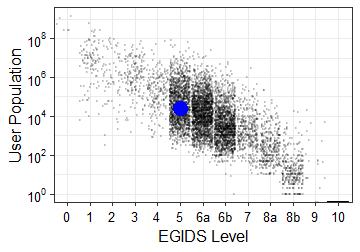
Full explanation
A language of Slovenia
- ISO 639
- ysl
- Alternate Names
- SZJ, Slovene Sign Language, Slovenski Znakovni Jezik, YSL, Yugoslav Sign Language, Yugoslavian Sign Language
- Population
- 1,000 in Slovenia (2014 Association of Deaf and Hard of Hearing Slovenia). About 0.05% of total population. Other estimates: 863 (2021 EUD); 2,500–3,000 (2004 M. Debecv et al). Total users in all countries: 25,000.
- Location
- Scattered.
- Language Maps
- Sign Languages of Europe
- Language Status
- 5 (Developing). Recognized language (2002, Law 96/02, Law on the Use of Slovenian Sign Language, ZUSZJ).
- Classification
- Sign language, Deaf community sign language
- Dialects
- Degree of variation with other former Yugoslavian countries is unknown, but reportedly minor. Fingerspelling alphabets vary considerably throughout the Balkans (one- vs. two-handed, Latin vs. Cyrillic, 2020 B. van der Louw).
- Typology
- Fingerspelling alphabet based on French Sign Language [fsl].
- Language Use
- Deaf schools. Deaf associations. Used by all. Also use Slovene [slv], in written form, which is taught in deaf schools.
- Language Development
- TV. Theater. Videos. Dictionary. Agency: Slovenian Association of the Deaf and Hard of Hearing (ZDGNS).
- Other Comments
- Origin from deaf schools in Austria and Hungary. Since the breakup of Yugoslavia, each area has tended to distinguish its variety from the others, with its own name. The ISO 639-3 standard has not yet been adjusted to reflect these changes, treating all sign languages in the former Yugoslavia (with the exception of Croatian Sign Language [csq]) as dialects of Yugoslavian Sign Language [ysl]. 46 registered sign language interpreters (2019 EUD). Christian.
Also Spoken in
- Location
- Scattered.
- Dialects
- Degree of variation with other former Yugoslavian countries is unknown, but reportedly minor. Fingerspelling alphabets vary considerably throughout the Balkans (one- vs. two-handed, Latin vs. Cyrillic, 2020 B. van der Louw).
- Language Status
- 6a (Vigorous)
- Language Use
- Some also use Bosnian [bos].
- Other Comments
- Origin from deaf schools in Austria and Hungary. Since the breakup of Yugoslavia, each area has tended to distinguish its variety from the others, with its own name. The ISO 639-3 standard has not yet been adjusted to reflect these changes, treating all sign languages in the former Yugoslavia (with the exception of Croatian Sign Language [csq]) as dialects of Yugoslavian Sign Language [ysl]. View other languages of Bosnia and Herzegovina
Language Name
Bosnian Sign Language
User Population
10,000 in Bosnia and Herzegovina (2021 DBS/DOOR/SIL). Estimated 7,000–13,000 deaf signers, assuming 0.2%–0.4% of the general population.
- Location
- Scattered.
- Dialects
- Degree of variation with other former Yugoslavian countries is unknown, but reportedly minor. Fingerspelling alphabets vary considerably throughout the Balkans (one- vs. two-handed, Latin vs. Cyrillic, 2020 B. van der Louw).
- Language Status
- 6a (Vigorous)
- Language Use
- Used by all.
- Language Development
- Agency: Nacionalniot Sojuz na gluvi i nagluvi na Republika Severna Makedonija (National Association of Deaf and Hard of Hearing of Republic of Macedonia, NADHHRM).
- Other Comments
- Origin from deaf schools in Austria and Hungary. Since the breakup of Yugoslavia, each area has tended to distinguish its variety from the others, with its own name. The ISO 639-3 standard has not yet been adjusted to reflect these changes, treating all sign languages in the former Yugoslavia (with the exception of Croatian Sign Language [csq]) as dialects of Yugoslavian Sign Language [ysl]. Two deaf schools (Koceski and Koceska 2015). 30 certified sign language interpreters (2020 NADHHRM). Two fingerspelling systems are used for the Macedonia alphabet, one is one-handed, the other two-handed (Koceski and Koceska 2015). View other languages of North Macedonia
Language Name
Macedonian Sign Language
User Population
2,000 in North Macedonia (2021 DBS/DOOR/SIL). Estimated assuming 0.1% of total population. Around 6,000 deaf people (Koceski and Koceska 2015).
- Location
- Scattered.
- Dialects
- Degree of variation with other former Yugoslavian countries is unknown, but reportedly minor. Fingerspelling alphabets vary considerably throughout the Balkans (one- vs. two-handed, Latin vs. Cyrillic, 2020 B. van der Louw).
- Language Status
- 6a (Vigorous)
- Language Use
- Some also use Montenegrin [cnr].
- Other Comments
- Origin from deaf schools in Austria and Hungary. Since the breakup of Yugoslavia, each area has tended to distinguish its variety from the others, with its own name. The ISO 639-3 standard has not yet been adjusted to reflect these changes, treating all sign languages in the former Yugoslavia (with the exception of Croatian Sign Language [csq]) as dialects of Yugoslavian Sign Language [ysl]. View other languages of Montenegro
Language Name
Montenegrin Sign Language
User Population
2,000 in Montenegro (2021 DBS/DOOR/SIL). Estimated 1,200–2,400 deaf signers, based on 0.2%–0.4% of total population.
- Location
- Scattered.
- Dialects
- Kosovar Sign Language (KosSL). Degree of variation with other former Yugoslavian countries is unknown, but reportedly minor. Fingerspelling alphabets vary considerably throughout the Balkans (one- vs. two-handed, Latin vs. Cyrillic, 2020 B. van der Louw).
- Language Status
- 5 (Developing)
- Language Use
- Deaf associations. Deaf camps. Used by all. Some also use Serbian [srp].
- Language Development
- Agency: Association of the Deaf and Hard of Hearing for Serbia and Montenegro.
- Other Comments
- Origin from deaf schools in Austria and Hungary. Since the breakup of Yugoslavia, each area has tended to distinguish its variety from the others, with its own name. The ISO 639-3 standard has not yet been adjusted to reflect these changes, treating all sign languages in the former Yugoslavia (with the exception of Croatian Sign Language [csq]) as dialects of Yugoslavian Sign Language [ysl]. Regional variants, but adequate comprehension. Efforts to standardize since 1979. Serbian Telecom employees learning Serbian Sign Language as an L2. Interpreters furnished in court. About 100 sign language interpreters (2014 European Forum of Sign Language Interpreters). 40 working sign language interpreters (2014 EUD). Christian. View other languages of Serbia
Language Name
Serbian Sign Language
User Population
10,000 in Serbia (2014 EUD). Estimated deaf signers, approximately 0.05% of total population. Other estimates: 30,000 signers (2014 European Forum of Sign Language Interpreters); 30,000 deaf and 90,000 hard of hearing (2013 Association of the Deaf and Hard Hearing); 47,500 (2014 IMB).